Grade 6 · Social StudiesHIS.6.6Premium
Spartans in Chains: An Athens News Report, 425 BCE
Grade 6 ancient Greece: a news report on the Spartan surrender at Sphacteria in 425 BCE compares Athens and Sparta and links Greek comedy, medicine and thought.
Preview
OwlSheets.com
Spartans in Chains: An Athens News Report, 425 BCE
Read a report on the surrender at Sphacteria to compare Athens and Sparta and Greek achievements.
The report
Read the note and the report. Then answer the questions.
The Athenian Crier
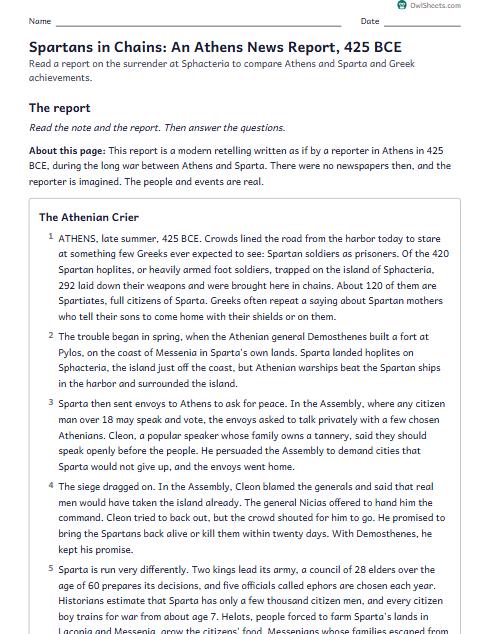
1ATHENS, late summer, 425 BCE. Crowds lined the road from the harbor today to stare at something few Greeks ever expected to see: Spartan soldiers as prisoners. Of the 420 Spartan hoplites, or heavily armed foot soldiers, trapped on the island of Sphacteria, 292 laid down their weapons and were brought here in chains. About 120 of them are Spartiates, full citizens of Sparta. Greeks often repeat a saying about Spartan mothers who tell their sons to come home with their shields or on them.
2The trouble began in spring, when the Athenian general Demosthenes built a fort at Pylos, on the coast of Messenia in Sparta's own lands. Sparta landed hoplites on Sphacteria, the island just off the coast, but Athenian warships beat the Spartan ships in the harbor and surrounded the island.
3Sparta then sent envoys to Athens to ask for peace. In the Assembly, where any citizen man over 18 may speak and vote, the envoys asked to talk privately with a few chosen Athenians. Cleon, a popular speaker whose family owns a tannery, said they should speak openly before the people. He persuaded the Assembly to demand cities that Sparta would not give up, and the envoys went home.
4The siege dragged on. In the Assembly, Cleon blamed the generals and said that real men would have taken the island already. The general Nicias offered to hand him the command. Cleon tried to back out, but the crowd shouted for him to go. He promised to bring the Spartans back alive or kill them within twenty days. With Demosthenes, he kept his promise.
5Sparta is run very differently. Two kings lead its army, a council of 28 elders over the age of 60 prepares its decisions, and five officials called ephors are chosen each year. Historians estimate that Sparta has only a few thousand citizen men, and every citizen boy trains for war from about age 7. Helots, people forced to farm Sparta's lands in Laconia and Messenia, grow the citizens' food. Messenians whose families escaped from Sparta now hold the fort at Pylos for Athens, and helots have begun slipping away to join them.
6Athens has more to talk about than war. Early this year, the comic poet Aristophanes won first prize at a festival with the Acharnians, a play in which a tired farmer makes his own private peace with Sparta. Doctors who follow Hippocrates of Kos teach that illness comes from natural causes such as food, water and weather, and they write down each patient's signs day by day. And Protagoras, a teacher from Abdera who has taught in Athens, says that every question has two opposing arguments.
- A. Many Greeks thought Spartans would die before giving up.
- B. Sparta had already made peace with Athens that spring.
- C. The prisoners included the two kings who led Sparta's army.
- D. Sparta had never fought a war against Athens before.
The preview shows the first questions. Unlock the worksheet to see all of it.
Related worksheets
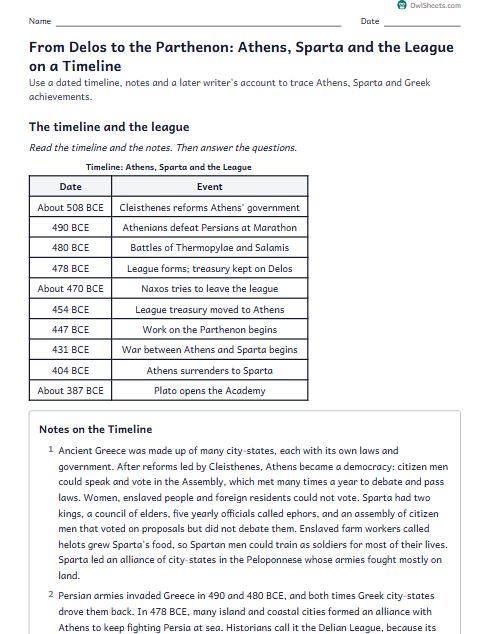
From Delos to the Parthenon: Athens, Sparta and the League on a Timeline
Grade 6 · HIS.6.6
15 questionsPremium
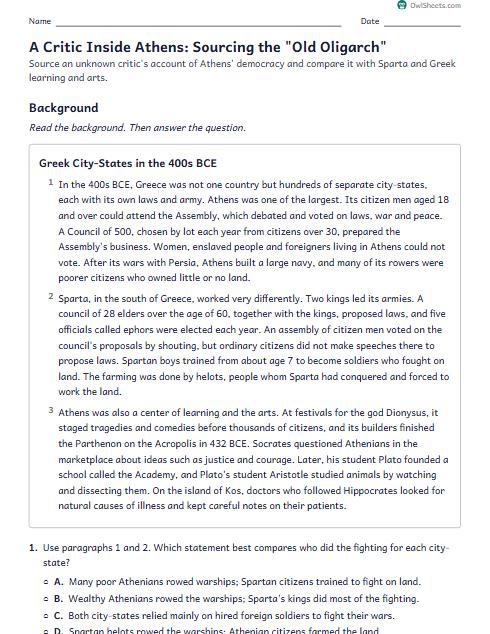
A Critic Inside Athens: Sourcing the "Old Oligarch"
Grade 6 · HIS.6.6
14 questionsPremium
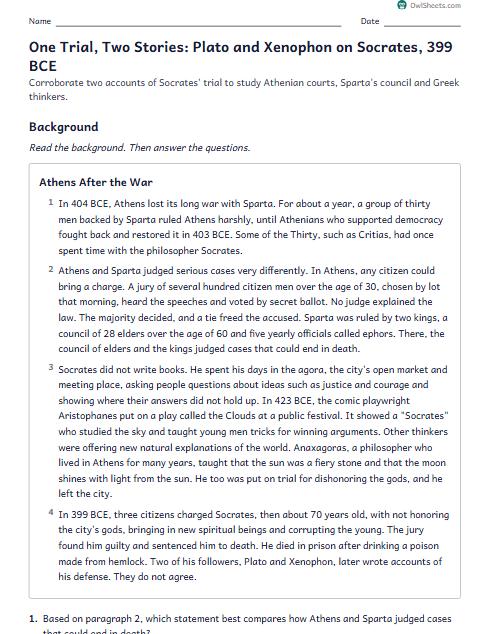
One Trial, Two Stories: Plato and Xenophon on Socrates, 399 BCE
Grade 6 · HIS.6.6
16 questionsPremium
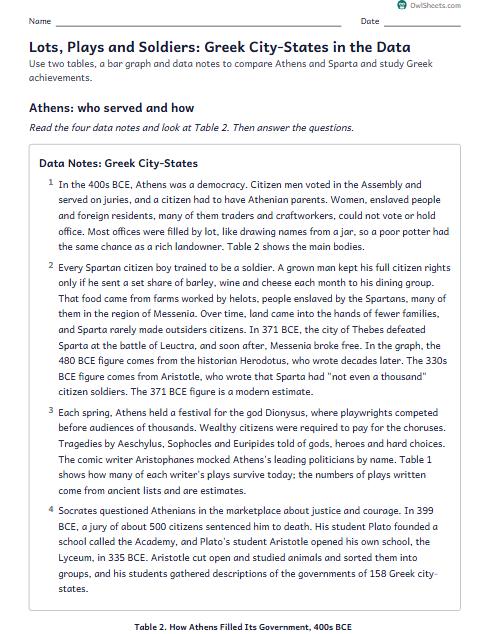
Lots, Plays and Soldiers: Greek City-States in the Data
Grade 6 · HIS.6.6
14 questionsPremium
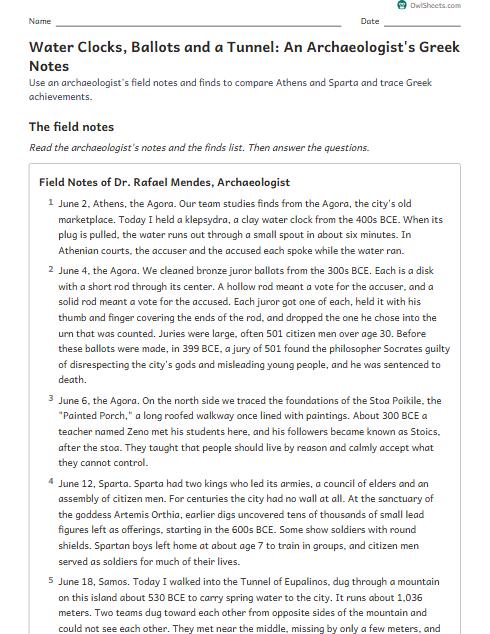
Water Clocks, Ballots and a Tunnel: An Archaeologist's Greek Notes
Grade 6 · HIS.6.6
12 questionsPremium
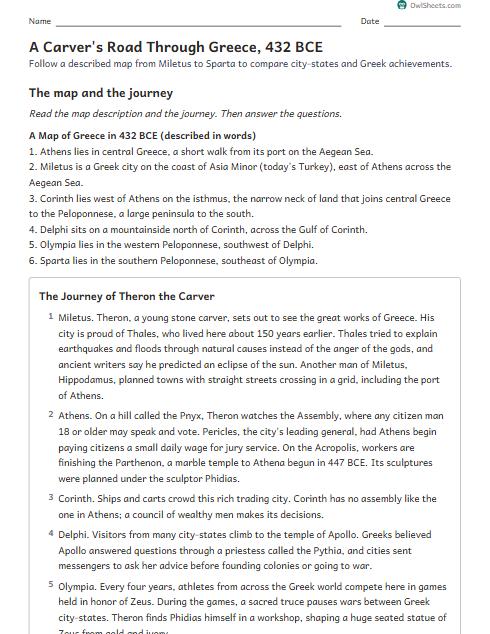
A Carver's Road Through Greece, 432 BCE
Grade 6 · HIS.6.6
12 questionsPremium