Grade 8 · Social StudiesHIS.8.4Premium
A Letter Mailed South: Sourcing Angelina Grimké's Appeal, 1836
Grade 8 history: source Angelina Grimké's 1836 Appeal to Southern women and trace how abolition, women's rights and school reform were linked.
Preview
OwlSheets.com
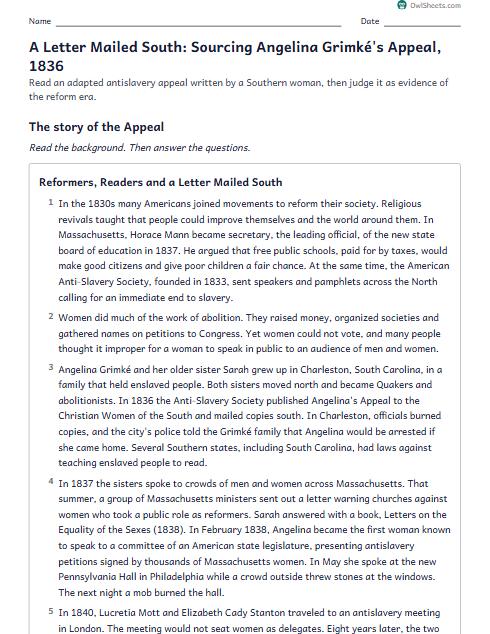
A Letter Mailed South: Sourcing Angelina Grimké's Appeal, 1836
Read an adapted antislavery appeal written by a Southern woman, then judge it as evidence of the reform era.
The story of the Appeal
Read the background. Then answer the questions.
Reformers, Readers and a Letter Mailed South
1In the 1830s many Americans joined movements to reform their society. Religious revivals taught that people could improve themselves and the world around them. In Massachusetts, Horace Mann became secretary, the leading official, of the new state board of education in 1837. He argued that free public schools, paid for by taxes, would make good citizens and give poor children a fair chance. At the same time, the American Anti-Slavery Society, founded in 1833, sent speakers and pamphlets across the North calling for an immediate end to slavery.
2Women did much of the work of abolition. They raised money, organized societies and gathered names on petitions to Congress. Yet women could not vote, and many people thought it improper for a woman to speak in public to an audience of men and women.
3Angelina Grimké and her older sister Sarah grew up in Charleston, South Carolina, in a family that held enslaved people. Both sisters moved north and became Quakers and abolitionists. In 1836 the Anti-Slavery Society published Angelina's Appeal to the Christian Women of the South and mailed copies south. In Charleston, officials burned copies, and the city's police told the Grimké family that Angelina would be arrested if she came home. Several Southern states, including South Carolina, had laws against teaching enslaved people to read.
4In 1837 the sisters spoke to crowds of men and women across Massachusetts. That summer, a group of Massachusetts ministers sent out a letter warning churches against women who took a public role as reformers. Sarah answered with a book, Letters on the Equality of the Sexes (1838). In February 1838, Angelina became the first woman known to speak to a committee of an American state legislature, presenting antislavery petitions signed by thousands of Massachusetts women. In May she spoke at the new Pennsylvania Hall in Philadelphia while a crowd outside threw stones at the windows. The next night a mob burned the hall.
5In 1840, Lucretia Mott and Elizabeth Cady Stanton traveled to an antislavery meeting in London. The meeting would not seat women as delegates. Eight years later, the two women helped organize the Seneca Falls Convention, which called for women's rights, including the right to vote.
- Horace Mann
- Sarah Grimké
- Angelina Grimké
- Lucretia Mott
- A. Wrote a book defending women's equality
- B. Spoke to lawmakers while presenting women's petitions
- C. Helped organize a convention for women's rights
- D. Led a state board that worked for tax-paid schools
- A. Abolitionists asked women to leave the movement to the men.
- B. Ministers in Massachusetts led the fight for women to vote.
- C. Women's rights reformers had little interest in ending slavery.
- D. Women who worked against slavery met limits on their own rights.
The preview shows the first questions. Unlock the worksheet to see all of it.
Related worksheets
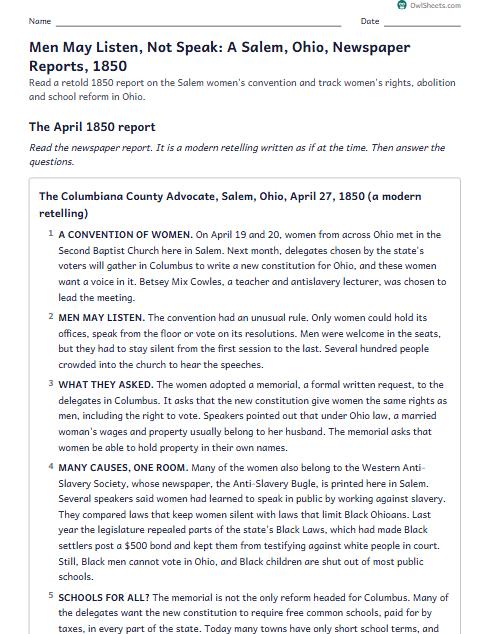
Men May Listen, Not Speak: A Salem, Ohio, Newspaper Reports, 1850
Grade 8 · HIS.8.4
14 questionsPremium
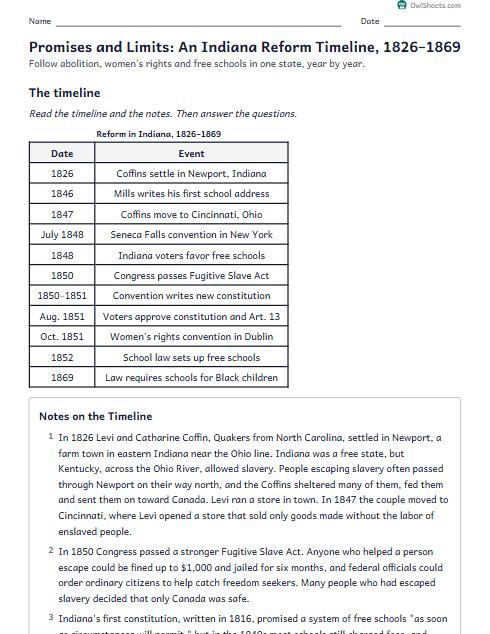
Promises and Limits: An Indiana Reform Timeline, 1826–1869
Grade 8 · HIS.8.4
14 questionsPremium
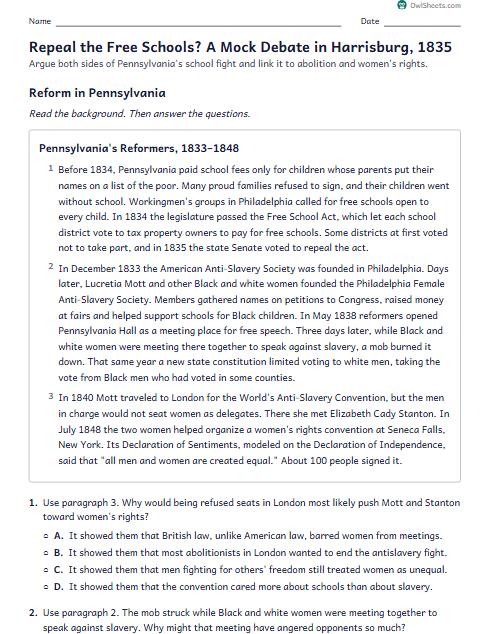
Repeal the Free Schools? A Mock Debate in Harrisburg, 1835
Grade 8 · HIS.8.4
14 questionsPremium
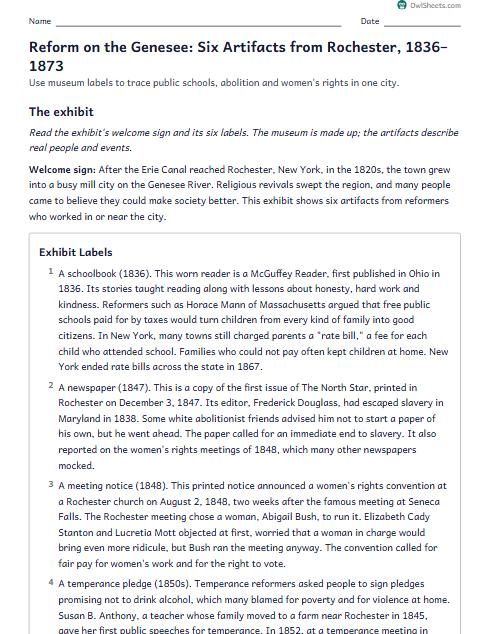
Reform on the Genesee: Six Artifacts from Rochester, 1836–1873
Grade 8 · HIS.8.4
13 questionsPremium
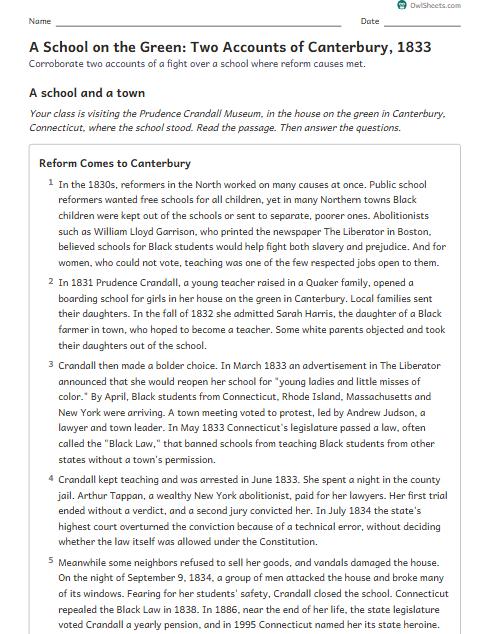
A School on the Green: Two Accounts of Canterbury, 1833
Grade 8 · HIS.8.4
11 questionsPremium
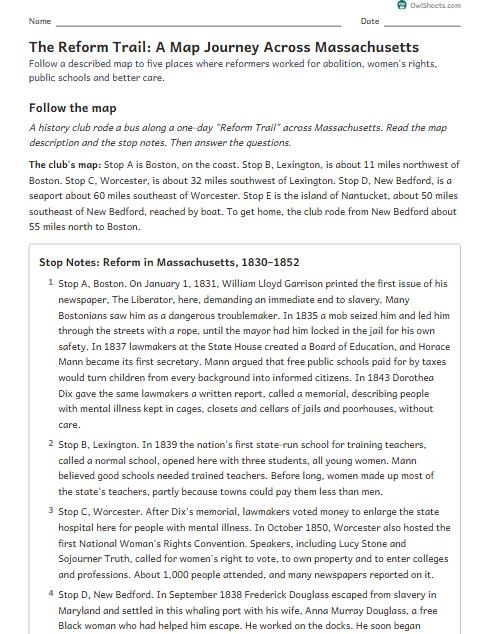
The Reform Trail: A Map Journey Across Massachusetts
Grade 8 · HIS.8.4
11 questionsPremium