Grade 7 · Social StudiesECO.7.3Premium
Reapers Wanted: An Abbey's Accounts After the Black Death
Grade 7 economics: use supply and demand to explain reapers' pay, rents and wheat prices in an abbey's harvest accounts near Paris, 1345–1375.
Preview
OwlSheets.com
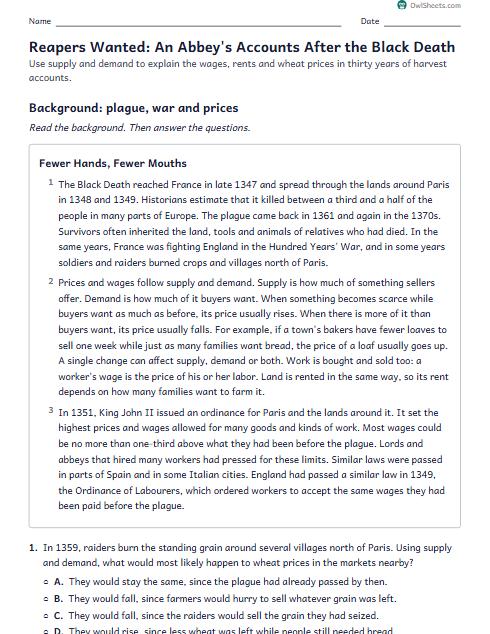
Reapers Wanted: An Abbey's Accounts After the Black Death
Use supply and demand to explain the wages, rents and wheat prices in thirty years of harvest accounts.
Background: plague, war and prices
Read the background. Then answer the questions.
Fewer Hands, Fewer Mouths
1The Black Death reached France in late 1347 and spread through the lands around Paris in 1348 and 1349. Historians estimate that it killed between a third and a half of the people in many parts of Europe. The plague came back in 1361 and again in the 1370s. Survivors often inherited the land, tools and animals of relatives who had died. In the same years, France was fighting England in the Hundred Years' War, and in some years soldiers and raiders burned crops and villages north of Paris.
2Prices and wages follow supply and demand. Supply is how much of something sellers offer. Demand is how much of it buyers want. When something becomes scarce while buyers want as much as before, its price usually rises. When there is more of it than buyers want, its price usually falls. For example, if a town's bakers have fewer loaves to sell one week while just as many families want bread, the price of a loaf usually goes up. A single change can affect supply, demand or both. Work is bought and sold too: a worker's wage is the price of his or her labor. Land is rented in the same way, so its rent depends on how many families want to farm it.
3In 1351, King John II issued an ordinance for Paris and the lands around it. It set the highest prices and wages allowed for many goods and kinds of work. Most wages could be no more than one-third above what they had been before the plague. Lords and abbeys that hired many workers had pressed for these limits. Similar laws were passed in parts of Spain and in some Italian cities. England had passed a similar law in 1349, the Ordinance of Labourers, which ordered workers to accept the same wages they had been paid before the plague.
- A. They would stay the same, since the plague had already passed by then.
- B. They would fall, since farmers would hurry to sell whatever grain was left.
- C. They would fall, since the raiders would sell the grain they had seized.
- D. They would rise, since less wheat was left while people still needed bread.
- A. To help landowners keep paying close to the old rates
- B. To help workers earn as much as they could after the plague
- C. To bring workers from England to farm French fields
- D. To raise the number of workers who lived through the plague
The preview shows the first questions. Unlock the worksheet to see all of it.
Related worksheets
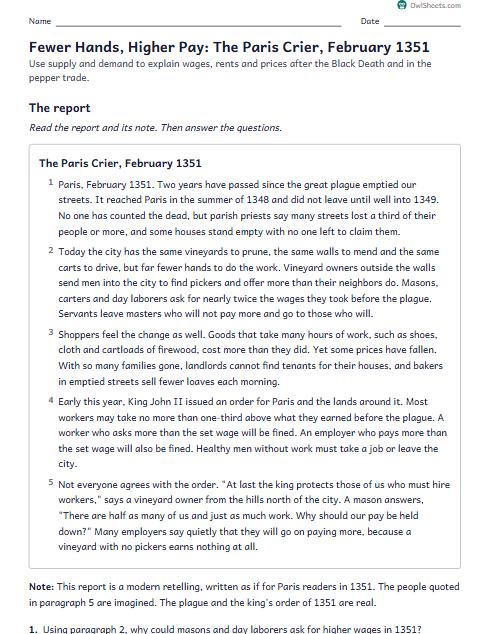
Fewer Hands, Higher Pay: The Paris Crier, February 1351
Grade 7 · ECO.7.3
14 questionsPremium
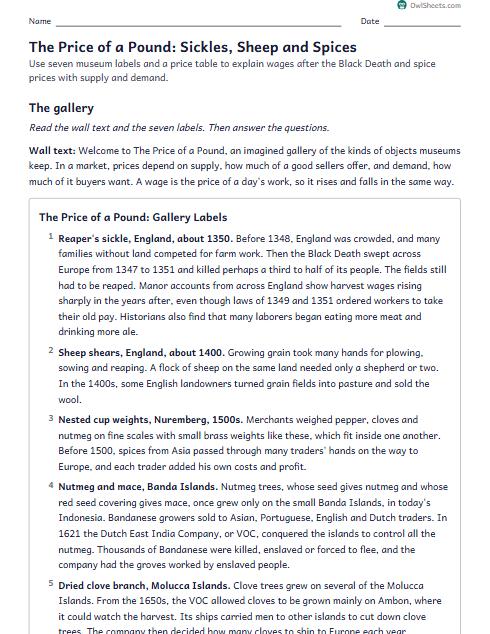
The Price of a Pound: Sickles, Sheep and Spices
Grade 7 · ECO.7.3
14 questionsPremium
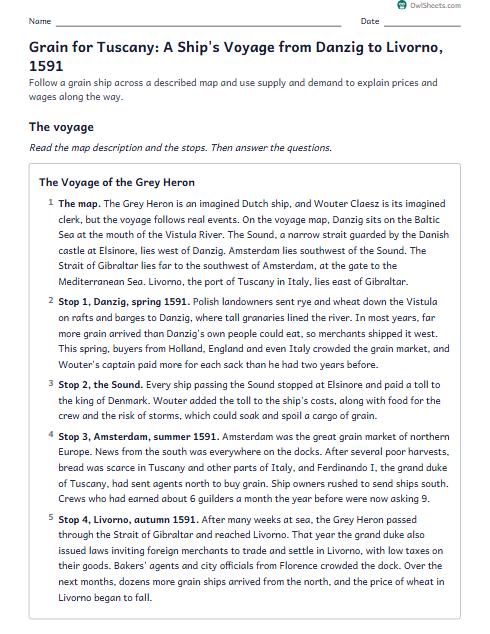
Grain for Tuscany: A Ship's Voyage from Danzig to Livorno, 1591
Grade 7 · ECO.7.3
13 questionsPremium
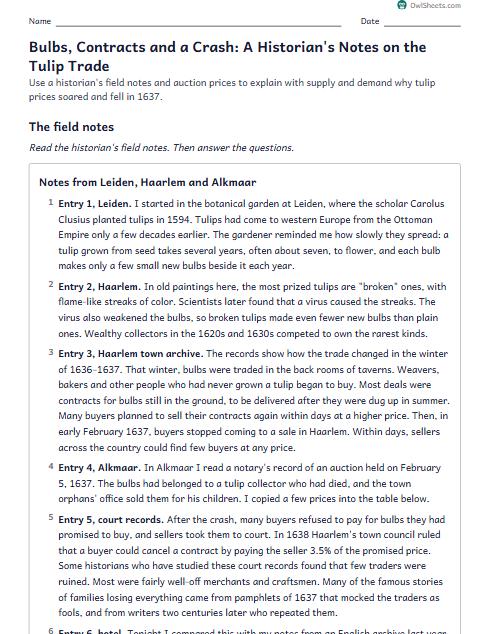
Bulbs, Contracts and a Crash: A Historian's Notes on the Tulip Trade
Grade 7 · ECO.7.3
13 questionsPremium
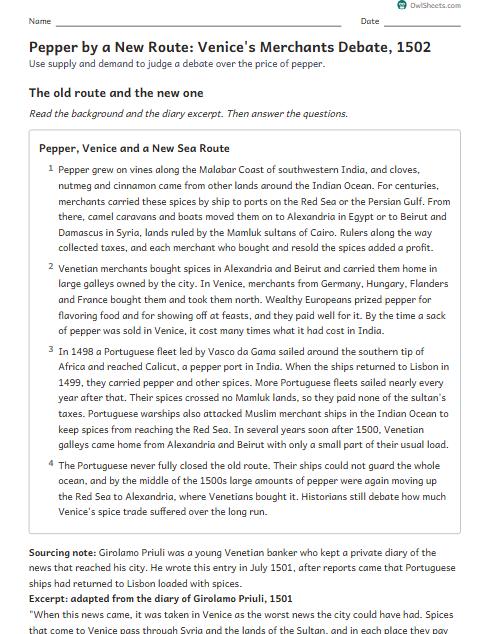
Pepper by a New Route: Venice's Merchants Debate, 1502
Grade 7 · ECO.7.3
12 questionsPremium
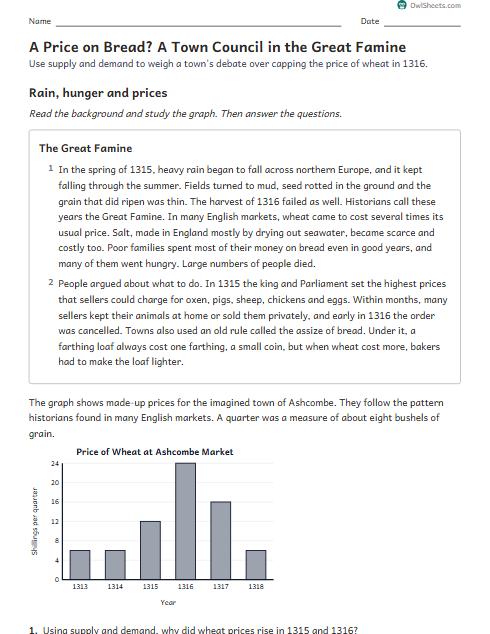
A Price on Bread? A Town Council in the Great Famine
Grade 7 · ECO.7.3
12 questionsPremium