Grade 7 · Social StudiesHIS.7.6Premium
Guest or Prisoner? Two Accounts of Moctezuma and Cortés
Grade 7 history: compare Cortés's letter and the Florentine Codex on the 1519 meeting in Tenochtitlan, with Maya, Mexica and Inca context.
Preview
OwlSheets.com
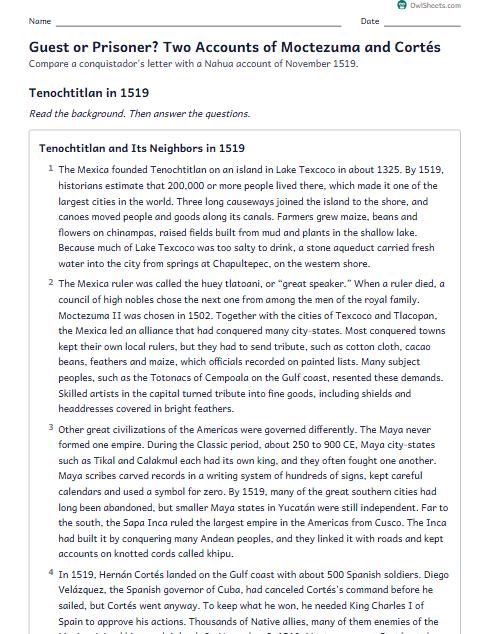
Guest or Prisoner? Two Accounts of Moctezuma and Cortés
Compare a conquistador's letter with a Nahua account of November 1519.
Tenochtitlan in 1519
Read the background. Then answer the questions.
Tenochtitlan and Its Neighbors in 1519
1The Mexica founded Tenochtitlan on an island in Lake Texcoco in about 1325. By 1519, historians estimate that 200,000 or more people lived there, which made it one of the largest cities in the world. Three long causeways joined the island to the shore, and canoes moved people and goods along its canals. Farmers grew maize, beans and flowers on chinampas, raised fields built from mud and plants in the shallow lake. Because much of Lake Texcoco was too salty to drink, a stone aqueduct carried fresh water into the city from springs at Chapultepec, on the western shore.
2The Mexica ruler was called the huey tlatoani, or “great speaker.” When a ruler died, a council of high nobles chose the next one from among the men of the royal family. Moctezuma II was chosen in 1502. Together with the cities of Texcoco and Tlacopan, the Mexica led an alliance that had conquered many city-states. Most conquered towns kept their own local rulers, but they had to send tribute, such as cotton cloth, cacao beans, feathers and maize, which officials recorded on painted lists. Many subject peoples, such as the Totonacs of Cempoala on the Gulf coast, resented these demands. Skilled artists in the capital turned tribute into fine goods, including shields and headdresses covered in bright feathers.
3Other great civilizations of the Americas were governed differently. The Maya never formed one empire. During the Classic period, about 250 to 900 CE, Maya city-states such as Tikal and Calakmul each had its own king, and they often fought one another. Maya scribes carved records in a writing system of hundreds of signs, kept careful calendars and used a symbol for zero. By 1519, many of the great southern cities had long been abandoned, but smaller Maya states in Yucatán were still independent. Far to the south, the Sapa Inca ruled the largest empire in the Americas from Cusco. The Inca had built it by conquering many Andean peoples, and they linked it with roads and kept accounts on knotted cords called khipu.
4In 1519, Hernán Cortés landed on the Gulf coast with about 500 Spanish soldiers. Diego Velázquez, the Spanish governor of Cuba, had canceled Cortés's command before he sailed, but Cortés went anyway. To keep what he won, he needed King Charles I of Spain to approve his actions. Thousands of Native allies, many of them enemies of the Mexica, joined his march inland. On November 8, 1519, Moctezuma met Cortés at the edge of Tenochtitlan. Two accounts of that day and the days after it follow.
- A. The people of Tenochtitlan voted for him in a city election.
- B. He took the throne because he was the last ruler's oldest son.
- C. A council of high nobles picked him from the royal family.
- D. The rulers of the conquered towns chose him at a meeting.
- A. It cut off the main supply of fresh drinking water for the island.
- B. It blocked the causeways that joined the island to the shore.
- C. It flooded the chinampas, so farmers could no longer grow maize.
- D. It drained the canals, so canoes could no longer carry goods.
The preview shows the first questions. Unlock the worksheet to see all of it.
Related worksheets
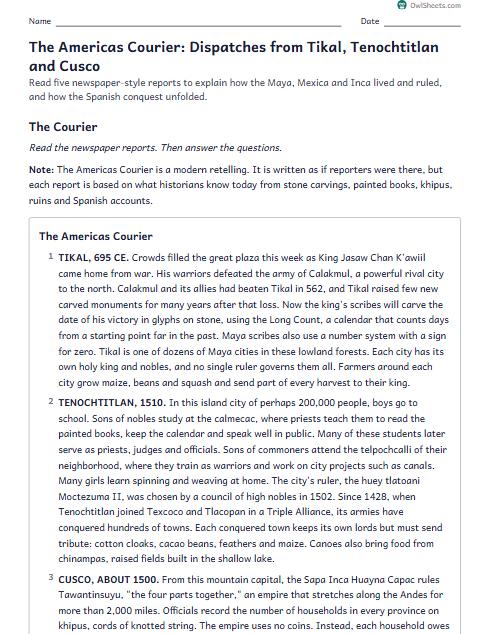
The Americas Courier: Dispatches from Tikal, Tenochtitlan and Cusco
Grade 7 · HIS.7.6
15 questionsPremium
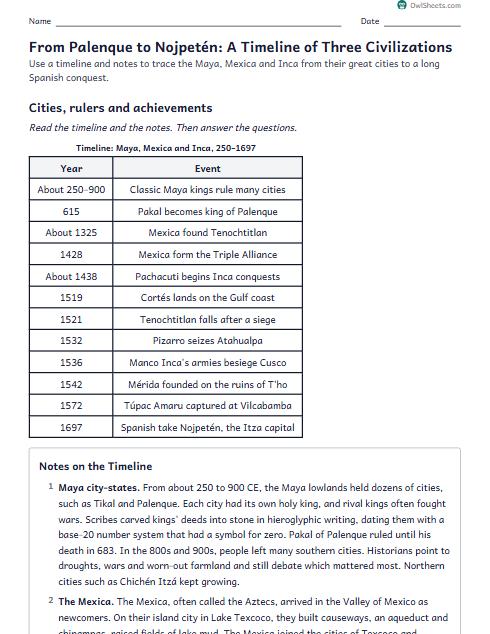
From Palenque to Nojpetén: A Timeline of Three Civilizations
Grade 7 · HIS.7.6
15 questionsPremium
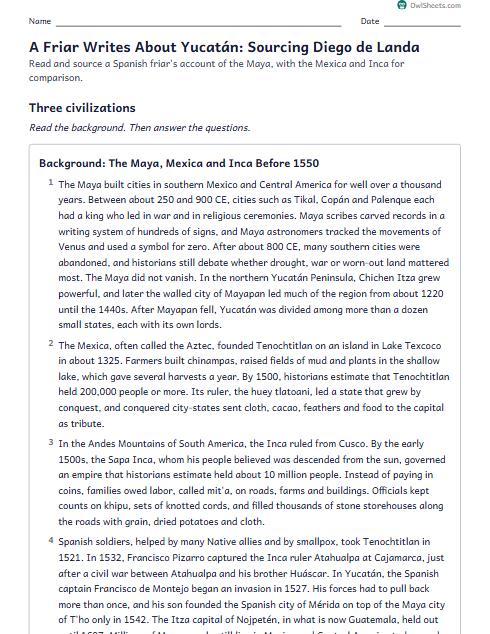
A Friar Writes About Yucatán: Sourcing Diego de Landa
Grade 7 · HIS.7.6
16 questionsPremium
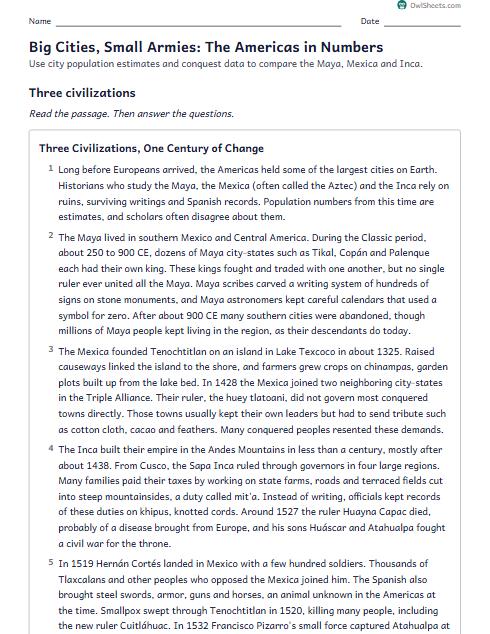
Big Cities, Small Armies: The Americas in Numbers
Grade 7 · HIS.7.6
13 questionsPremium
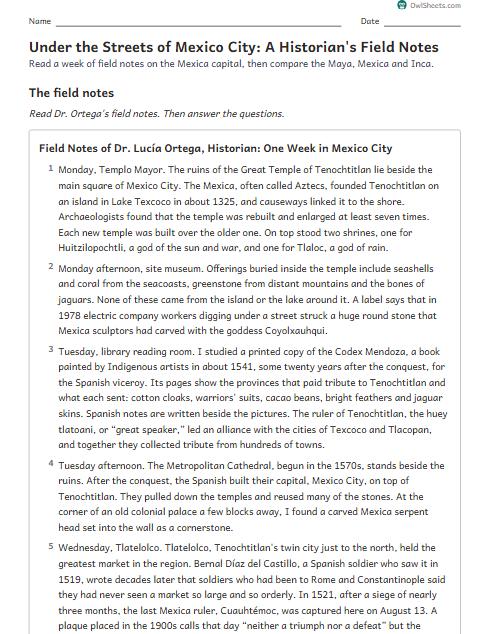
Under the Streets of Mexico City: A Historian's Field Notes
Grade 7 · HIS.7.6
12 questionsPremium
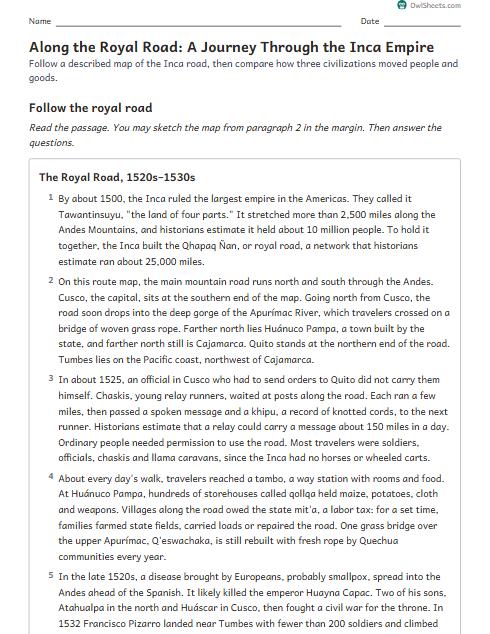
Along the Royal Road: A Journey Through the Inca Empire
Grade 7 · HIS.7.6
12 questionsPremium