Grade 6 · Social StudiesCIV.6.1Premium
After the Brothers Fell: A Debate in Syracuse, 466 BCE
Grade 6 civics: an imagined citizens' meeting in Syracuse about 466 BCE weighs monarchy, oligarchy, Athenian direct democracy and the Roman Republic.
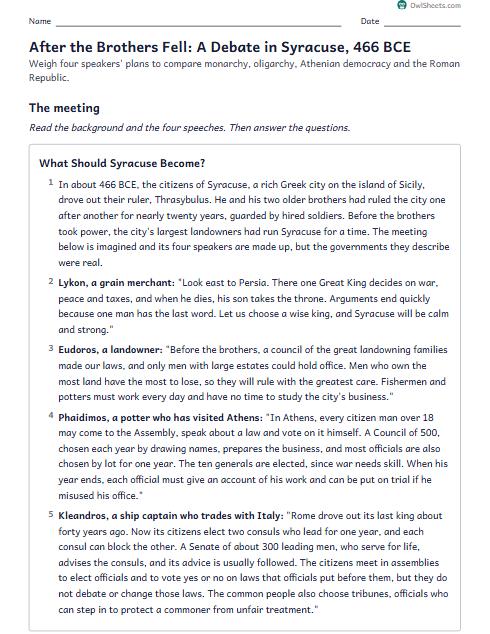
Preview
OwlSheets.com
After the Brothers Fell: A Debate in Syracuse, 466 BCE
Weigh four speakers' plans to compare monarchy, oligarchy, Athenian democracy and the Roman Republic.
The meeting
Read the background and the four speeches. Then answer the questions.
What Should Syracuse Become?
1In about 466 BCE, the citizens of Syracuse, a rich Greek city on the island of Sicily, drove out their ruler, Thrasybulus. He and his two older brothers had ruled the city one after another for nearly twenty years, guarded by hired soldiers. Before the brothers took power, the city's largest landowners had run Syracuse for a time. The meeting below is imagined and its four speakers are made up, but the governments they describe were real.
2Lykon, a grain merchant: "Look east to Persia. There one Great King decides on war, peace and taxes, and when he dies, his son takes the throne. Arguments end quickly because one man has the last word. Let us choose a wise king, and Syracuse will be calm and strong."
3Eudoros, a landowner: "Before the brothers, a council of the great landowning families made our laws, and only men with large estates could hold office. Men who own the most land have the most to lose, so they will rule with the greatest care. Fishermen and potters must work every day and have no time to study the city's business."
4Phaidimos, a potter who has visited Athens: "In Athens, every citizen man over 18 may come to the Assembly, speak about a law and vote on it himself. A Council of 500, chosen each year by drawing names, prepares the business, and most officials are also chosen by lot for one year. The ten generals are elected, since war needs skill. When his year ends, each official must give an account of his work and can be put on trial if he misused his office."
5Kleandros, a ship captain who trades with Italy: "Rome drove out its last king about forty years ago. Now its citizens elect two consuls who lead for one year, and each consul can block the other. A Senate of about 300 leading men, who serve for life, advises the consuls, and its advice is usually followed. The citizens meet in assemblies to elect officials and to vote yes or no on laws that officials put before them, but they do not debate or change those laws. The common people also choose tribunes, officials who can step in to protect a commoner from unfair treatment."
- A. They had just lived for years under rulers backed by hired guards.
- B. They had never heard of any city that was ruled by a single king.
- C. They had always chosen their leaders by drawing names, as Athens did.
- D. They knew Persia's Great King had just been driven off his throne.
| Monarchy (Lykon) | Oligarchy (Eudoros) | Athenian democracy (Phaidimos) | Roman Republic (Kleandros) |
|---|---|---|---|
The preview shows the first questions. Unlock the worksheet to see all of it.
Related worksheets
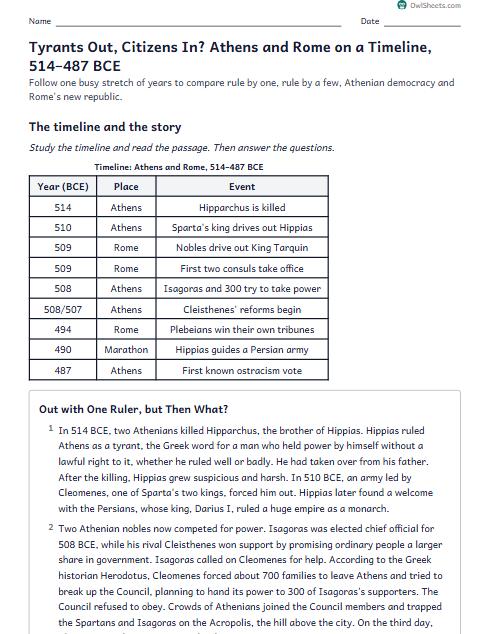
Tyrants Out, Citizens In? Athens and Rome on a Timeline, 514–487 BCE
Grade 6 · CIV.6.1
15 questionsPremium
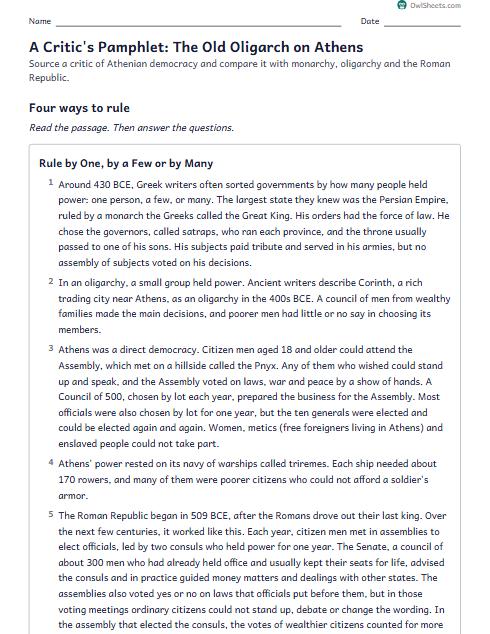
A Critic's Pamphlet: The Old Oligarch on Athens
Grade 6 · CIV.6.1
14 questionsPremium
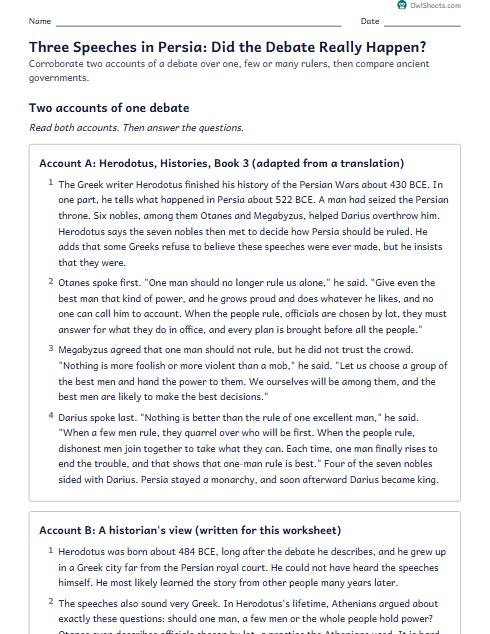
Three Speeches in Persia: Did the Debate Really Happen?
Grade 6 · CIV.6.1
14 questionsPremium
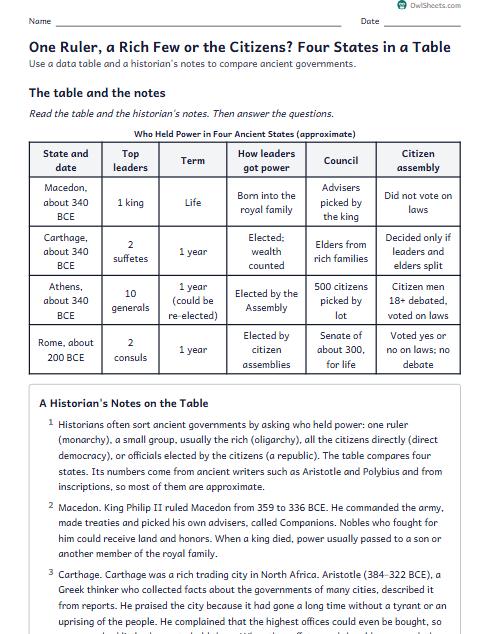
One Ruler, a Rich Few or the Citizens? Four States in a Table
Grade 6 · CIV.6.1
13 questionsPremium
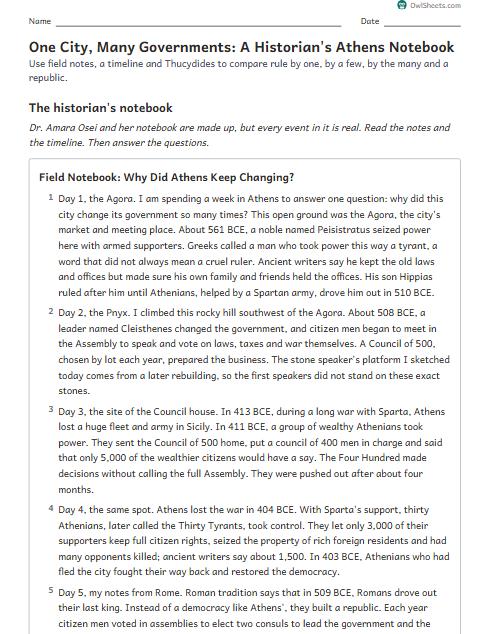
One City, Many Governments: A Historian's Athens Notebook
Grade 6 · CIV.6.1
12 questionsPremium
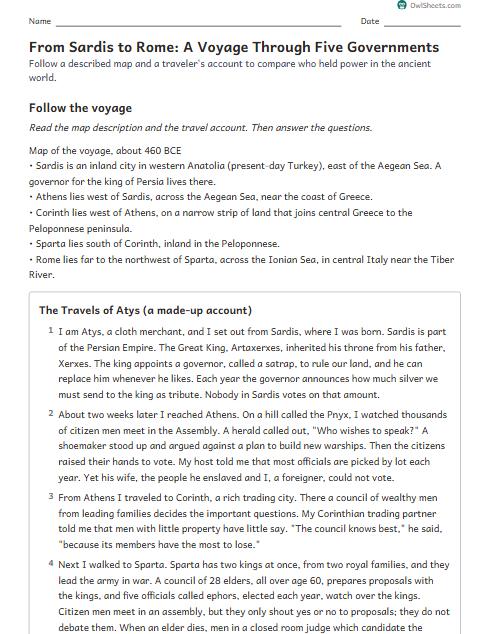
From Sardis to Rome: A Voyage Through Five Governments
Grade 6 · CIV.6.1
11 questionsPremium