Grade 6 · Social StudiesHIS.6.7Premium
No Emperor in the West: A Ravenna News Report, 476 CE
Grade 6 ancient Rome: a news report from Ravenna in 476 CE traces Rome from republic to empire, its law and engineering, and why the West lost its emperors.
Preview
OwlSheets.com
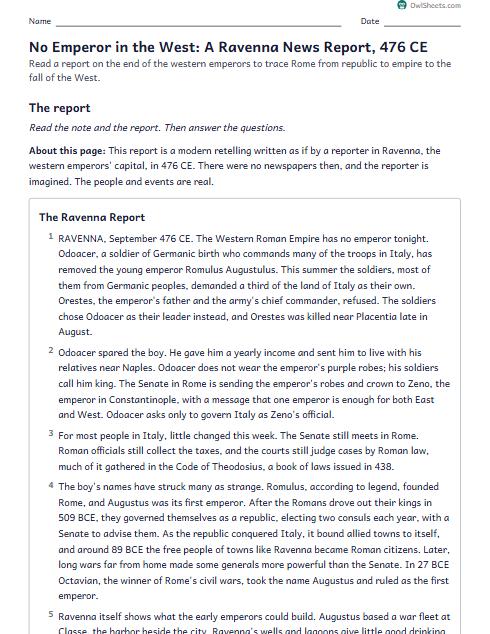
No Emperor in the West: A Ravenna News Report, 476 CE
Read a report on the end of the western emperors to trace Rome from republic to empire to the fall of the West.
The report
Read the note and the report. Then answer the questions.
The Ravenna Report
1RAVENNA, September 476 CE. The Western Roman Empire has no emperor tonight. Odoacer, a soldier of Germanic birth who commands many of the troops in Italy, has removed the young emperor Romulus Augustulus. This summer the soldiers, most of them from Germanic peoples, demanded a third of the land of Italy as their own. Orestes, the emperor's father and the army's chief commander, refused. The soldiers chose Odoacer as their leader instead, and Orestes was killed near Placentia late in August.
2Odoacer spared the boy. He gave him a yearly income and sent him to live with his relatives near Naples. Odoacer does not wear the emperor's purple robes; his soldiers call him king. The Senate in Rome is sending the emperor's robes and crown to Zeno, the emperor in Constantinople, with a message that one emperor is enough for both East and West. Odoacer asks only to govern Italy as Zeno's official.
3For most people in Italy, little changed this week. The Senate still meets in Rome. Roman officials still collect the taxes, and the courts still judge cases by Roman law, much of it gathered in the Code of Theodosius, a book of laws issued in 438.
4The boy's names have struck many as strange. Romulus, according to legend, founded Rome, and Augustus was its first emperor. After the Romans drove out their kings in 509 BCE, they governed themselves as a republic, electing two consuls each year, with a Senate to advise them. As the republic conquered Italy, it bound allied towns to itself, and around 89 BCE the free people of towns like Ravenna became Roman citizens. Later, long wars far from home made some generals more powerful than the Senate. In 27 BCE Octavian, the winner of Rome's civil wars, took the name Augustus and ruled as the first emperor.
5Ravenna itself shows what the early emperors could build. Augustus based a war fleet at Classe, the harbor beside the city. Ravenna's wells and lagoons give little good drinking water, and the emperor Trajan had an aqueduct built to carry water to the city from far away.
6Since then, the West has grown weaker. In 402, Emperor Honorius moved his court here from Milan. Ravenna is ringed by marshes, and ships can bring supplies to Classe from the sea. In 439, the Vandals captured Carthage, and with it the rich grain and tax lands of North Africa. Emperors came to depend more and more on Germanic soldiers, and the generals who commanded them made and unmade emperors.
- A. The army had shrunk to a few guards who protected Ravenna.
- B. Most soldiers were Roman citizens drafted from farms near Rome.
- C. The Senate paid and commanded the soldiers, as in the republic.
- D. The soldiers' loyalty depended on the rewards they were given.
The preview shows the first questions. Unlock the worksheet to see all of it.
Related worksheets
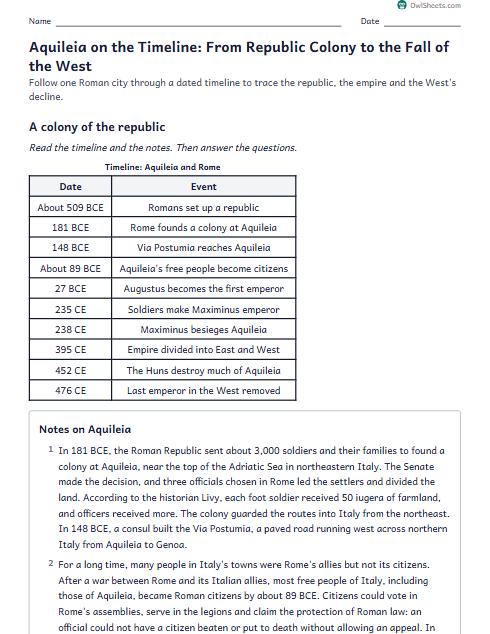
Aquileia on the Timeline: From Republic Colony to the Fall of the West
Grade 6 · HIS.6.7
15 questionsPremium
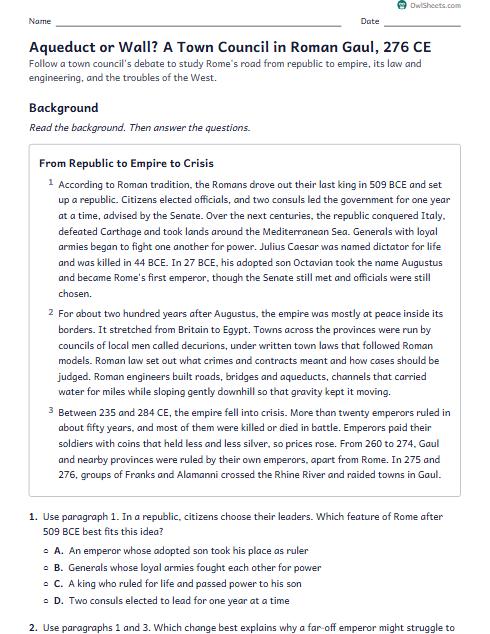
Aqueduct or Wall? A Town Council in Roman Gaul, 276 CE
Grade 6 · HIS.6.7
14 questionsPremium
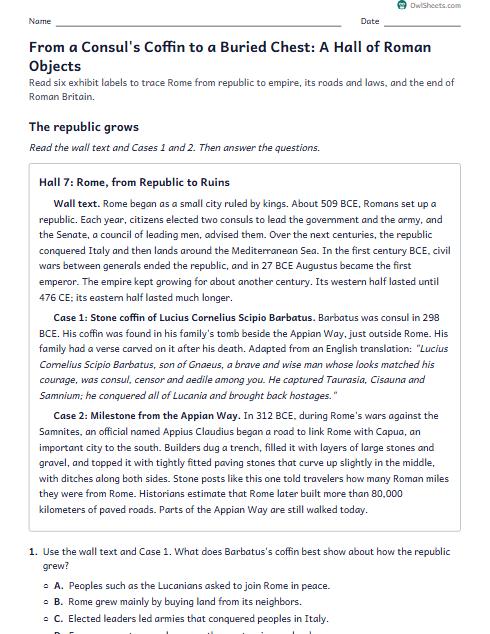
From a Consul's Coffin to a Buried Chest: A Hall of Roman Objects
Grade 6 · HIS.6.7
15 questionsPremium
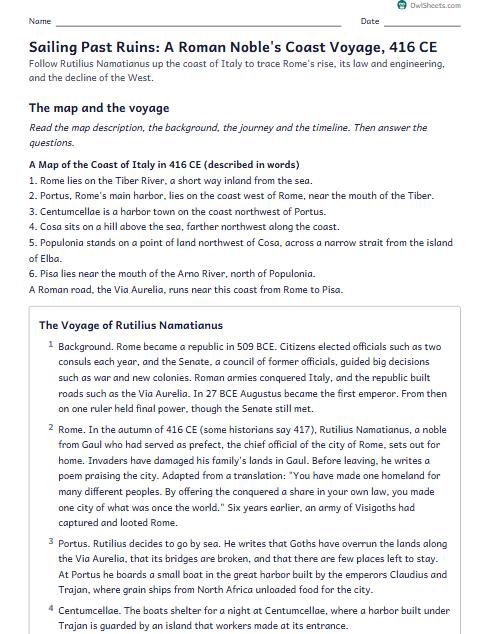
Sailing Past Ruins: A Roman Noble's Coast Voyage, 416 CE
Grade 6 · HIS.6.7
14 questionsPremium
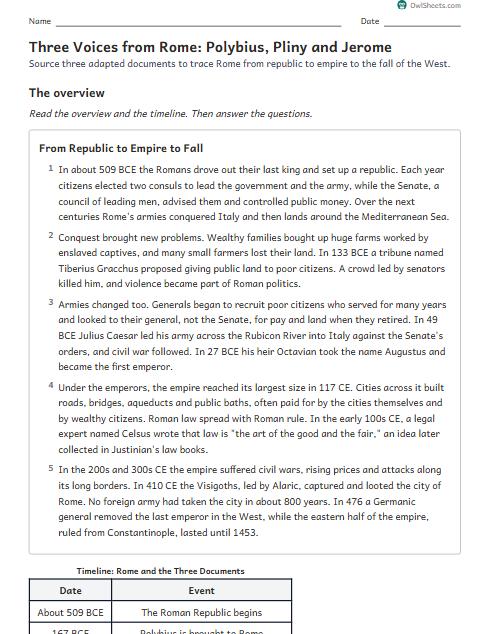
Three Voices from Rome: Polybius, Pliny and Jerome
Grade 6 · HIS.6.7
12 questionsPremium
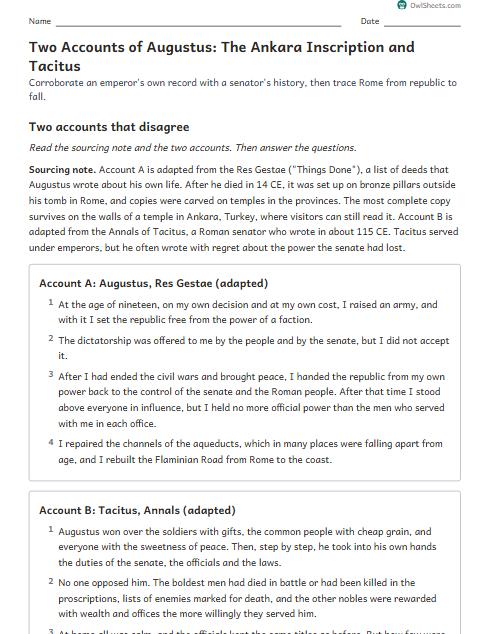
Two Accounts of Augustus: The Ankara Inscription and Tacitus
Grade 6 · HIS.6.7
10 questionsFree