Grade 8 · Social StudiesGEO.8.3Premium
Flour, Falls and Newcomers: Minnesota in the Census, 1870–1890
Grade 8 census practice: Minnesota, Minneapolis and St. Paul counts and 1890 birthplace data show population growth, urbanization and immigration.
Preview
OwlSheets.com
Flour, Falls and Newcomers: Minnesota in the Census, 1870–1890
Use census tables for Minnesota, Minneapolis and St. Paul to analyze growth, city growth and immigration.
Cities at the falls
Read the passage and the first table. Then answer the questions.
The Falls and the Wheat
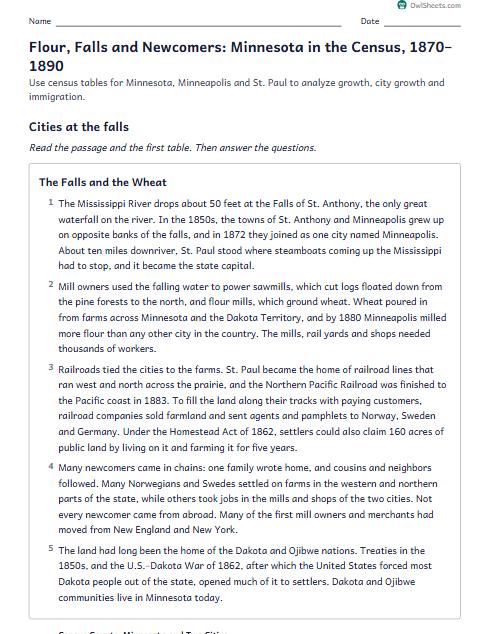
1The Mississippi River drops about 50 feet at the Falls of St. Anthony, the only great waterfall on the river. In the 1850s, the towns of St. Anthony and Minneapolis grew up on opposite banks of the falls, and in 1872 they joined as one city named Minneapolis. About ten miles downriver, St. Paul stood where steamboats coming up the Mississippi had to stop, and it became the state capital.
2Mill owners used the falling water to power sawmills, which cut logs floated down from the pine forests to the north, and flour mills, which ground wheat. Wheat poured in from farms across Minnesota and the Dakota Territory, and by 1880 Minneapolis milled more flour than any other city in the country. The mills, rail yards and shops needed thousands of workers.
3Railroads tied the cities to the farms. St. Paul became the home of railroad lines that ran west and north across the prairie, and the Northern Pacific Railroad was finished to the Pacific coast in 1883. To fill the land along their tracks with paying customers, railroad companies sold farmland and sent agents and pamphlets to Norway, Sweden and Germany. Under the Homestead Act of 1862, settlers could also claim 160 acres of public land by living on it and farming it for five years.
4Many newcomers came in chains: one family wrote home, and cousins and neighbors followed. Many Norwegians and Swedes settled on farms in the western and northern parts of the state, while others took jobs in the mills and shops of the two cities. Not every newcomer came from abroad. Many of the first mill owners and merchants had moved from New England and New York.
5The land had long been the home of the Dakota and Ojibwe nations. Treaties in the 1850s, and the U.S.–Dakota War of 1862, after which the United States forced most Dakota people out of the state, opened much of it to settlers. Dakota and Ojibwe communities live in Minnesota today.
| Year | Minnesota | Minneapolis | St. Paul |
|---|---|---|---|
| 1870 | 439,706 | 13,066 | 20,030 |
| 1880 | 780,773 | 46,887 | 41,473 |
| 1890 | 1,310,283 | 164,738 | 133,156 |
From 1880 to 1890, Minneapolis gained people. Minnesota's population in 1890 was about times its population in 1870.
The preview shows the first questions. Unlock the worksheet to see all of it.
Related worksheets
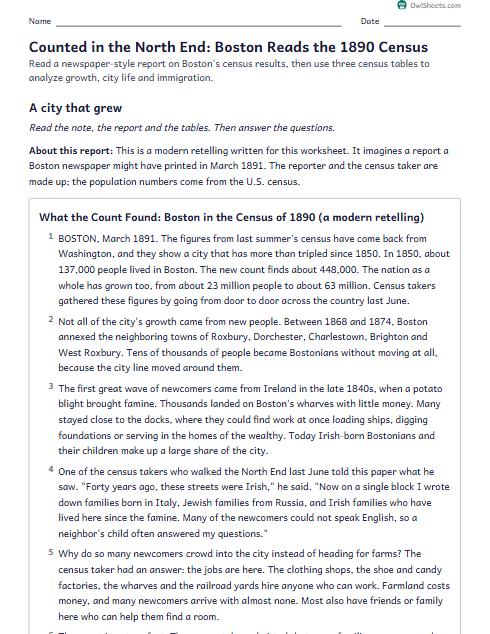
Counted in the North End: Boston Reads the 1890 Census
Grade 8 · GEO.8.3
14 questionsPremium
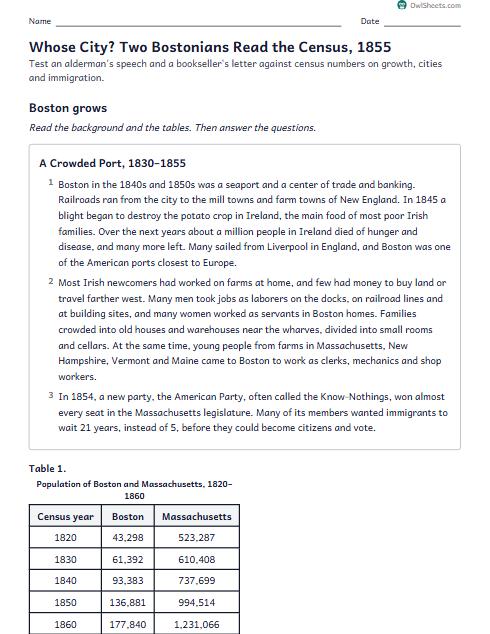
Whose City? Two Bostonians Read the Census, 1855
Grade 8 · GEO.8.3
13 questionsPremium
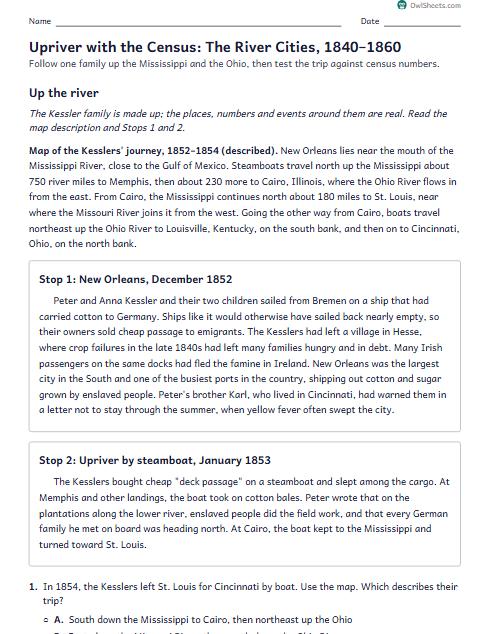
Upriver with the Census: The River Cities, 1840–1860
Grade 8 · GEO.8.3
14 questionsPremium
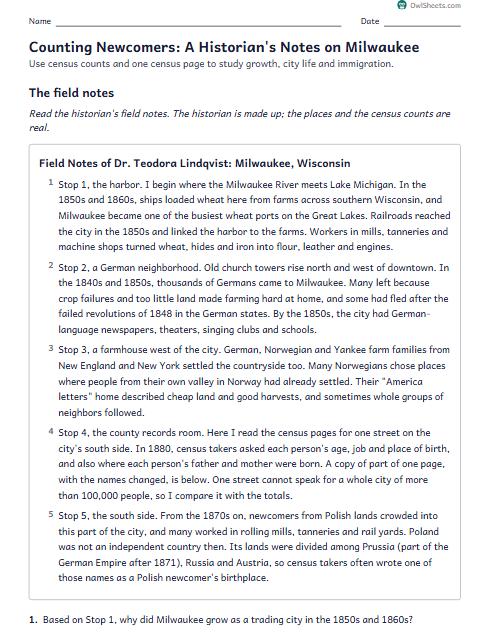
Counting Newcomers: A Historian's Notes on Milwaukee
Grade 8 · GEO.8.3
14 questionsPremium
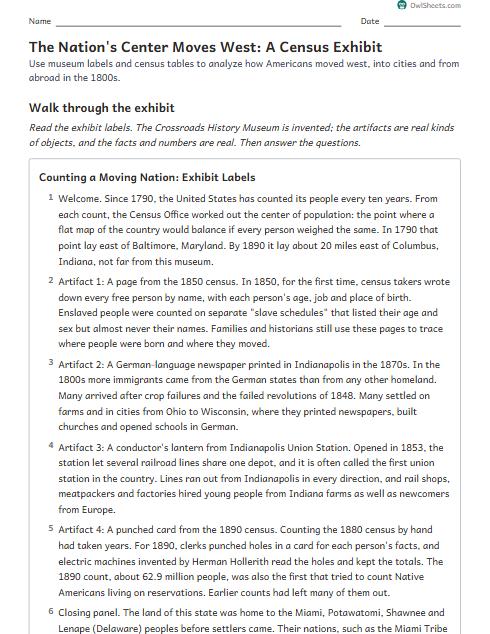
The Nation's Center Moves West: A Census Exhibit
Grade 8 · GEO.8.3
11 questionsPremium
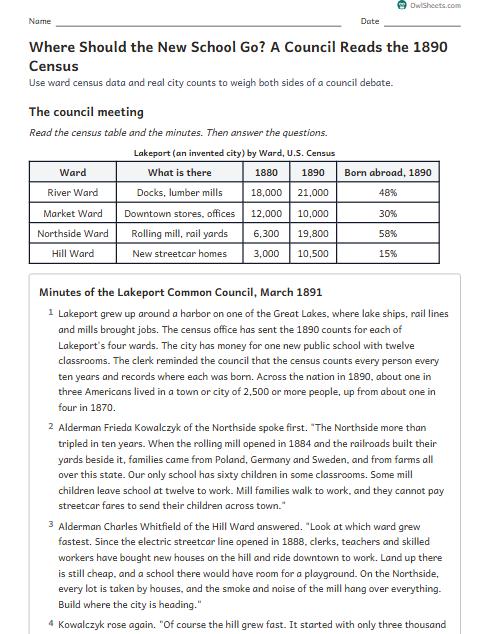
Where Should the New School Go? A Council Reads the 1890 Census
Grade 8 · GEO.8.3
10 questionsPremium