Grade 8 · Social StudiesGEO.8.3Premium
Upriver with the Census: The River Cities, 1840–1860
Grade 8: follow a German family from New Orleans to Cincinnati and use census data to analyze city growth, urbanization and immigration from 1840 to 1860.
Preview
OwlSheets.com
Upriver with the Census: The River Cities, 1840–1860
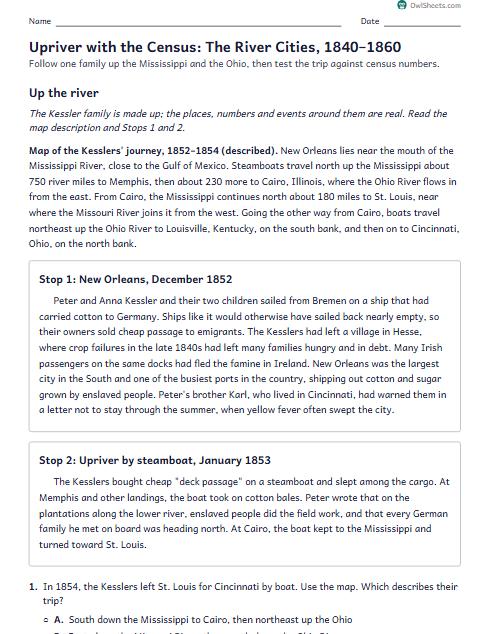
Follow one family up the Mississippi and the Ohio, then test the trip against census numbers.
Up the river
The Kessler family is made up; the places, numbers and events around them are real. Read the map description and Stops 1 and 2.
Stop 1: New Orleans, December 1852
Peter and Anna Kessler and their two children sailed from Bremen on a ship that had carried cotton to Germany. Ships like it would otherwise have sailed back nearly empty, so their owners sold cheap passage to emigrants. The Kesslers had left a village in Hesse, where crop failures in the late 1840s had left many families hungry and in debt. Many Irish passengers on the same docks had fled the famine in Ireland. New Orleans was the largest city in the South and one of the busiest ports in the country, shipping out cotton and sugar grown by enslaved people. Peter's brother Karl, who lived in Cincinnati, had warned them in a letter not to stay through the summer, when yellow fever often swept the city.
Stop 2: Upriver by steamboat, January 1853
The Kesslers bought cheap "deck passage" on a steamboat and slept among the cargo. At Memphis and other landings, the boat took on cotton bales. Peter wrote that on the plantations along the lower river, enslaved people did the field work, and that every German family he met on board was heading north. At Cairo, the boat kept to the Mississippi and turned toward St. Louis.
The preview shows the first questions. Unlock the worksheet to see all of it.
Related worksheets
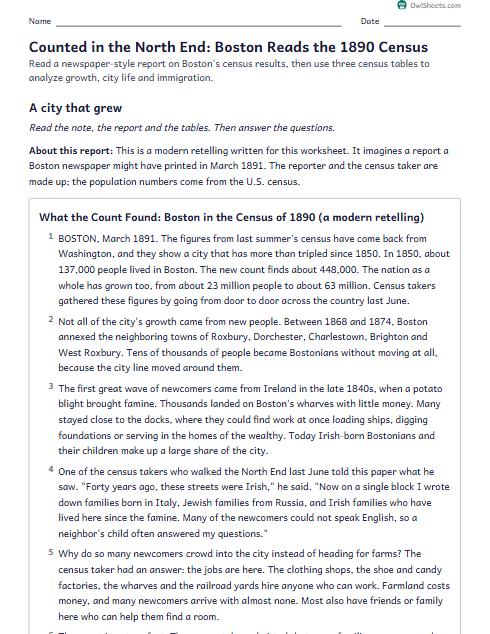
Counted in the North End: Boston Reads the 1890 Census
Grade 8 · GEO.8.3
14 questionsPremium
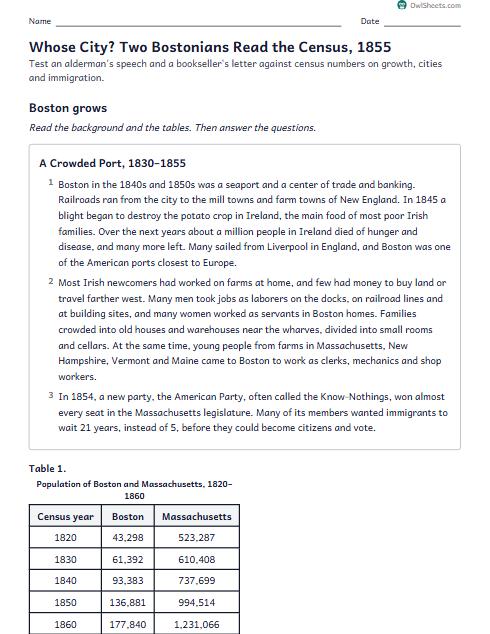
Whose City? Two Bostonians Read the Census, 1855
Grade 8 · GEO.8.3
13 questionsPremium
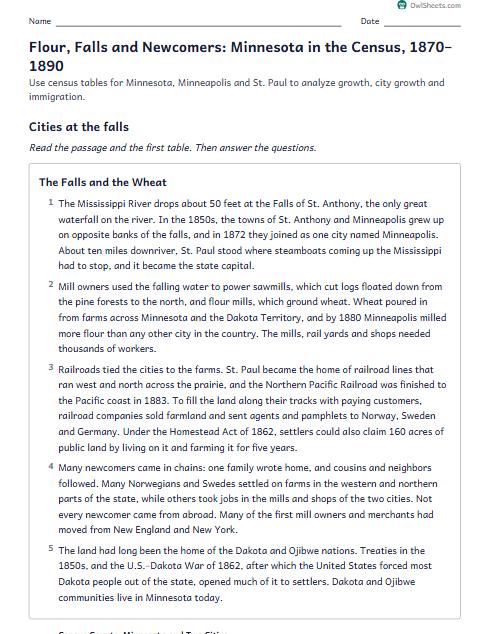
Flour, Falls and Newcomers: Minnesota in the Census, 1870–1890
Grade 8 · GEO.8.3
14 questionsPremium
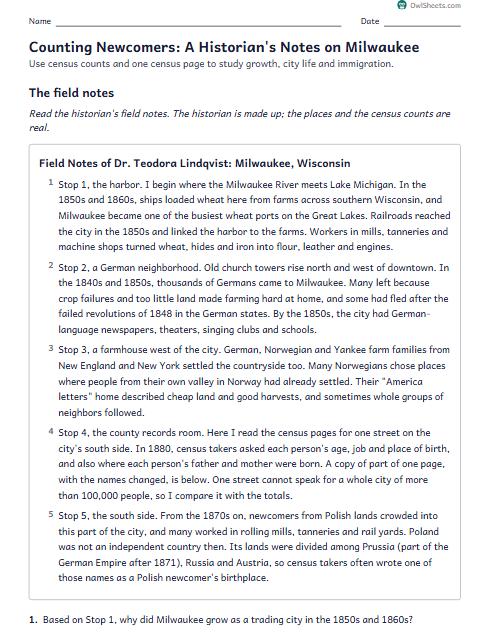
Counting Newcomers: A Historian's Notes on Milwaukee
Grade 8 · GEO.8.3
14 questionsPremium
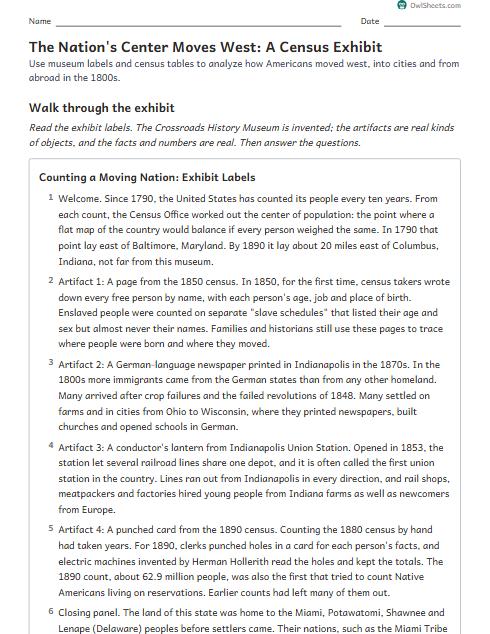
The Nation's Center Moves West: A Census Exhibit
Grade 8 · GEO.8.3
11 questionsPremium
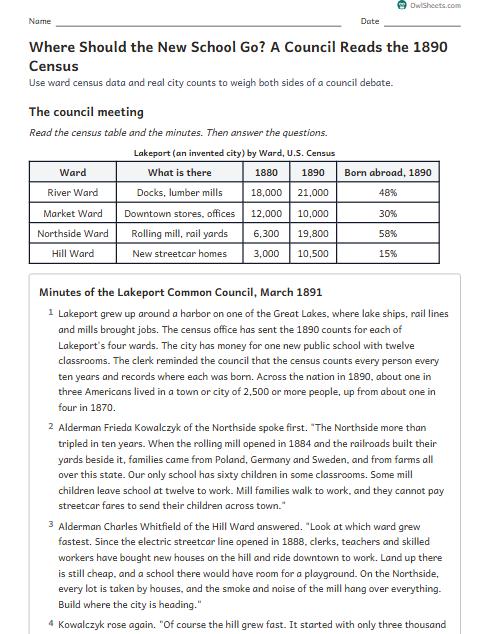
Where Should the New School Go? A Council Reads the 1890 Census
Grade 8 · GEO.8.3
10 questionsPremium