Grade 8 · Social StudiesCIV.8.2Premium
The Right to Remain Silent: Reading the Miranda Opinion
Grade 8 civics: source an adapted excerpt of the Miranda v. Arizona opinion, apply its Fifth and Sixth Amendment rules and trace judicial review to 2000.
Preview
OwlSheets.com
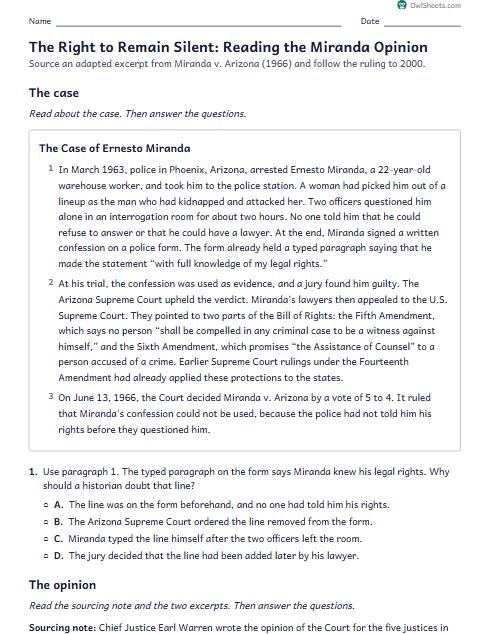
The Right to Remain Silent: Reading the Miranda Opinion
Source an adapted excerpt from Miranda v. Arizona (1966) and follow the ruling to 2000.
The case
Read about the case. Then answer the questions.
The Case of Ernesto Miranda
1In March 1963, police in Phoenix, Arizona, arrested Ernesto Miranda, a 22-year-old warehouse worker, and took him to the police station. A woman had picked him out of a lineup as the man who had kidnapped and attacked her. Two officers questioned him alone in an interrogation room for about two hours. No one told him that he could refuse to answer or that he could have a lawyer. At the end, Miranda signed a written confession on a police form. The form already held a typed paragraph saying that he made the statement “with full knowledge of my legal rights.”
2At his trial, the confession was used as evidence, and a jury found him guilty. The Arizona Supreme Court upheld the verdict. Miranda's lawyers then appealed to the U.S. Supreme Court. They pointed to two parts of the Bill of Rights: the Fifth Amendment, which says no person “shall be compelled in any criminal case to be a witness against himself,” and the Sixth Amendment, which promises “the Assistance of Counsel” to a person accused of a crime. Earlier Supreme Court rulings under the Fourteenth Amendment had already applied these protections to the states.
3On June 13, 1966, the Court decided Miranda v. Arizona by a vote of 5 to 4. It ruled that Miranda's confession could not be used, because the police had not told him his rights before they questioned him.
- A. The line was on the form beforehand, and no one had told him his rights.
- B. The Arizona Supreme Court ordered the line removed from the form.
- C. Miranda typed the line himself after the two officers left the room.
- D. The jury decided that the line had been added later by his lawyer.
The preview shows the first questions. Unlock the worksheet to see all of it.
Related worksheets
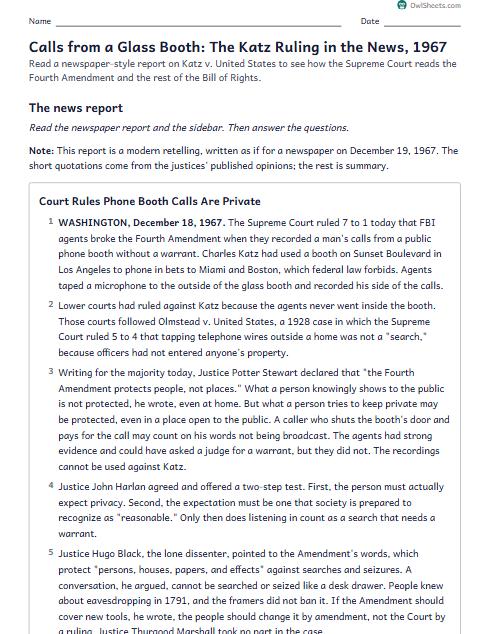
Calls from a Glass Booth: The Katz Ruling in the News, 1967
Grade 8 · CIV.8.2
15 questionsPremium
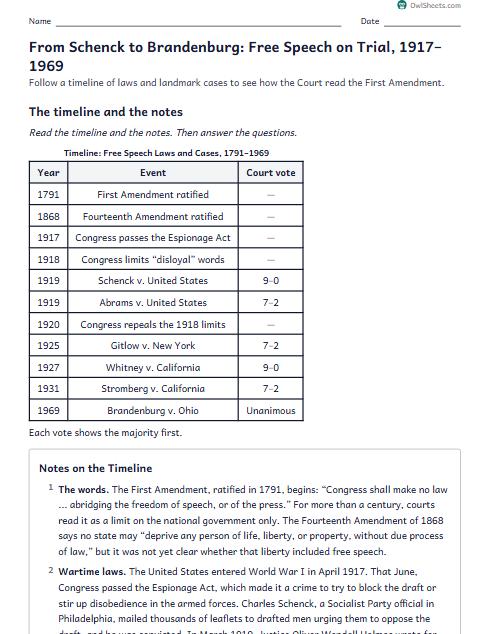
From Schenck to Brandenburg: Free Speech on Trial, 1917–1969
Grade 8 · CIV.8.2
14 questionsPremium
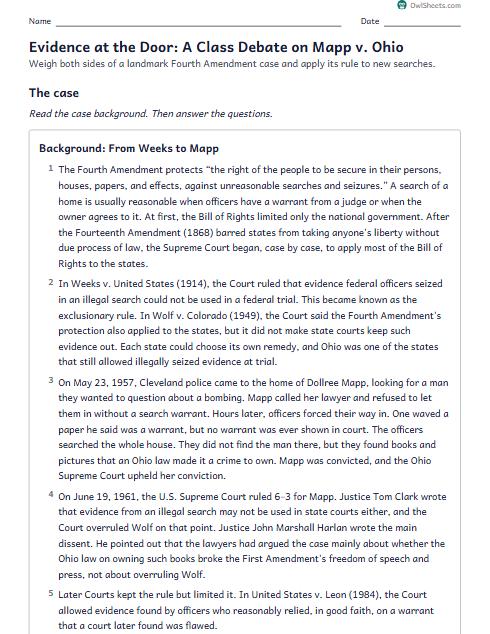
Evidence at the Door: A Class Debate on Mapp v. Ohio
Grade 8 · CIV.8.2
14 questionsPremium
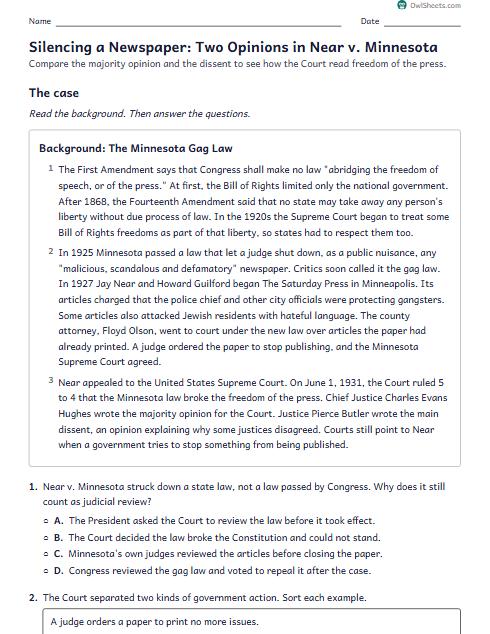
Silencing a Newspaper: Two Opinions in Near v. Minnesota
Grade 8 · CIV.8.2
13 questionsPremium
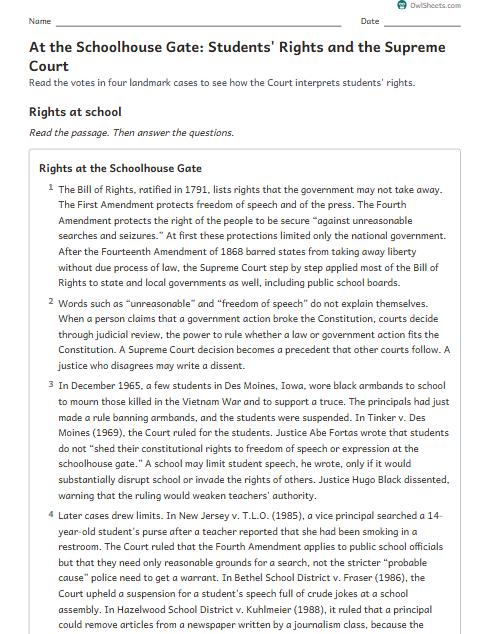
At the Schoolhouse Gate: Students' Rights and the Supreme Court
Grade 8 · CIV.8.2
11 questionsPremium
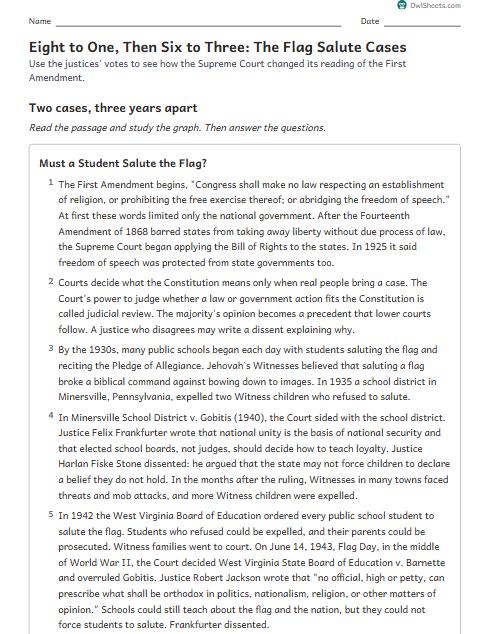
Eight to One, Then Six to Three: The Flag Salute Cases
Grade 8 · CIV.8.2
10 questionsPremium