Grade 7 · Social StudiesGEO.7.2Premium
Wild Herds on the Pampas: A Buenos Aires Council Debates, 1715
Grade 7 geography: an imagined 1715 Buenos Aires council debate on wild cattle shows how the Columbian Exchange changed the pampas and its peoples.
Preview
OwlSheets.com
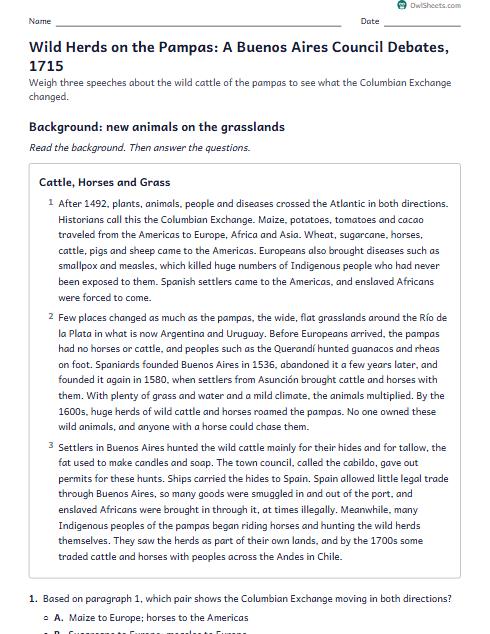
Wild Herds on the Pampas: A Buenos Aires Council Debates, 1715
Weigh three speeches about the wild cattle of the pampas to see what the Columbian Exchange changed.
Background: new animals on the grasslands
Read the background. Then answer the questions.
Cattle, Horses and Grass
1After 1492, plants, animals, people and diseases crossed the Atlantic in both directions. Historians call this the Columbian Exchange. Maize, potatoes, tomatoes and cacao traveled from the Americas to Europe, Africa and Asia. Wheat, sugarcane, horses, cattle, pigs and sheep came to the Americas. Europeans also brought diseases such as smallpox and measles, which killed huge numbers of Indigenous people who had never been exposed to them. Spanish settlers came to the Americas, and enslaved Africans were forced to come.
2Few places changed as much as the pampas, the wide, flat grasslands around the Río de la Plata in what is now Argentina and Uruguay. Before Europeans arrived, the pampas had no horses or cattle, and peoples such as the Querandí hunted guanacos and rheas on foot. Spaniards founded Buenos Aires in 1536, abandoned it a few years later, and founded it again in 1580, when settlers from Asunción brought cattle and horses with them. With plenty of grass and water and a mild climate, the animals multiplied. By the 1600s, huge herds of wild cattle and horses roamed the pampas. No one owned these wild animals, and anyone with a horse could chase them.
3Settlers in Buenos Aires hunted the wild cattle mainly for their hides and for tallow, the fat used to make candles and soap. The town council, called the cabildo, gave out permits for these hunts. Ships carried the hides to Spain. Spain allowed little legal trade through Buenos Aires, so many goods were smuggled in and out of the port, and enslaved Africans were brought in through it, at times illegally. Meanwhile, many Indigenous peoples of the pampas began riding horses and hunting the wild herds themselves. They saw the herds as part of their own lands, and by the 1700s some traded cattle and horses with peoples across the Andes in Chile.
- A. Maize to Europe; horses to the Americas
- B. Sugarcane to Europe; measles to Europe
- C. Wheat to the Americas; cattle to the Americas
- D. Potatoes to Europe; cacao to Europe
- A. The grasslands gave them plenty of grass, water and mild weather.
- B. The Querandí had raised them in herds before 1536.
- C. Spanish ships brought thousands of new animals each year.
- D. Settlers fed them grain from their wheat farms each winter.
The preview shows the first questions. Unlock the worksheet to see all of it.
Related worksheets
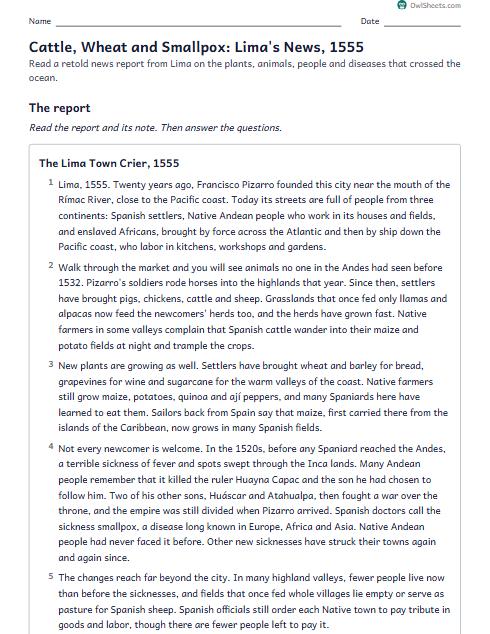
Cattle, Wheat and Smallpox: Lima's News, 1555
Grade 7 · GEO.7.2
13 questionsPremium
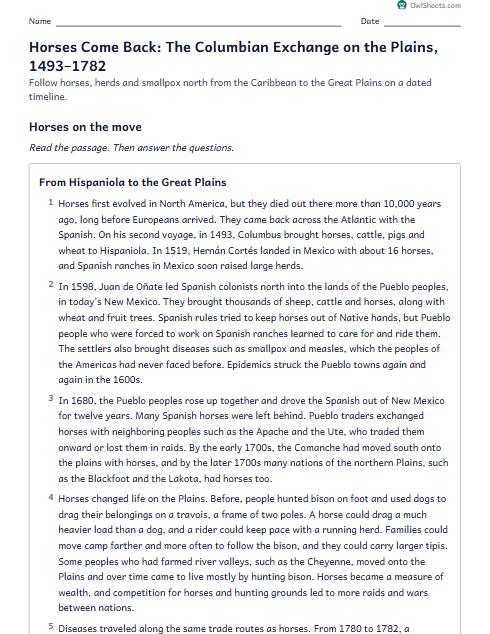
Horses Come Back: The Columbian Exchange on the Plains, 1493–1782
Grade 7 · GEO.7.2
14 questionsPremium
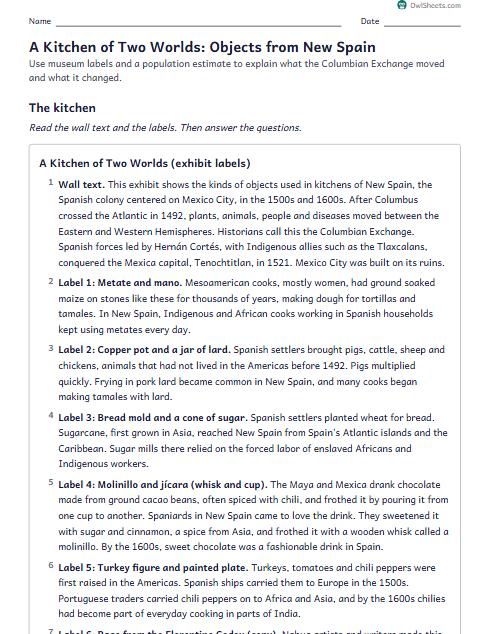
A Kitchen of Two Worlds: Objects from New Spain
Grade 7 · GEO.7.2
14 questionsPremium
From Salvador to Istanbul: A Voyage Through the Columbian Exchange, 1692
Grade 7 · GEO.7.2
13 questionsPremium
From Andean Fields to Prussian Farms: The Potato in Two Sources
Grade 7 · GEO.7.2
12 questionsFree
Gold, Sugar and Smallpox: Two Accounts of Hispaniola
Grade 7 · GEO.7.2
12 questionsPremium