Grade 7 · Social StudiesGEO.7.2Premium
Cattle, Wheat and Smallpox: Lima's News, 1555
Grade 7 geography: a retold 1555 Lima news report and a valley count show how the Columbian Exchange brought animals, crops, people and smallpox to Peru.
Preview
OwlSheets.com
Cattle, Wheat and Smallpox: Lima's News, 1555
Read a retold news report from Lima on the plants, animals, people and diseases that crossed the ocean.
The report
Read the report and its note. Then answer the questions.
The Lima Town Crier, 1555
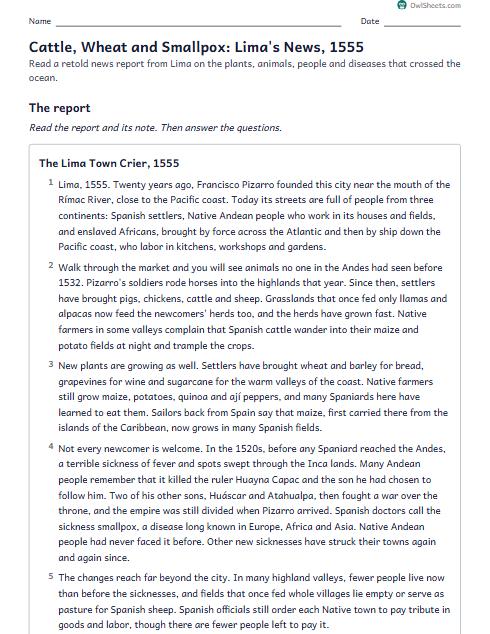
1Lima, 1555. Twenty years ago, Francisco Pizarro founded this city near the mouth of the Rímac River, close to the Pacific coast. Today its streets are full of people from three continents: Spanish settlers, Native Andean people who work in its houses and fields, and enslaved Africans, brought by force across the Atlantic and then by ship down the Pacific coast, who labor in kitchens, workshops and gardens.
2Walk through the market and you will see animals no one in the Andes had seen before 1532. Pizarro's soldiers rode horses into the highlands that year. Since then, settlers have brought pigs, chickens, cattle and sheep. Grasslands that once fed only llamas and alpacas now feed the newcomers' herds too, and the herds have grown fast. Native farmers in some valleys complain that Spanish cattle wander into their maize and potato fields at night and trample the crops.
3New plants are growing as well. Settlers have brought wheat and barley for bread, grapevines for wine and sugarcane for the warm valleys of the coast. Native farmers still grow maize, potatoes, quinoa and ají peppers, and many Spaniards here have learned to eat them. Sailors back from Spain say that maize, first carried there from the islands of the Caribbean, now grows in many Spanish fields.
4Not every newcomer is welcome. In the 1520s, before any Spaniard reached the Andes, a terrible sickness of fever and spots swept through the Inca lands. Many Andean people remember that it killed the ruler Huayna Capac and the son he had chosen to follow him. Two of his other sons, Huáscar and Atahualpa, then fought a war over the throne, and the empire was still divided when Pizarro arrived. Spanish doctors call the sickness smallpox, a disease long known in Europe, Africa and Asia. Native Andean people had never faced it before. Other new sicknesses have struck their towns again and again since.
5The changes reach far beyond the city. In many highland valleys, fewer people live now than before the sicknesses, and fields that once fed whole villages lie empty or serve as pasture for Spanish sheep. Spanish officials still order each Native town to pay tribute in goods and labor, though there are fewer people left to pay it.
- A. Only Spanish settlers crossed the ocean to live in Peru.
- B. Most of Lima's people had come there from Asia by sea.
- C. Native Andean people had all moved away from the coast.
- D. It moved people, some of them by force, not only goods.
The preview shows the first questions. Unlock the worksheet to see all of it.
Related worksheets
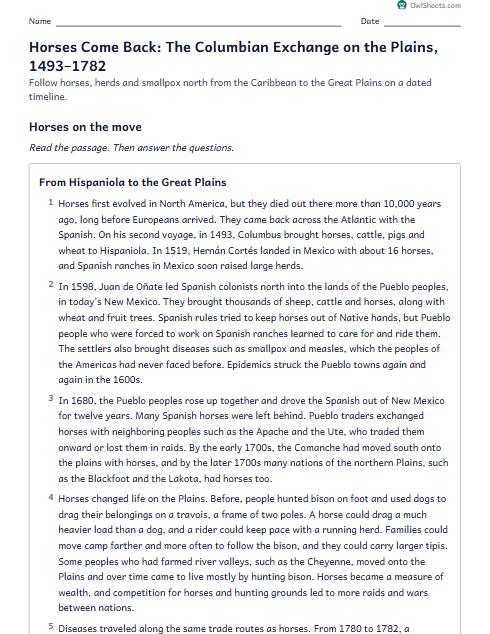
Horses Come Back: The Columbian Exchange on the Plains, 1493–1782
Grade 7 · GEO.7.2
14 questionsPremium
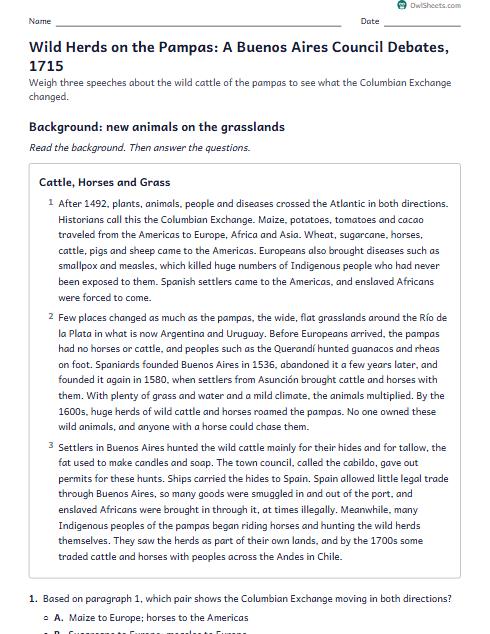
Wild Herds on the Pampas: A Buenos Aires Council Debates, 1715
Grade 7 · GEO.7.2
14 questionsPremium
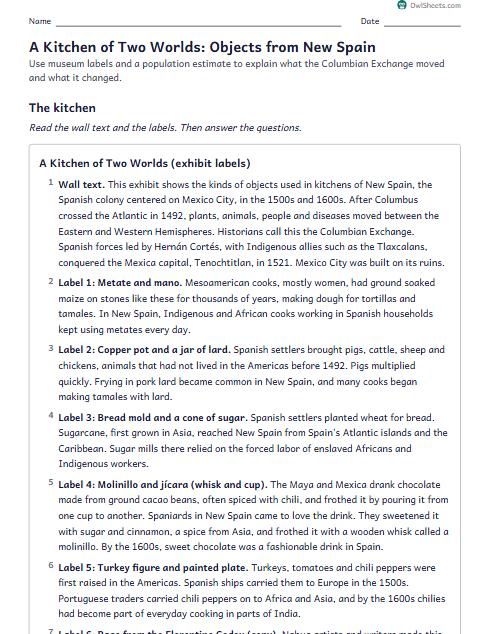
A Kitchen of Two Worlds: Objects from New Spain
Grade 7 · GEO.7.2
14 questionsPremium
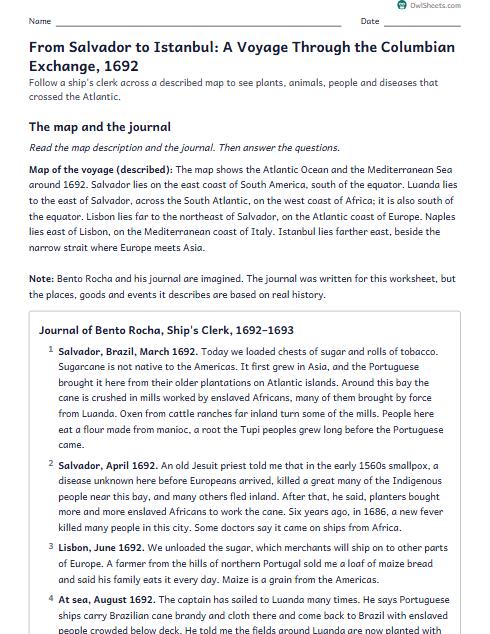
From Salvador to Istanbul: A Voyage Through the Columbian Exchange, 1692
Grade 7 · GEO.7.2
13 questionsPremium
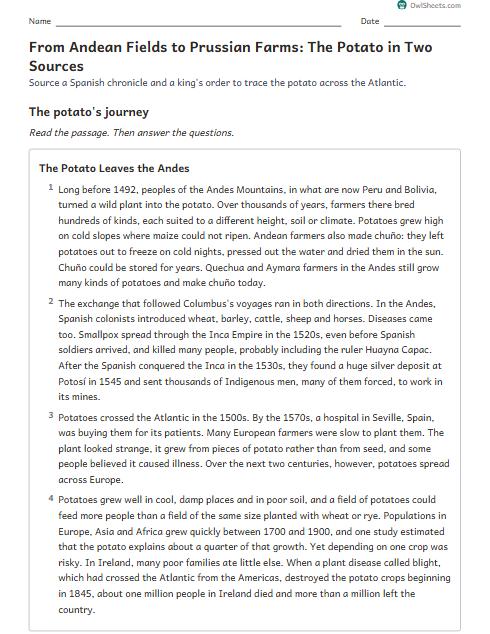
From Andean Fields to Prussian Farms: The Potato in Two Sources
Grade 7 · GEO.7.2
12 questionsFree
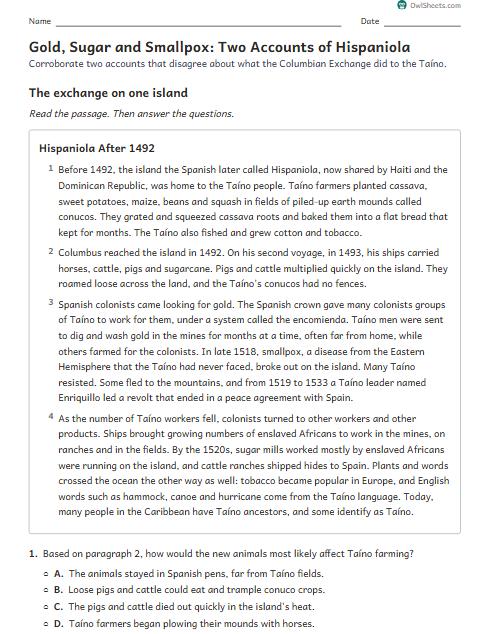
Gold, Sugar and Smallpox: Two Accounts of Hispaniola
Grade 7 · GEO.7.2
12 questionsPremium