Grade 7 · Social StudiesCIV.7.1Premium
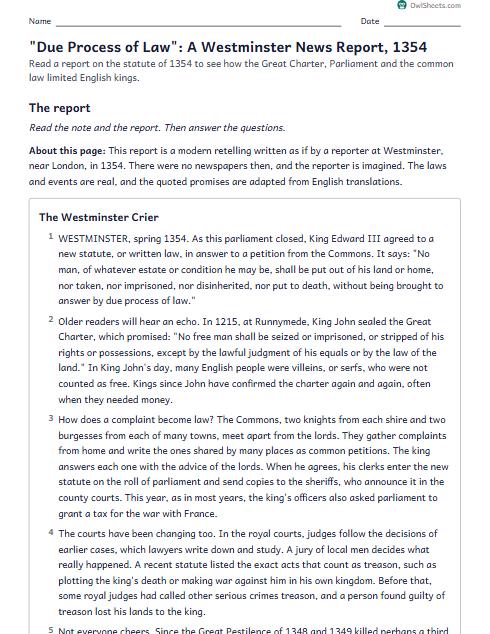
"Due Process of Law": A Westminster News Report, 1354
Grade 7 civics: a news report on the 1354 "due process" statute traces how the Great Charter, Parliament's petitions and the common law limited English kings.
Preview
OwlSheets.com
"Due Process of Law": A Westminster News Report, 1354
Read a report on the statute of 1354 to see how the Great Charter, Parliament and the common law limited English kings.
The report
Read the note and the report. Then answer the questions.
The Westminster Crier
1WESTMINSTER, spring 1354. As this parliament closed, King Edward III agreed to a new statute, or written law, in answer to a petition from the Commons. It says: "No man, of whatever estate or condition he may be, shall be put out of his land or home, nor taken, nor imprisoned, nor disinherited, nor put to death, without being brought to answer by due process of law."
2Older readers will hear an echo. In 1215, at Runnymede, King John sealed the Great Charter, which promised: "No free man shall be seized or imprisoned, or stripped of his rights or possessions, except by the lawful judgment of his equals or by the law of the land." In King John's day, many English people were villeins, or serfs, who were not counted as free. Kings since John have confirmed the charter again and again, often when they needed money.
3How does a complaint become law? The Commons, two knights from each shire and two burgesses from each of many towns, meet apart from the lords. They gather complaints from home and write the ones shared by many places as common petitions. The king answers each one with the advice of the lords. When he agrees, his clerks enter the new statute on the roll of parliament and send copies to the sheriffs, who announce it in the county courts. This year, as in most years, the king's officers also asked parliament to grant a tax for the war with France.
4The courts have been changing too. In the royal courts, judges follow the decisions of earlier cases, which lawyers write down and study. A jury of local men decides what really happened. A recent statute listed the exact acts that count as treason, such as plotting the king's death or making war against him in his own kingdom. Before that, some royal judges had called other serious crimes treason, and a person found guilty of treason lost his lands to the king.
5Not everyone cheers. Since the Great Pestilence of 1348 and 1349 killed perhaps a third or more of the people, workers have been scarce, and many ask for higher pay. Laws passed with parliament's consent now order laborers to work for the wages paid before the pestilence. A worker who refuses, or who leaves his master before his agreed time is up, can be put in the stocks or in jail. Many laborers grumble that a parliament of landowners and merchants makes laws for its own kind.
- A. The 1354 law gives the lords the power to judge the king's officers.
- B. The 1354 law protects land, but it drops the old promise about prison.
- C. The 1354 law is worded to cover people of every rank, not just the free.
- D. The 1354 law lets the king jail people as long as he names a reason.
The preview shows the first questions. Unlock the worksheet to see all of it.
Related worksheets
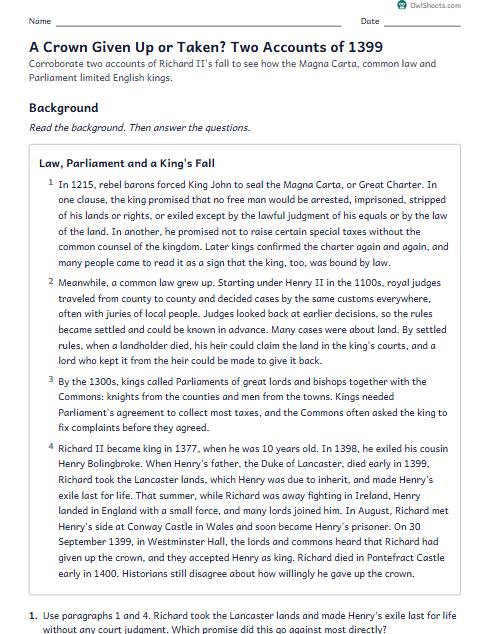
A Crown Given Up or Taken? Two Accounts of 1399
Grade 7 · CIV.7.1
15 questionsPremium
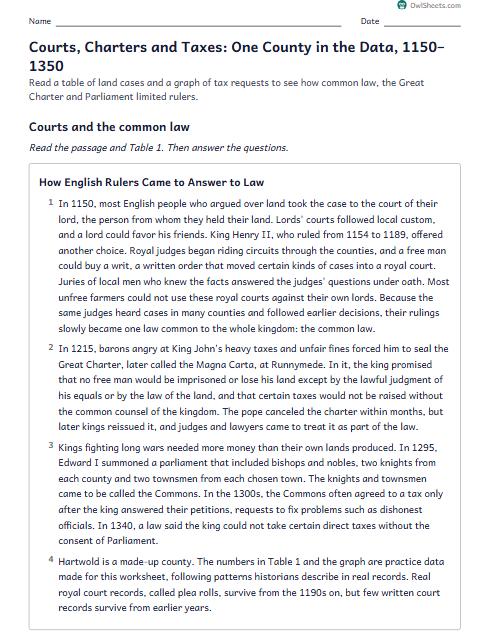
Courts, Charters and Taxes: One County in the Data, 1150–1350
Grade 7 · CIV.7.1
13 questionsPremium
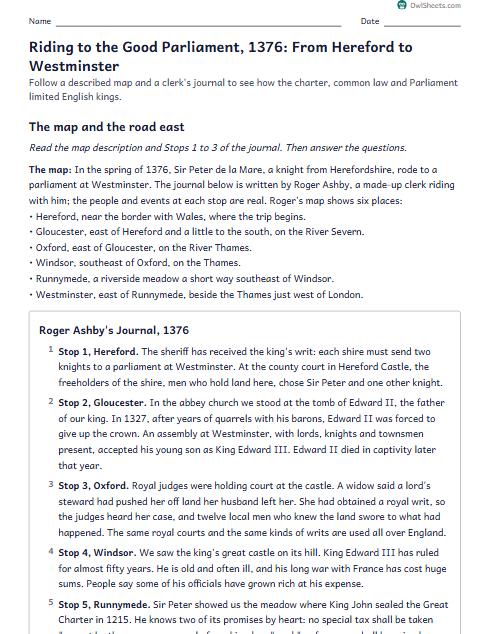
Riding to the Good Parliament, 1376: From Hereford to Westminster
Grade 7 · CIV.7.1
14 questionsPremium
Charters, Rolls and Battles: A Historian's Notes from Salisbury to Marlborough
Grade 7 · CIV.7.1
13 questionsPremium
Iron, Ink and Summons: How English Law Bound the Crown
Grade 7 · CIV.7.1
11 questionsPremium
Showdown at Oxford, 1258: Should the King Answer to a Council?
Grade 7 · CIV.7.1
10 questionsPremium