Grade 7 · Social StudiesECO.7.1Premium
Runaway Serfs or Rising Rents? Two Letters About a New Town
Grade 7 economics: how manors worked and how towns, guilds and fairs grew, told through two imagined letters that disagree and a table of manor records.
Preview
OwlSheets.com
Runaway Serfs or Rising Rents? Two Letters About a New Town
Corroborate two letters that disagree about what a chartered town did to the manor beside it.
Background: manors, towns, guilds and fairs
Read the background. Then answer the questions.
From Manor to Market
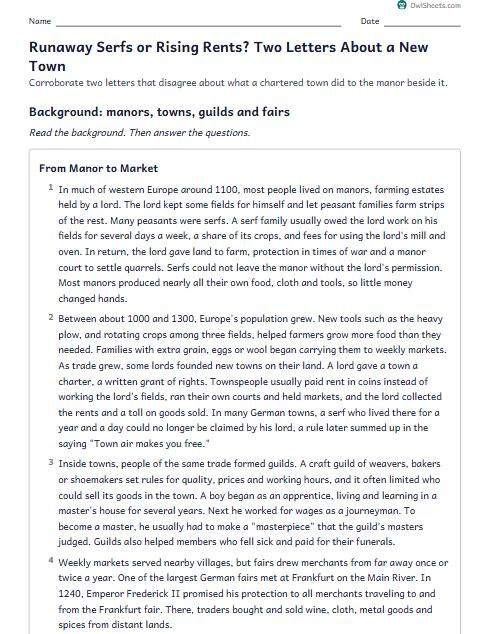
1In much of western Europe around 1100, most people lived on manors, farming estates held by a lord. The lord kept some fields for himself and let peasant families farm strips of the rest. Many peasants were serfs. A serf family usually owed the lord work on his fields for several days a week, a share of its crops, and fees for using the lord's mill and oven. In return, the lord gave land to farm, protection in times of war and a manor court to settle quarrels. Serfs could not leave the manor without the lord's permission. Most manors produced nearly all their own food, cloth and tools, so little money changed hands.
2Between about 1000 and 1300, Europe's population grew. New tools such as the heavy plow, and rotating crops among three fields, helped farmers grow more food than they needed. Families with extra grain, eggs or wool began carrying them to weekly markets. As trade grew, some lords founded new towns on their land. A lord gave a town a charter, a written grant of rights. Townspeople usually paid rent in coins instead of working the lord's fields, ran their own courts and held markets, and the lord collected the rents and a toll on goods sold. In many German towns, a serf who lived there for a year and a day could no longer be claimed by his lord, a rule later summed up in the saying "Town air makes you free."
3Inside towns, people of the same trade formed guilds. A craft guild of weavers, bakers or shoemakers set rules for quality, prices and working hours, and it often limited who could sell its goods in the town. A boy began as an apprentice, living and learning in a master's house for several years. Next he worked for wages as a journeyman. To become a master, he usually had to make a "masterpiece" that the guild's masters judged. Guilds also helped members who fell sick and paid for their funerals.
4Weekly markets served nearby villages, but fairs drew merchants from far away once or twice a year. One of the largest German fairs met at Frankfurt on the Main River. In 1240, Emperor Frederick II promised his protection to all merchants traveling to and from the Frankfurt fair. There, traders bought and sold wine, cloth, metal goods and spices from distant lands.
- A. He needed his lord's permission before he could go.
- B. He could leave after working one year for the lord.
- C. He could leave at any time once he paid the mill fee.
- D. He needed a town council's vote before he could go.
- A. Townspeople would plow his fields on every market day.
- B. The emperor paid lords for each new town they founded.
- C. A charter let the lord choose the guild masters himself.
- D. The town's rents and tolls gave him a steady income in coins.
The preview shows the first questions. Unlock the worksheet to see all of it.
Related worksheets
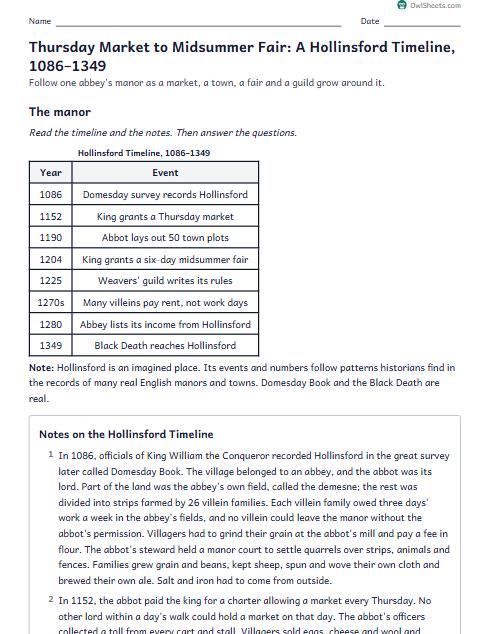
Thursday Market to Midsummer Fair: A Hollinsford Timeline, 1086–1349
Grade 7 · ECO.7.1
15 questionsPremium
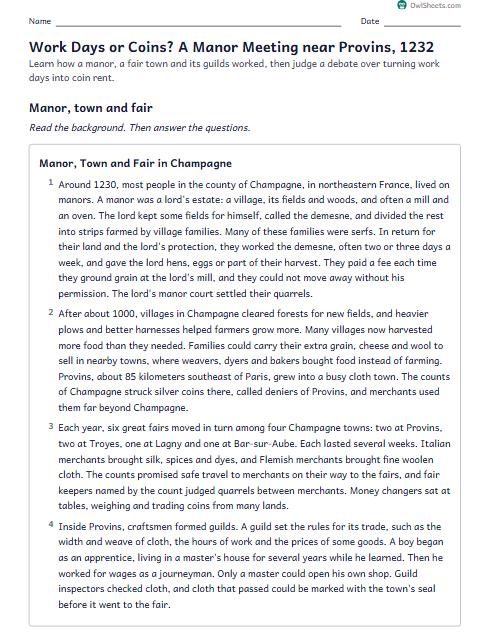
Work Days or Coins? A Manor Meeting near Provins, 1232
Grade 7 · ECO.7.1
15 questionsPremium
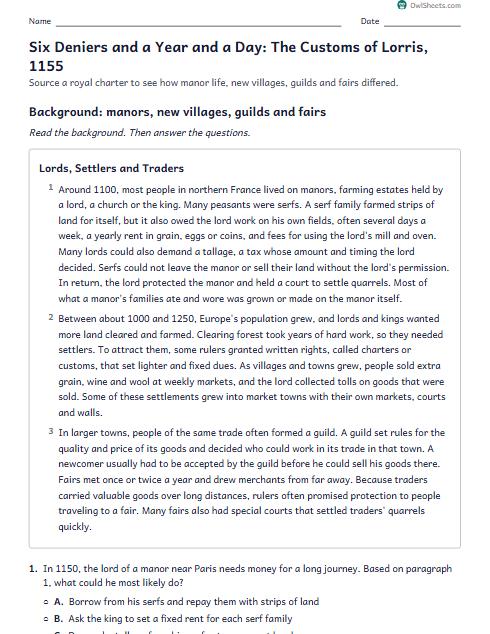
Six Deniers and a Year and a Day: The Customs of Lorris, 1155
Grade 7 · ECO.7.1
15 questionsPremium
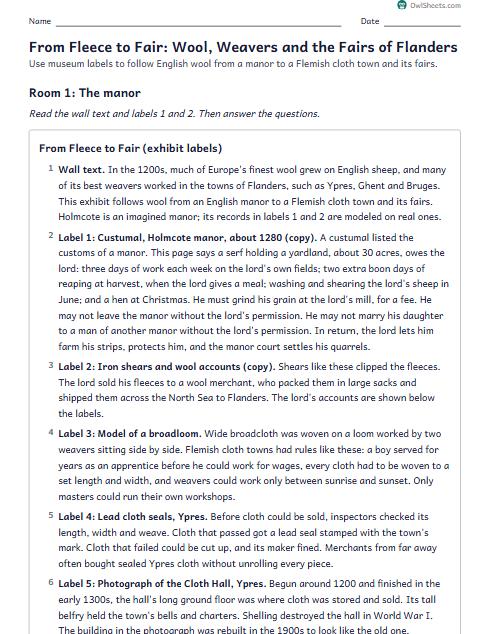
From Fleece to Fair: Wool, Weavers and the Fairs of Flanders
Grade 7 · ECO.7.1
14 questionsPremium
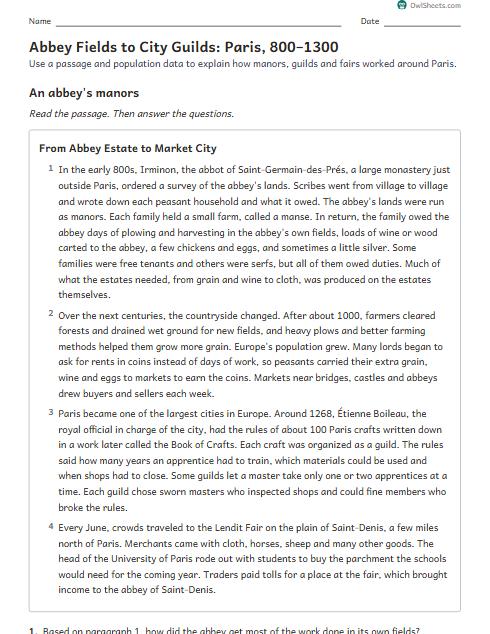
Abbey Fields to City Guilds: Paris, 800–1300
Grade 7 · ECO.7.1
12 questionsPremium
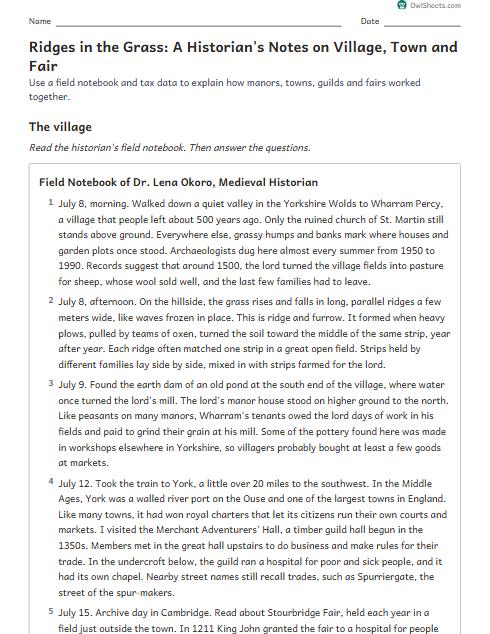
Ridges in the Grass: A Historian's Notes on Village, Town and Fair
Grade 7 · ECO.7.1
12 questionsPremium