Grade 6 · Social StudiesECO.6.1Premium
Maize, Basalt and Obsidian: Field Notes from Olmec San Lorenzo
Grade 6 economics: use field notes and a table of finds from Olmec San Lorenzo to explain how a food surplus led to specialized jobs, social classes and trade.
Preview
OwlSheets.com
Maize, Basalt and Obsidian: Field Notes from Olmec San Lorenzo
Use an archaeologist's notes and a table of finds to link a food surplus to jobs, classes and trade.
The field notes
Read the field notes. Then answer the questions.
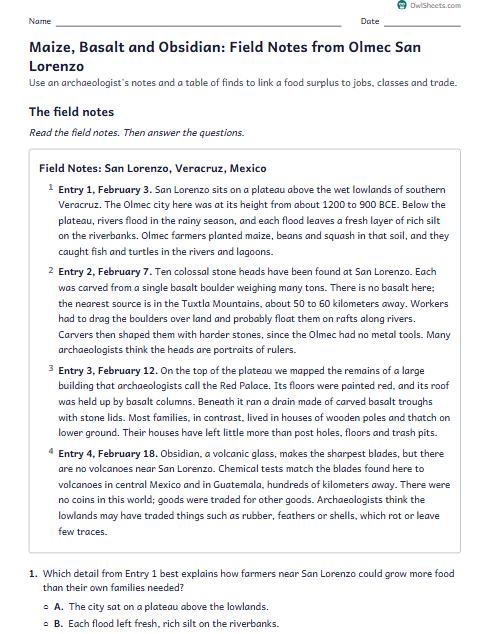
Field Notes: San Lorenzo, Veracruz, Mexico
1Entry 1, February 3. San Lorenzo sits on a plateau above the wet lowlands of southern Veracruz. The Olmec city here was at its height from about 1200 to 900 BCE. Below the plateau, rivers flood in the rainy season, and each flood leaves a fresh layer of rich silt on the riverbanks. Olmec farmers planted maize, beans and squash in that soil, and they caught fish and turtles in the rivers and lagoons.
2Entry 2, February 7. Ten colossal stone heads have been found at San Lorenzo. Each was carved from a single basalt boulder weighing many tons. There is no basalt here; the nearest source is in the Tuxtla Mountains, about 50 to 60 kilometers away. Workers had to drag the boulders over land and probably float them on rafts along rivers. Carvers then shaped them with harder stones, since the Olmec had no metal tools. Many archaeologists think the heads are portraits of rulers.
3Entry 3, February 12. On the top of the plateau we mapped the remains of a large building that archaeologists call the Red Palace. Its floors were painted red, and its roof was held up by basalt columns. Beneath it ran a drain made of carved basalt troughs with stone lids. Most families, in contrast, lived in houses of wooden poles and thatch on lower ground. Their houses have left little more than post holes, floors and trash pits.
4Entry 4, February 18. Obsidian, a volcanic glass, makes the sharpest blades, but there are no volcanoes near San Lorenzo. Chemical tests match the blades found here to volcanoes in central Mexico and in Guatemala, hundreds of kilometers away. There were no coins in this world; goods were traded for other goods. Archaeologists think the lowlands may have traded things such as rubber, feathers or shells, which rot or leave few traces.
- A. The city sat on a plateau above the lowlands.
- B. Each flood left fresh, rich silt on the riverbanks.
- C. The city was at its height around 1000 BCE.
- D. The rivers were too deep for farmers to cross.
- A. The haulers were paid in coins to buy their meals.
- B. Extra food could feed many workers away from their fields.
- C. Food was so scarce that only a few men could haul stone.
- D. Each hauler grew his own food along the route.
The preview shows the first questions. Unlock the worksheet to see all of it.
Related worksheets
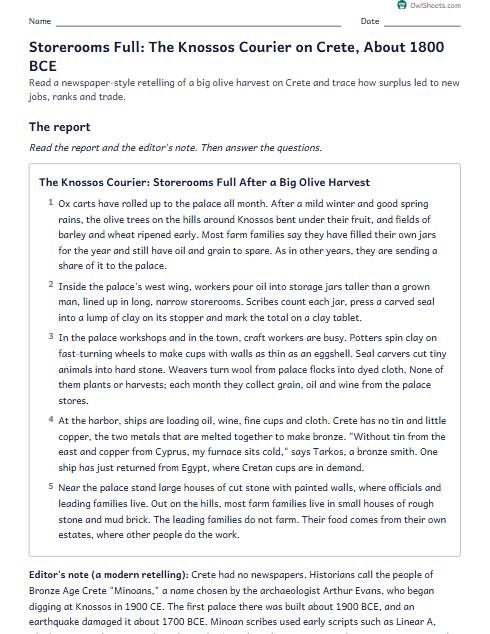
Storerooms Full: The Knossos Courier on Crete, About 1800 BCE
Grade 6 · ECO.6.1
14 questionsPremium
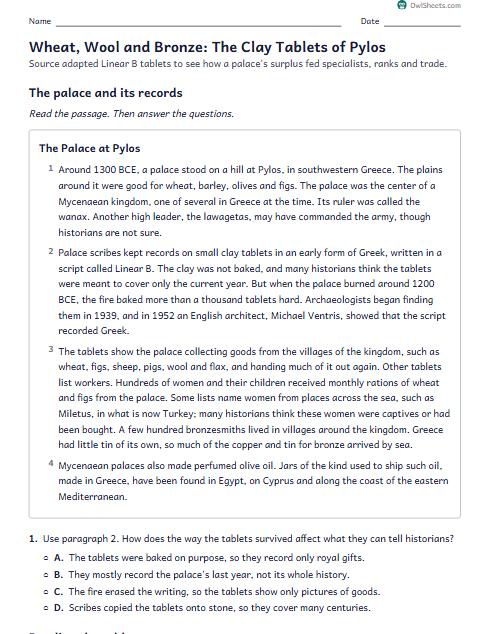
Wheat, Wool and Bronze: The Clay Tablets of Pylos
Grade 6 · ECO.6.1
14 questionsPremium
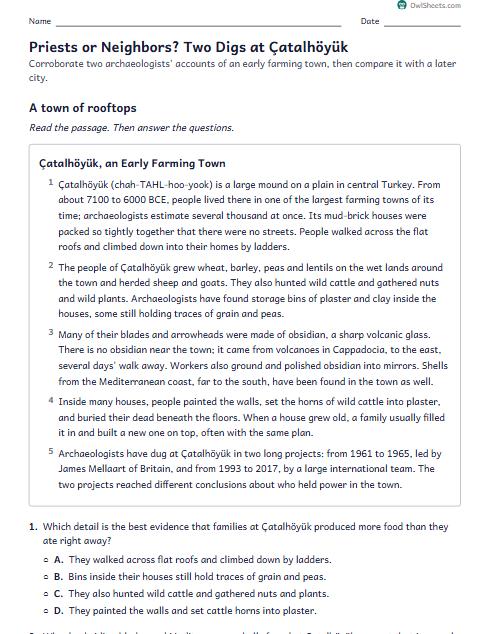
Priests or Neighbors? Two Digs at Çatalhöyük
Grade 6 · ECO.6.1
14 questionsPremium
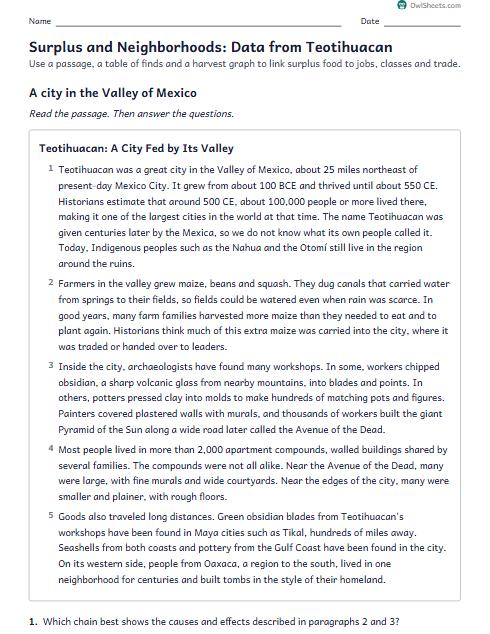
Surplus and Neighborhoods: Data from Teotihuacan
Grade 6 · ECO.6.1
13 questionsPremium
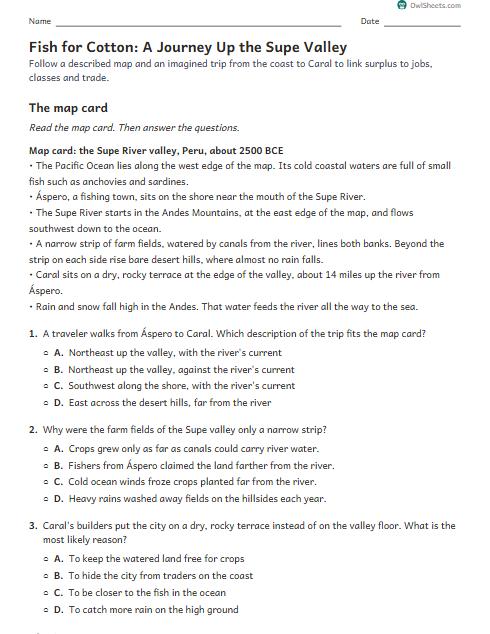
Fish for Cotton: A Journey Up the Supe Valley
Grade 6 · ECO.6.1
11 questionsFree
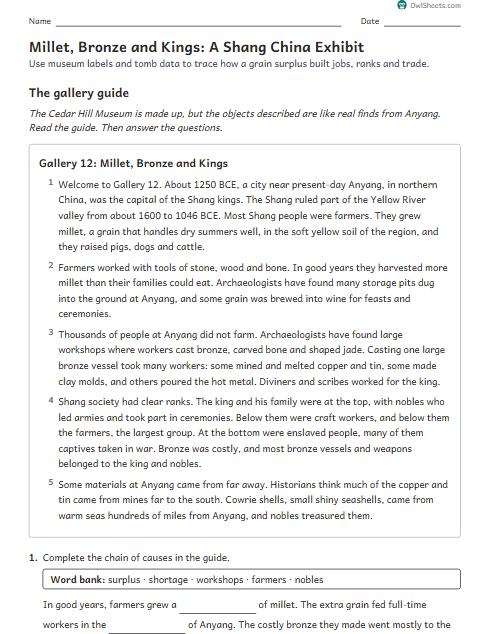
Millet, Bronze and Kings: A Shang China Exhibit
Grade 6 · ECO.6.1
10 questionsPremium