Grade 6 · Social StudiesECO.6.1Premium
Wheat, Wool and Bronze: The Clay Tablets of Pylos
Grade 6 economics: source adapted Linear B tablets from the Mycenaean palace at Pylos to explain how food surplus led to specialized jobs, classes and trade.
Preview
OwlSheets.com
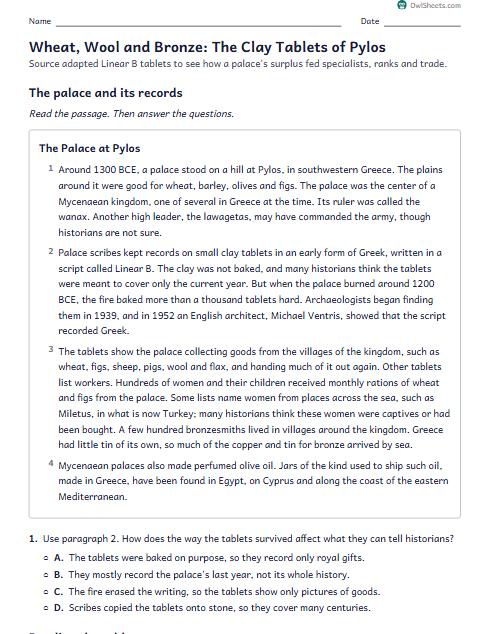
Wheat, Wool and Bronze: The Clay Tablets of Pylos
Source adapted Linear B tablets to see how a palace's surplus fed specialists, ranks and trade.
The palace and its records
Read the passage. Then answer the questions.
The Palace at Pylos
1Around 1300 BCE, a palace stood on a hill at Pylos, in southwestern Greece. The plains around it were good for wheat, barley, olives and figs. The palace was the center of a Mycenaean kingdom, one of several in Greece at the time. Its ruler was called the wanax. Another high leader, the lawagetas, may have commanded the army, though historians are not sure.
2Palace scribes kept records on small clay tablets in an early form of Greek, written in a script called Linear B. The clay was not baked, and many historians think the tablets were meant to cover only the current year. But when the palace burned around 1200 BCE, the fire baked more than a thousand tablets hard. Archaeologists began finding them in 1939, and in 1952 an English architect, Michael Ventris, showed that the script recorded Greek.
3The tablets show the palace collecting goods from the villages of the kingdom, such as wheat, figs, sheep, pigs, wool and flax, and handing much of it out again. Other tablets list workers. Hundreds of women and their children received monthly rations of wheat and figs from the palace. Some lists name women from places across the sea, such as Miletus, in what is now Turkey; many historians think these women were captives or had been bought. A few hundred bronzesmiths lived in villages around the kingdom. Greece had little tin of its own, so much of the copper and tin for bronze arrived by sea.
4Mycenaean palaces also made perfumed olive oil. Jars of the kind used to ship such oil, made in Greece, have been found in Egypt, on Cyprus and along the coast of the eastern Mediterranean.
- A. The tablets were baked on purpose, so they record only royal gifts.
- B. They mostly record the palace's last year, not its whole history.
- C. The fire erased the writing, so the tablets show only pictures of goods.
- D. Scribes copied the tablets onto stone, so they cover many centuries.
The preview shows the first questions. Unlock the worksheet to see all of it.
Related worksheets
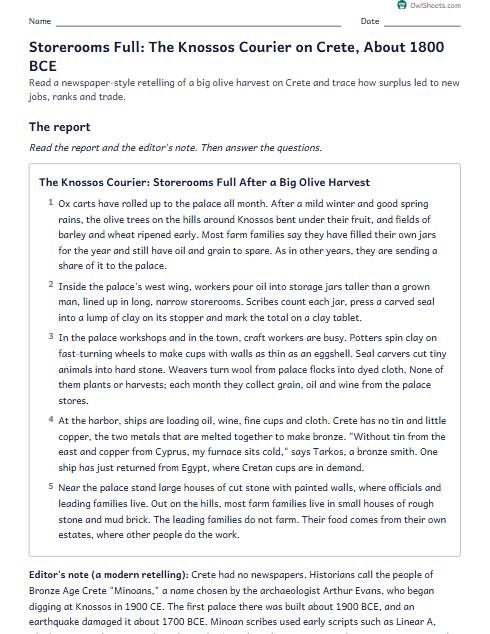
Storerooms Full: The Knossos Courier on Crete, About 1800 BCE
Grade 6 · ECO.6.1
14 questionsPremium
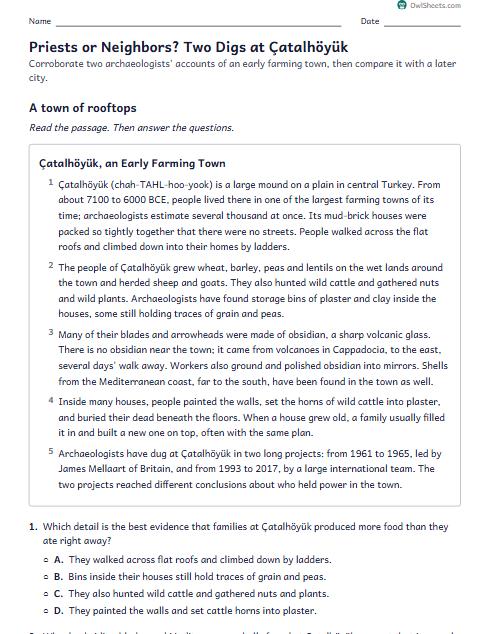
Priests or Neighbors? Two Digs at Çatalhöyük
Grade 6 · ECO.6.1
14 questionsPremium
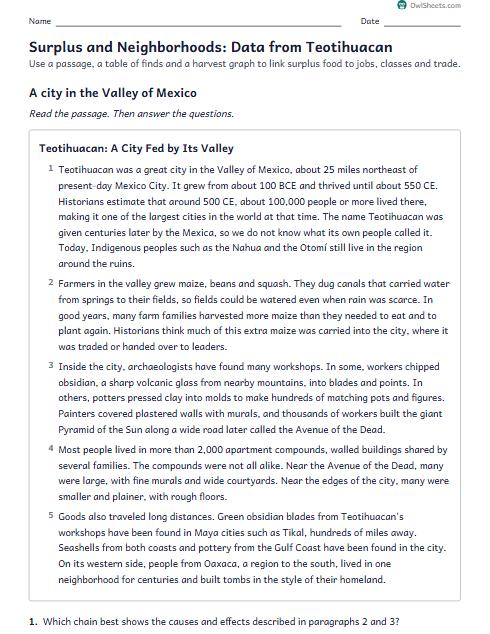
Surplus and Neighborhoods: Data from Teotihuacan
Grade 6 · ECO.6.1
13 questionsPremium
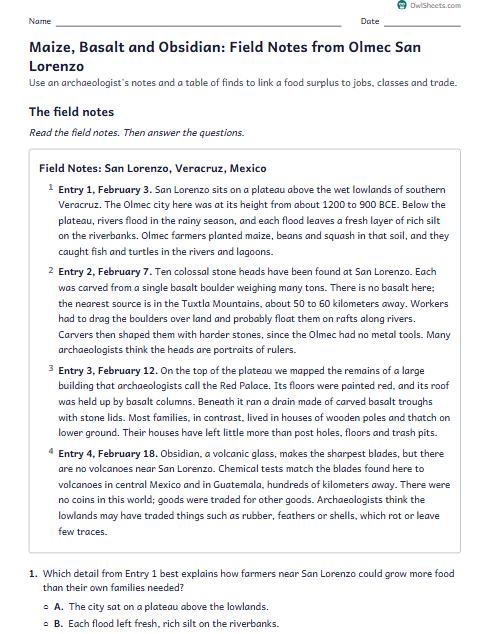
Maize, Basalt and Obsidian: Field Notes from Olmec San Lorenzo
Grade 6 · ECO.6.1
13 questionsPremium
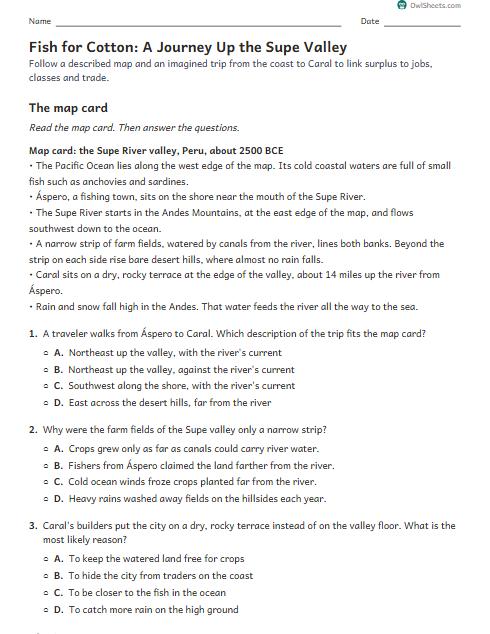
Fish for Cotton: A Journey Up the Supe Valley
Grade 6 · ECO.6.1
11 questionsFree
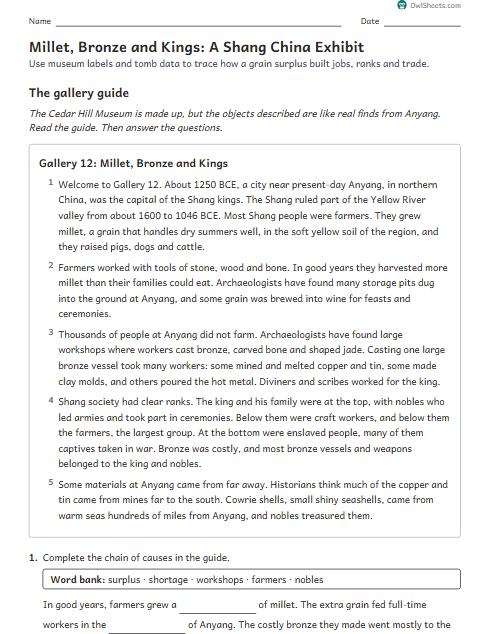
Millet, Bronze and Kings: A Shang China Exhibit
Grade 6 · ECO.6.1
10 questionsPremium