Grade 6 · Social StudiesECO.6.3Premium
Rebuild What First? The Pompeii Crier, About 75 CE
Grade 6 economics: a newspaper-style retelling of Pompeii rebuilding after the 62 CE earthquake uses scarcity and opportunity cost, then and today.
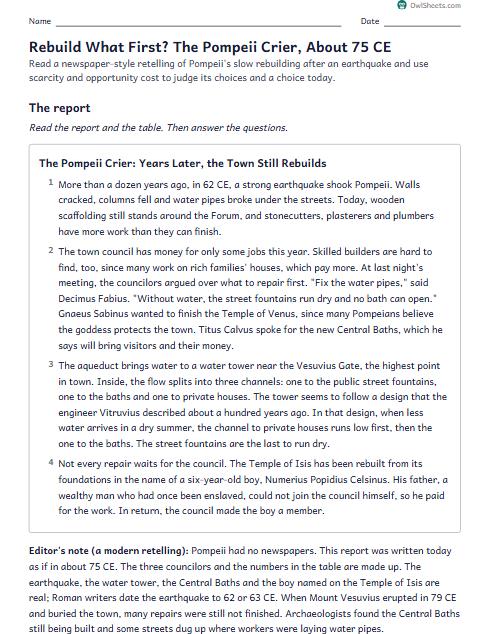
Preview
OwlSheets.com
Rebuild What First? The Pompeii Crier, About 75 CE
Read a newspaper-style retelling of Pompeii's slow rebuilding after an earthquake and use scarcity and opportunity cost to judge its choices and a choice today.
The report
Read the report and the table. Then answer the questions.
The Pompeii Crier: Years Later, the Town Still Rebuilds
1More than a dozen years ago, in 62 CE, a strong earthquake shook Pompeii. Walls cracked, columns fell and water pipes broke under the streets. Today, wooden scaffolding still stands around the Forum, and stonecutters, plasterers and plumbers have more work than they can finish.
2The town council has money for only some jobs this year. Skilled builders are hard to find, too, since many work on rich families' houses, which pay more. At last night's meeting, the councilors argued over what to repair first. "Fix the water pipes," said Decimus Fabius. "Without water, the street fountains run dry and no bath can open." Gnaeus Sabinus wanted to finish the Temple of Venus, since many Pompeians believe the goddess protects the town. Titus Calvus spoke for the new Central Baths, which he says will bring visitors and their money.
3The aqueduct brings water to a water tower near the Vesuvius Gate, the highest point in town. Inside, the flow splits into three channels: one to the public street fountains, one to the baths and one to private houses. The tower seems to follow a design that the engineer Vitruvius described about a hundred years ago. In that design, when less water arrives in a dry summer, the channel to private houses runs low first, then the one to the baths. The street fountains are the last to run dry.
4Not every repair waits for the council. The Temple of Isis has been rebuilt from its foundations in the name of a six-year-old boy, Numerius Popidius Celsinus. His father, a wealthy man who had once been enslaved, could not join the council himself, so he paid for the work. In return, the council made the boy a member.
| Job | Cost (sesterces) | Builders needed |
|---|---|---|
| Water pipes | 40000 | 30 |
| Temple of Venus | 60000 | 40 |
| Central Baths | 80000 | 50 |
| Forum columns | 30000 | 20 |
| Council can spend | 100000 | 70 |
The preview shows the first questions. Unlock the worksheet to see all of it.
Related worksheets
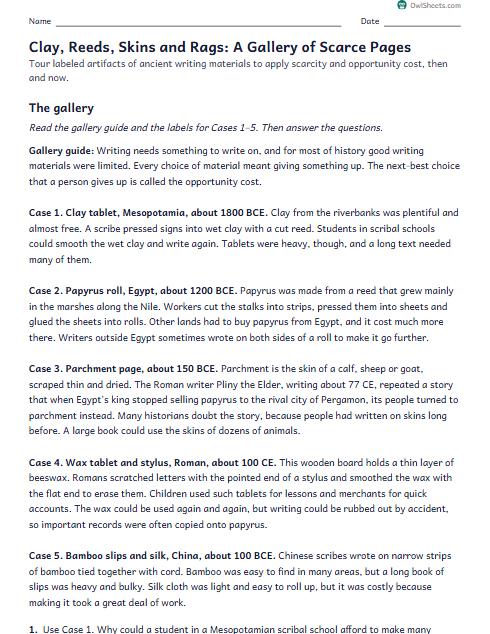
Clay, Reeds, Skins and Rags: A Gallery of Scarce Pages
Grade 6 · ECO.6.3
14 questionsPremium
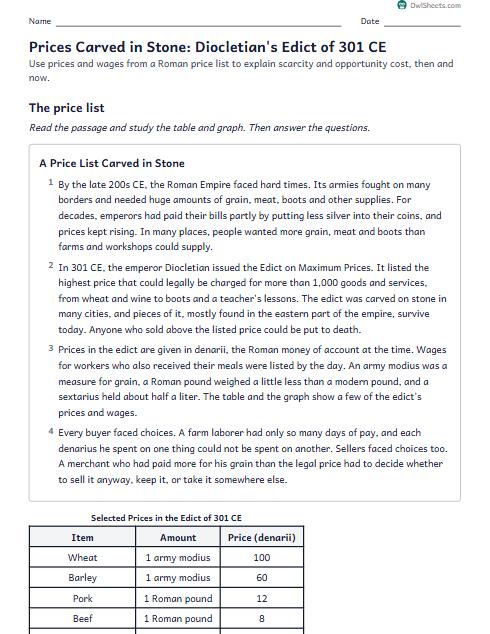
Prices Carved in Stone: Diocletian's Edict of 301 CE
Grade 6 · ECO.6.3
15 questionsPremium
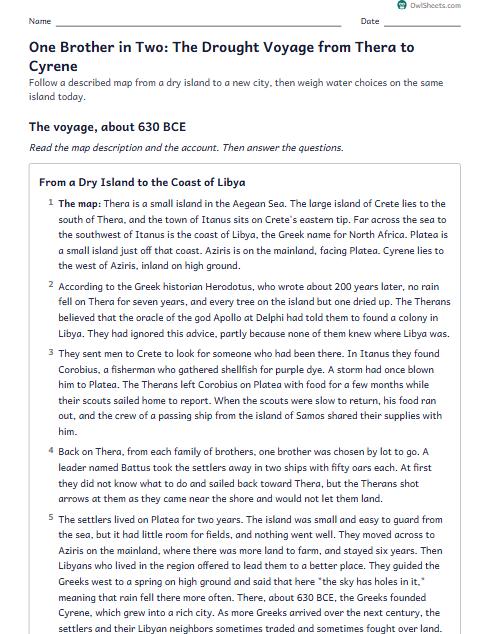
One Brother in Two: The Drought Voyage from Thera to Cyrene
Grade 6 · ECO.6.3
14 questionsPremium
Water Turns in the Desert: Field Notes from Nazca, Peru
Grade 6 · ECO.6.3
13 questionsPremium
The Salt and Iron Debate of 81 BCE
Grade 6 · ECO.6.3
11 questionsPremium
Bread for a Million: Rome's Grain Choices
Grade 6 · ECO.6.3
11 questionsPremium