Grade 6 · Social StudiesECO.6.2Premium
Wine Up the River, Tin Down: The Massalia Harbor Herald, About 500 BCE
Grade 6 economics: a newspaper-style retelling from Greek Massalia shows barter, gifts, new silver coins and ideas moving along the Rhone trade route.
Preview
OwlSheets.com
Wine Up the River, Tin Down: The Massalia Harbor Herald, About 500 BCE
Read a newspaper-style retelling from the Greek city of Massalia to study barter, gifts, the first coins and the ideas that traveled a trade route.
The report
Read the report. Then answer the questions.
The Massalia Harbor Herald: Wine Goes North, Tin Comes South
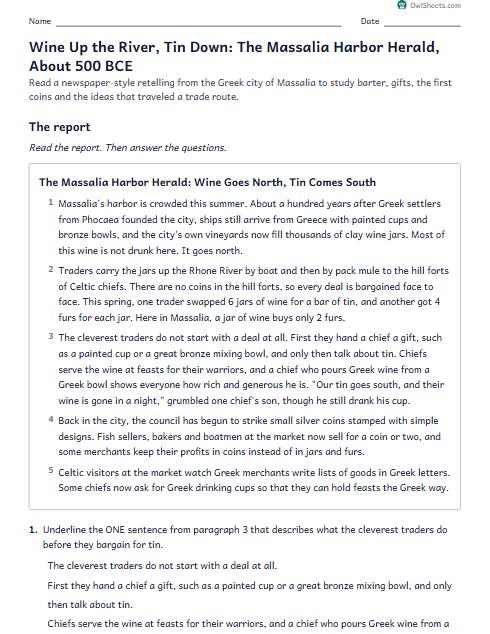
1Massalia's harbor is crowded this summer. About a hundred years after Greek settlers from Phocaea founded the city, ships still arrive from Greece with painted cups and bronze bowls, and the city's own vineyards now fill thousands of clay wine jars. Most of this wine is not drunk here. It goes north.
2Traders carry the jars up the Rhone River by boat and then by pack mule to the hill forts of Celtic chiefs. There are no coins in the hill forts, so every deal is bargained face to face. This spring, one trader swapped 6 jars of wine for a bar of tin, and another got 4 furs for each jar. Here in Massalia, a jar of wine buys only 2 furs.
3The cleverest traders do not start with a deal at all. First they hand a chief a gift, such as a painted cup or a great bronze mixing bowl, and only then talk about tin. Chiefs serve the wine at feasts for their warriors, and a chief who pours Greek wine from a Greek bowl shows everyone how rich and generous he is. "Our tin goes south, and their wine is gone in a night," grumbled one chief's son, though he still drank his cup.
4Back in the city, the council has begun to strike small silver coins stamped with simple designs. Fish sellers, bakers and boatmen at the market now sell for a coin or two, and some merchants keep their profits in coins instead of in jars and furs.
5Celtic visitors at the market watch Greek merchants write lists of goods in Greek letters. Some chiefs now ask for Greek drinking cups so that they can hold feasts the Greek way.
The cleverest traders do not start with a deal at all.First they hand a chief a gift, such as a painted cup or a great bronze mixing bowl, and only then talk about tin.Chiefs serve the wine at feasts for their warriors, and a chief who pours Greek wine from a Greek bowl shows everyone how rich and generous he is."Our tin goes south, and their wine is gone in a night," grumbled one chief's son, though he still drank his cup.
| Barter (goods for goods) | Paying with coins | A gift to build goodwill |
|---|---|---|
The preview shows the first questions. Unlock the worksheet to see all of it.
Related worksheets
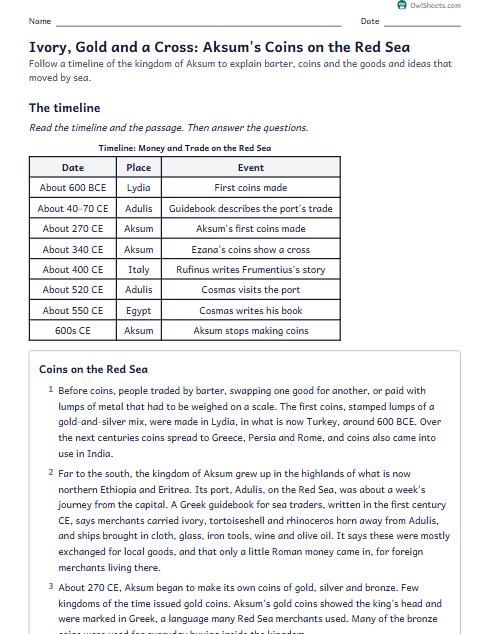
Ivory, Gold and a Cross: Aksum's Coins on the Red Sea
Grade 6 · ECO.6.2
15 questionsPremium
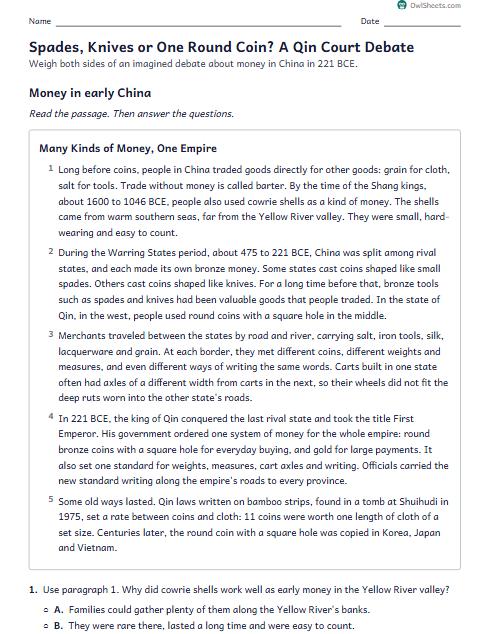
Spades, Knives or One Round Coin? A Qin Court Debate
Grade 6 · ECO.6.2
14 questionsPremium
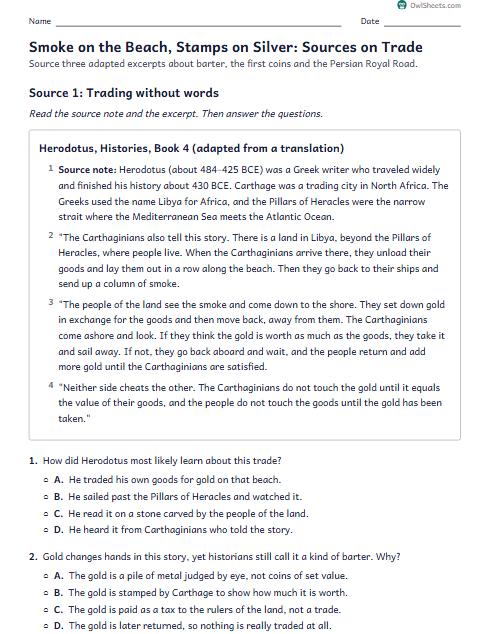
Smoke on the Beach, Stamps on Silver: Sources on Trade
Grade 6 · ECO.6.2
14 questionsPremium
Purple, Silver and Letters: A Phoenician Trade Gallery
Grade 6 · ECO.6.2
13 questionsPremium
Lydia or Aegina? Two Accounts of the First Coins
Grade 6 · ECO.6.2
11 questionsPremium
Pepper for Gold: Sailing the Monsoon to India
Grade 6 · ECO.6.2
10 questionsPremium