Grade 6 · Social StudiesCIV.6.3Premium
Gauls in the Senate? Claudius and the Debate of 48 CE
Grade 6 civics: weigh the Roman Senate's 48 CE debate on Gallic citizens holding office and compare citizenship in Athens, Rome and the U.S. today.
Preview
OwlSheets.com
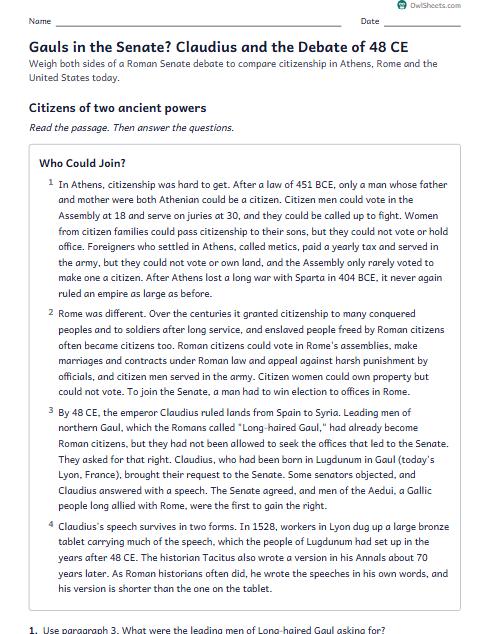
Gauls in the Senate? Claudius and the Debate of 48 CE
Weigh both sides of a Roman Senate debate to compare citizenship in Athens, Rome and the United States today.
Citizens of two ancient powers
Read the passage. Then answer the questions.
Who Could Join?
1In Athens, citizenship was hard to get. After a law of 451 BCE, only a man whose father and mother were both Athenian could be a citizen. Citizen men could vote in the Assembly at 18 and serve on juries at 30, and they could be called up to fight. Women from citizen families could pass citizenship to their sons, but they could not vote or hold office. Foreigners who settled in Athens, called metics, paid a yearly tax and served in the army, but they could not vote or own land, and the Assembly only rarely voted to make one a citizen. After Athens lost a long war with Sparta in 404 BCE, it never again ruled an empire as large as before.
2Rome was different. Over the centuries it granted citizenship to many conquered peoples and to soldiers after long service, and enslaved people freed by Roman citizens often became citizens too. Roman citizens could vote in Rome's assemblies, make marriages and contracts under Roman law and appeal against harsh punishment by officials, and citizen men served in the army. Citizen women could own property but could not vote. To join the Senate, a man had to win election to offices in Rome.
3By 48 CE, the emperor Claudius ruled lands from Spain to Syria. Leading men of northern Gaul, which the Romans called "Long-haired Gaul," had already become Roman citizens, but they had not been allowed to seek the offices that led to the Senate. They asked for that right. Claudius, who had been born in Lugdunum in Gaul (today's Lyon, France), brought their request to the Senate. Some senators objected, and Claudius answered with a speech. The Senate agreed, and men of the Aedui, a Gallic people long allied with Rome, were the first to gain the right.
4Claudius's speech survives in two forms. In 1528, workers in Lyon dug up a large bronze tablet carrying much of the speech, which the people of Lugdunum had set up in the years after 48 CE. The historian Tacitus also wrote a version in his Annals about 70 years later. As Roman historians often did, he wrote the speeches in his own words, and his version is shorter than the one on the tablet.
- A. To vote in Rome's assemblies for the first time
- B. To stop paying taxes to the emperor in Rome
- C. To seek the offices in Rome that led to the Senate
- D. To become Roman citizens for the first time
The preview shows the first questions. Unlock the worksheet to see all of it.
Related worksheets
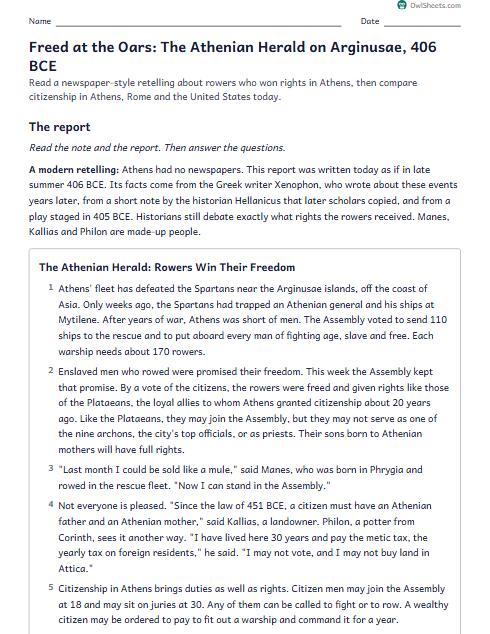
Freed at the Oars: The Athenian Herald on Arginusae, 406 BCE
Grade 6 · CIV.6.3
14 questionsPremium
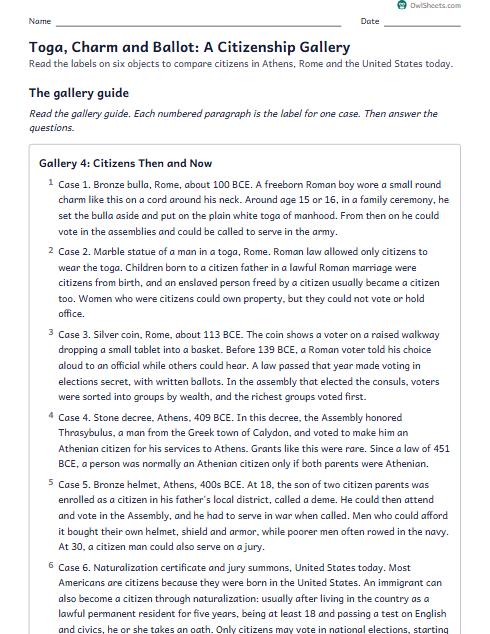
Toga, Charm and Ballot: A Citizenship Gallery
Grade 6 · CIV.6.3
14 questionsPremium
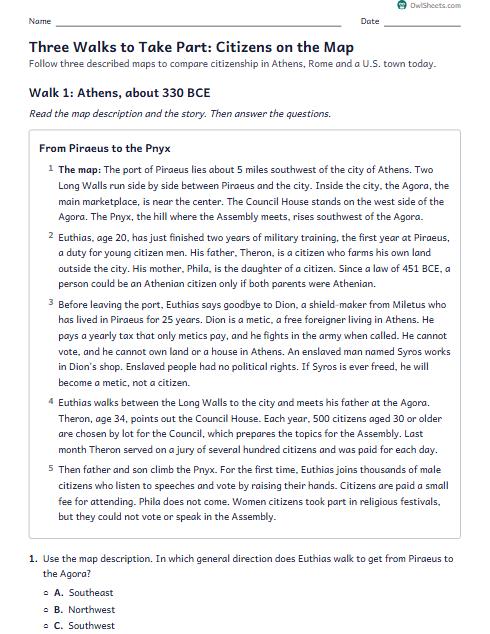
Three Walks to Take Part: Citizens on the Map
Grade 6 · CIV.6.3
13 questionsPremium
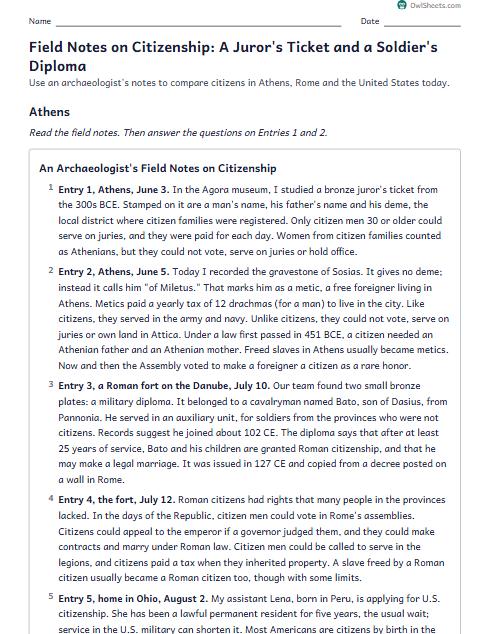
Field Notes on Citizenship: A Juror's Ticket and a Soldier's Diploma
Grade 6 · CIV.6.3
13 questionsPremium
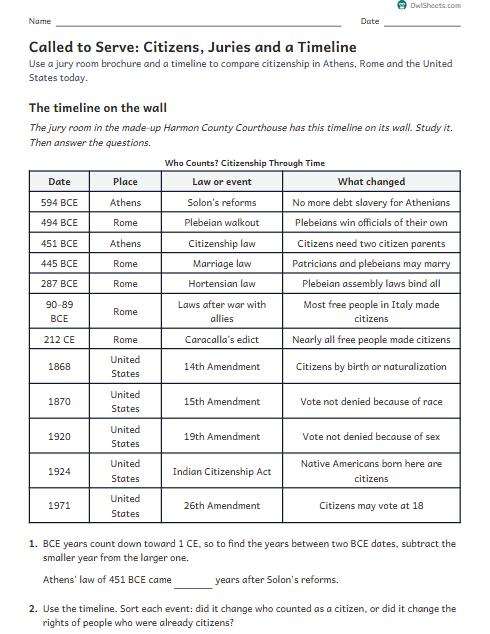
Called to Serve: Citizens, Juries and a Timeline
Grade 6 · CIV.6.3
11 questionsPremium
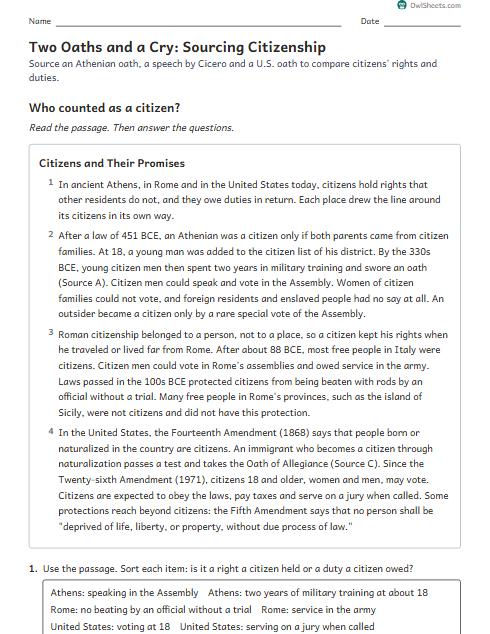
Two Oaths and a Cry: Sourcing Citizenship
Grade 6 · CIV.6.3
11 questionsFree