Grade 6 · Social StudiesCIV.6.3Premium
Freed at the Oars: The Athenian Herald on Arginusae, 406 BCE
Grade 6 civics: a newspaper-style retelling of the Arginusae rowers' reward compares citizenship in Athens, Rome and the U.S. today.
Preview
OwlSheets.com
Freed at the Oars: The Athenian Herald on Arginusae, 406 BCE
Read a newspaper-style retelling about rowers who won rights in Athens, then compare citizenship in Athens, Rome and the United States today.
The report
Read the note and the report. Then answer the questions.
The Athenian Herald: Rowers Win Their Freedom
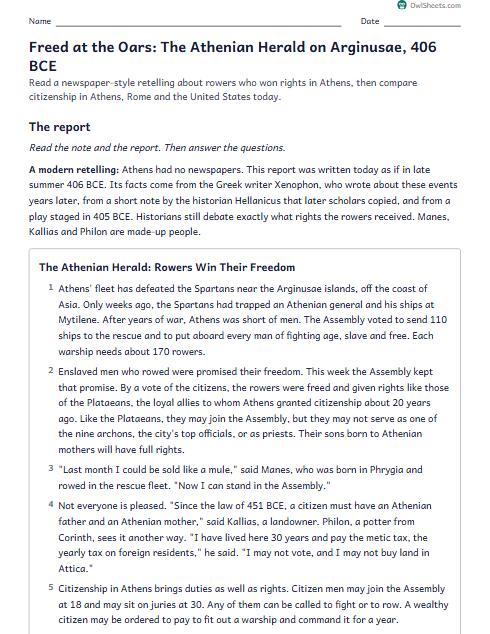
1Athens' fleet has defeated the Spartans near the Arginusae islands, off the coast of Asia. Only weeks ago, the Spartans had trapped an Athenian general and his ships at Mytilene. After years of war, Athens was short of men. The Assembly voted to send 110 ships to the rescue and to put aboard every man of fighting age, slave and free. Each warship needs about 170 rowers.
2Enslaved men who rowed were promised their freedom. This week the Assembly kept that promise. By a vote of the citizens, the rowers were freed and given rights like those of the Plataeans, the loyal allies to whom Athens granted citizenship about 20 years ago. Like the Plataeans, they may join the Assembly, but they may not serve as one of the nine archons, the city's top officials, or as priests. Their sons born to Athenian mothers will have full rights.
3"Last month I could be sold like a mule," said Manes, who was born in Phrygia and rowed in the rescue fleet. "Now I can stand in the Assembly."
4Not everyone is pleased. "Since the law of 451 BCE, a citizen must have an Athenian father and an Athenian mother," said Kallias, a landowner. Philon, a potter from Corinth, sees it another way. "I have lived here 30 years and pay the metic tax, the yearly tax on foreign residents," he said. "I may not vote, and I may not buy land in Attica."
5Citizenship in Athens brings duties as well as rights. Citizen men may join the Assembly at 18 and may sit on juries at 30. Any of them can be called to fight or to row. A wealthy citizen may be ordered to pay to fit out a warship and command it for a year.
- A. Enslaved men already had the right to fight for the city.
- B. The Spartans had freed many slaves who then joined Athens.
- C. After years of war, Athens lacked enough men to row.
- D. Metics had refused to row the ships sent to Mytilene.
The preview shows the first questions. Unlock the worksheet to see all of it.
Related worksheets
Gauls in the Senate? Claudius and the Debate of 48 CE
Grade 6 · CIV.6.3
14 questionsPremium
Toga, Charm and Ballot: A Citizenship Gallery
Grade 6 · CIV.6.3
14 questionsPremium
Three Walks to Take Part: Citizens on the Map
Grade 6 · CIV.6.3
13 questionsPremium
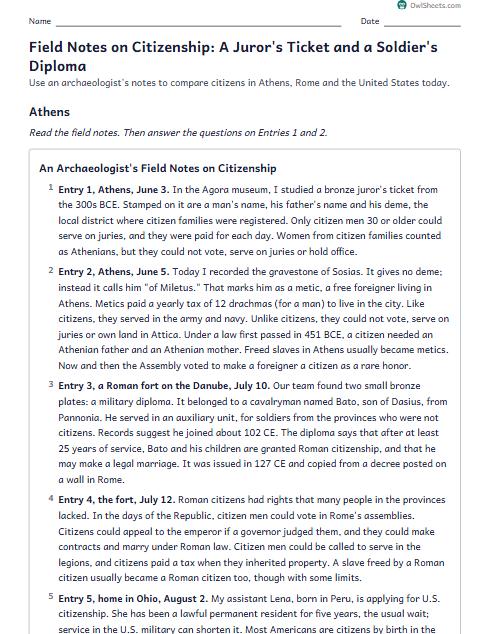
Field Notes on Citizenship: A Juror's Ticket and a Soldier's Diploma
Grade 6 · CIV.6.3
13 questionsPremium
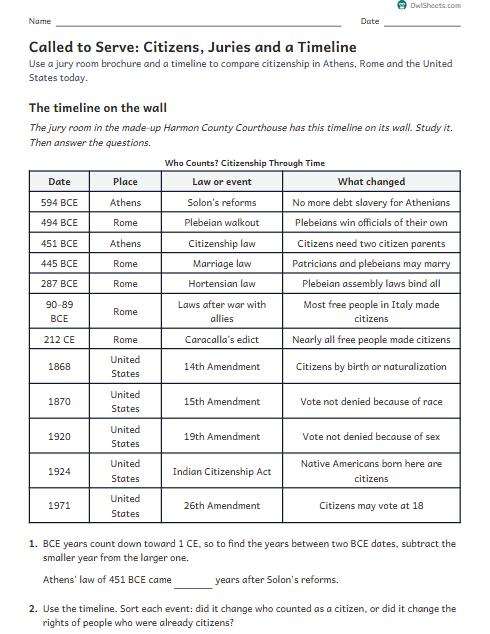
Called to Serve: Citizens, Juries and a Timeline
Grade 6 · CIV.6.3
11 questionsPremium
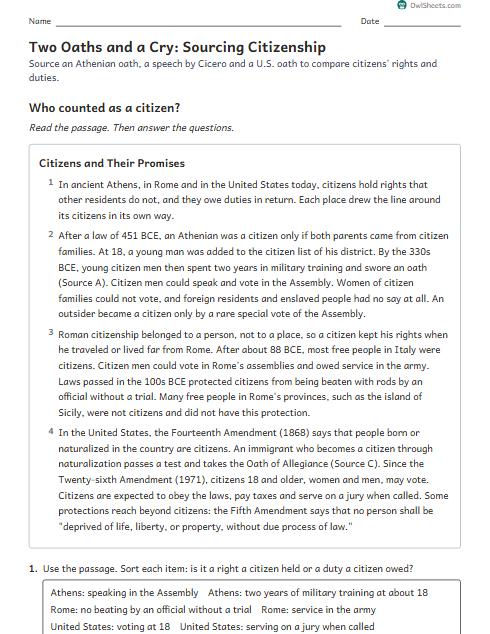
Two Oaths and a Cry: Sourcing Citizenship
Grade 6 · CIV.6.3
11 questionsFree