Grade 5 · Social StudiesHIS.5.2Premium
From Arrival to Harvest: A Colonial Timeline
Trace Jamestown and Plymouth through a chronological account of their founding, government, daily work and efforts to survive.
Preview
OwlSheets.com
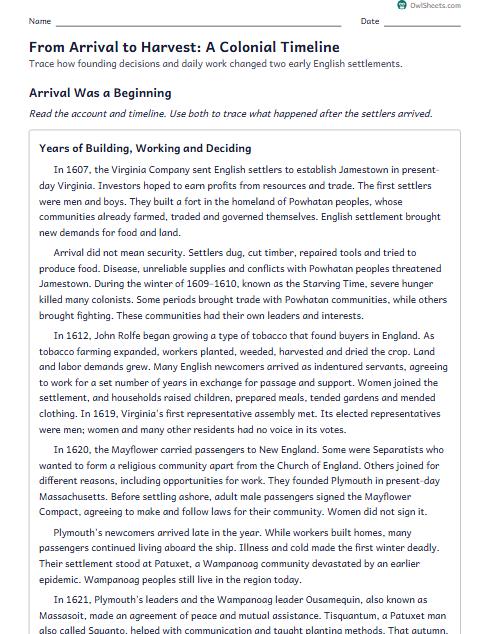
From Arrival to Harvest: A Colonial Timeline
Trace how founding decisions and daily work changed two early English settlements.
Arrival Was a Beginning
Read the account and timeline. Use both to trace what happened after the settlers arrived.
Years of Building, Working and Deciding
In 1607, the Virginia Company sent English settlers to establish Jamestown in present-day Virginia. Investors hoped to earn profits from resources and trade. The first settlers were men and boys. They built a fort in the homeland of Powhatan peoples, whose communities already farmed, traded and governed themselves. English settlement brought new demands for food and land.
Arrival did not mean security. Settlers dug, cut timber, repaired tools and tried to produce food. Disease, unreliable supplies and conflicts with Powhatan peoples threatened Jamestown. During the winter of 1609–1610, known as the Starving Time, severe hunger killed many colonists. Some periods brought trade with Powhatan communities, while others brought fighting. These communities had their own leaders and interests.
In 1612, John Rolfe began growing a type of tobacco that found buyers in England. As tobacco farming expanded, workers planted, weeded, harvested and dried the crop. Land and labor demands grew. Many English newcomers arrived as indentured servants, agreeing to work for a set number of years in exchange for passage and support. Women joined the settlement, and households raised children, prepared meals, tended gardens and mended clothing. In 1619, Virginia's first representative assembly met. Its elected representatives were men; women and many other residents had no voice in its votes.
In 1620, the Mayflower carried passengers to New England. Some were Separatists who wanted to form a religious community apart from the Church of England. Others joined for different reasons, including opportunities for work. They founded Plymouth in present-day Massachusetts. Before settling ashore, adult male passengers signed the Mayflower Compact, agreeing to make and follow laws for their community. Women did not sign it.
Plymouth's newcomers arrived late in the year. While workers built homes, many passengers continued living aboard the ship. Illness and cold made the first winter deadly. Their settlement stood at Patuxet, a Wampanoag community devastated by an earlier epidemic. Wampanoag peoples still live in the region today.
In 1621, Plymouth's leaders and the Wampanoag leader Ousamequin, also known as Massasoit, made an agreement of peace and mutual assistance. Tisquantum, a Patuxet man also called Squanto, helped with communication and taught planting methods. That autumn, Plymouth colonists and Wampanoag people shared a harvest gathering. Cooperation did not erase their different goals or English demands for land.
Plymouth households continued facing practical decisions. At first, colonists grew corn in common fields. In 1623, families received separate corn plots to cultivate, although other work remained shared. Daily life followed the seasons: planting in spring, tending crops in summer and gathering food for winter. Children helped with household and farm chores. In both settlements, a harvest required months of work, and stored food had to last until another crop was ready.
| Date | Event |
|---|---|
| 1607 | English settlers establish Jamestown. |
| Winter 1609–1610 | Jamestown suffers the Starving Time. |
| 1612 | Rolfe begins growing tobacco. |
| 1619 | Virginia's elected assembly meets. |
| 1620 | Compact signed; Plymouth founded. |
| 1621 | Peace agreement; harvest gathering. |
| 1623 | Families receive separate corn plots. |
- A. From New Settlements to Changing Ways of Living
- B. From English Farming Villages to Ocean Voyages
- C. From Successful Harvests to the First Arrivals
- D. From Religious Agreements to Company Ownership
The preview shows the first questions. Unlock the worksheet to see all of it.
Related worksheets
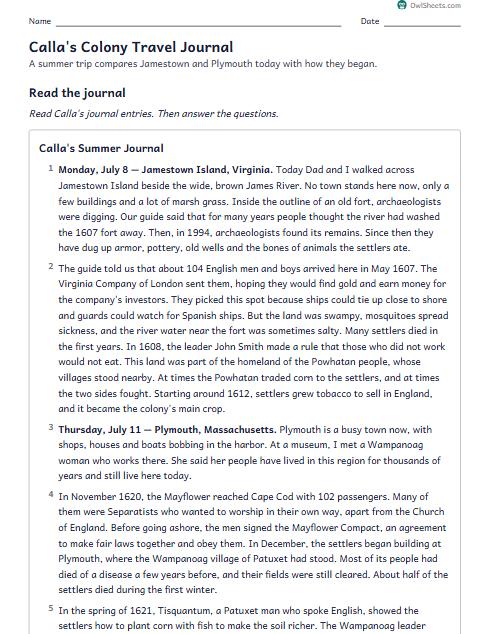
Calla's Colony Travel Journal
Grade 5 · HIS.5.2
14 questionsPremium
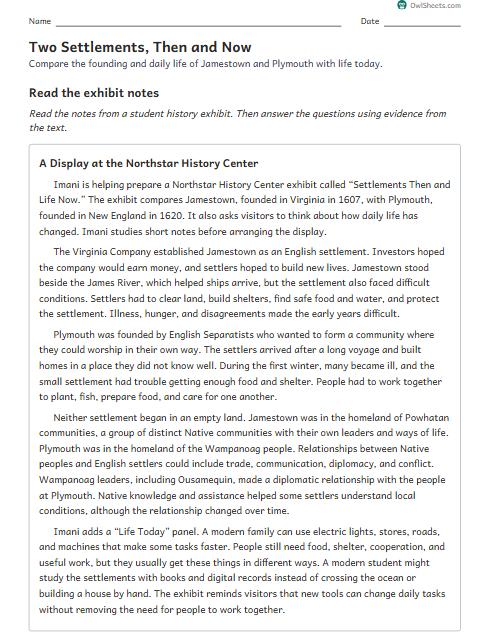
Two Settlements, Then and Now
Grade 5 · HIS.5.2
15 questionsFree
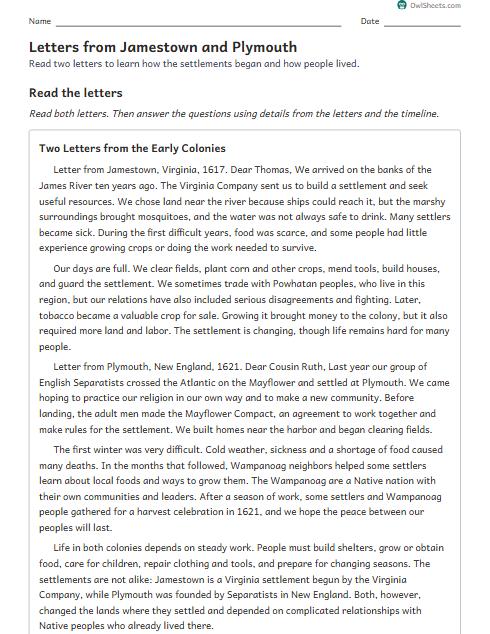
Letters from Jamestown and Plymouth
Grade 5 · HIS.5.2
15 questionsPremium
The Same River: 1609 and Today
Grade 5 · HIS.5.1
13 questionsPremium
News Reaches Marblehead
Grade 5 · HIS.5.3
13 questionsFree
Winning Without Winning Every Battle
Grade 5 · HIS.5.4
13 questionsFree