Grade 4 · Social StudiesHIS.4.4Premium
A Diary Beneath Liberty
Use a historically grounded fictional diary and timeline to sequence the Statue of Liberty's arrival and explain causes and effects.
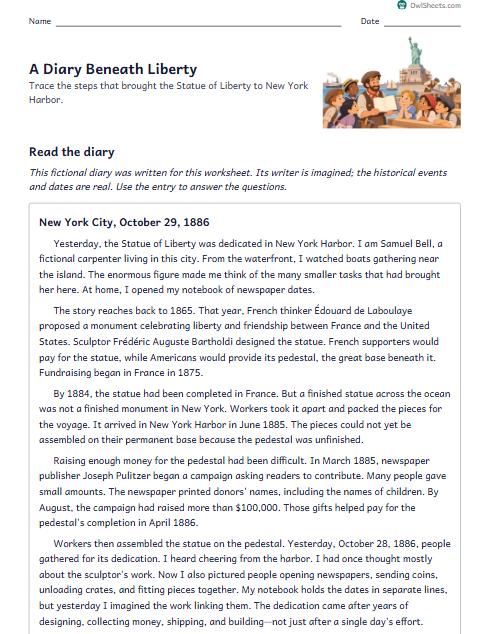
Preview
OwlSheets.com
A Diary Beneath Liberty
Trace the steps that brought the Statue of Liberty to New York Harbor.

Read the diary
This fictional diary was written for this worksheet. Its writer is imagined; the historical events and dates are real. Use the entry to answer the questions.
New York City, October 29, 1886
Yesterday, the Statue of Liberty was dedicated in New York Harbor. I am Samuel Bell, a fictional carpenter living in this city. From the waterfront, I watched boats gathering near the island. The enormous figure made me think of the many smaller tasks that had brought her here. At home, I opened my notebook of newspaper dates.
The story reaches back to 1865. That year, French thinker Édouard de Laboulaye proposed a monument celebrating liberty and friendship between France and the United States. Sculptor Frédéric Auguste Bartholdi designed the statue. French supporters would pay for the statue, while Americans would provide its pedestal, the great base beneath it. Fundraising began in France in 1875.
By 1884, the statue had been completed in France. But a finished statue across the ocean was not a finished monument in New York. Workers took it apart and packed the pieces for the voyage. It arrived in New York Harbor in June 1885. The pieces could not yet be assembled on their permanent base because the pedestal was unfinished.
Raising enough money for the pedestal had been difficult. In March 1885, newspaper publisher Joseph Pulitzer began a campaign asking readers to contribute. Many people gave small amounts. The newspaper printed donors' names, including the names of children. By August, the campaign had raised more than $100,000. Those gifts helped pay for the pedestal's completion in April 1886.
Workers then assembled the statue on the pedestal. Yesterday, October 28, 1886, people gathered for its dedication. I heard cheering from the harbor. I had once thought mostly about the sculptor's work. Now I also pictured people opening newspapers, sending coins, unloading crates, and fitting pieces together. My notebook holds the dates in separate lines, but yesterday I imagined the work linking them. The dedication came after years of designing, collecting money, shipping, and building—not just after a single day's effort.
- A. Arrival in New York → completion in France → assembly on the pedestal
- B. Assembly on the pedestal → arrival in New York → completion in France
- C. Completion in France → arrival in New York → assembly on the pedestal
- D. Completion in France → assembly on the pedestal → arrival in New York
- A. The workers still needed to finish its pedestal.
- B. The sculptor still needed to choose its design.
- C. The ship still needed to cross the Atlantic.
- D. French supporters still needed to build its pieces.
The preview shows the first questions. Unlock the worksheet to see all of it.
Related worksheets
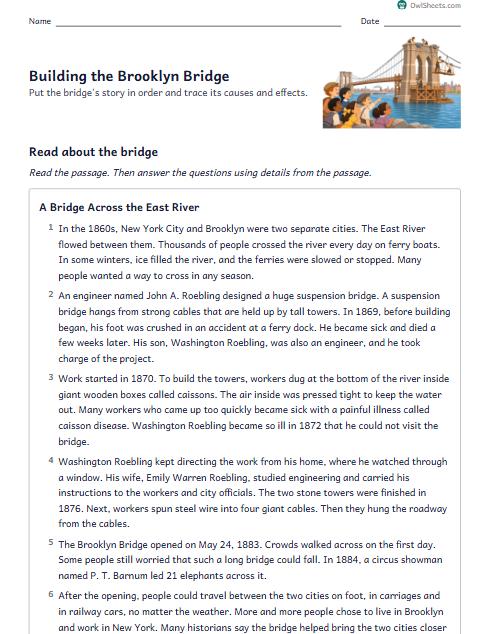
Building the Brooklyn Bridge
Grade 4 · HIS.4.4
15 questionsPremium
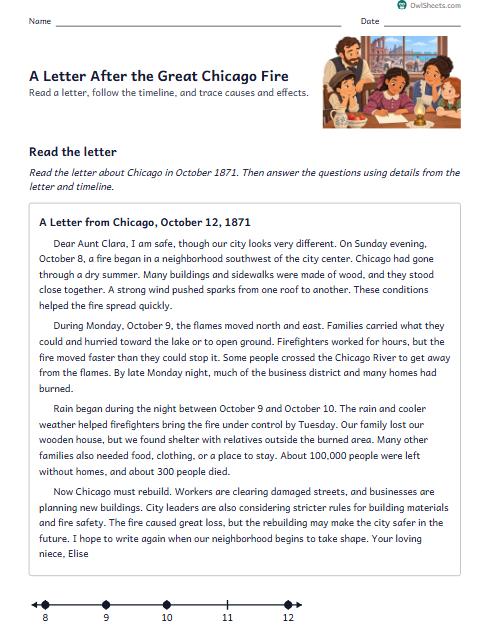
A Letter After the Great Chicago Fire
Grade 4 · HIS.4.4
15 questionsFree
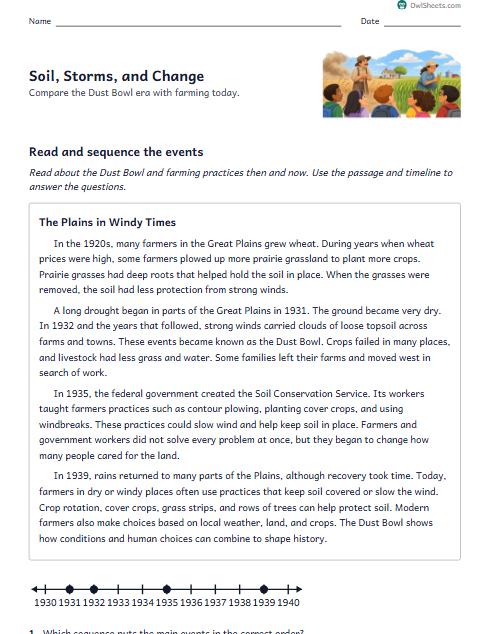
Soil, Storms, and Change
Grade 4 · HIS.4.4
15 questionsPremium
Mulberry Loop: Comparing Two Homelands
Grade 4 · HIS.4.1
14 questionsPremium
Canal-Side Signs: Desert and Wetland
Grade 4 · HIS.4.1
14 questionsPremium
The Hearthspan Crossing Report
Grade 4 · HIS.4.2
13 questionsPremium