Grade 4 · Social StudiesCIV.4.3Premium
Airport Fieldwork and a Bill's Flight Plan
Compare airport fieldwork and congressional lawmaking, then trace a fictional wildlife study bill through review, compromise, votes, and signing.
Preview
OwlSheets.com
Airport Fieldwork and a Bill's Flight Plan
Compare airport research work with the steps Congress takes to make a law.
Two Jobs, Different Decisions
Read this fictional training conversation. Then use it to answer the questions.
Field Notes Meet Congress
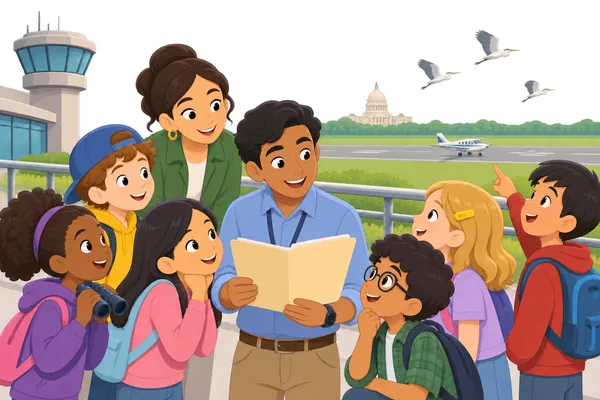
At fictional Flintwing Airport, Neris studies birds near runways. Birds and aircraft can collide, so her team records where birds gather and when they arrive. Her supervisor can adjust the team's observation checklist within its approved work plan. Dev, a congressional aide, helps explain a different task: creating a federal law for an airport wildlife research program. All people and bill records in this activity are fictional.
Neris asks, “If my supervisor approves our checklist, has Congress approved the research law?” Dev explains that a workplace instruction is different from a federal law. Airport workers can suggest ideas and share observations, but a member of Congress formally introduces a bill. This research bill could begin in either the House of Representatives or the Senate, the two chambers of Congress.
A bill usually goes to a committee, a smaller group of lawmakers. Committee members can study costs, question specialists at hearings, and suggest changes. In this activity, an early draft required observations at noon. Neris told a House committee that many birds arrived near sunset. Members changed the draft to require observations at different times. The committee recommended the revised bill to the full House. The full chamber then debated and voted.
After passage in its starting chamber, a bill goes to the other chamber for consideration. Both full chambers must pass exactly the same wording before the bill goes to the president. When versions differ, lawmakers can try different ways to reach agreement. One option is a conference committee with members from both chambers. It proposes a compromise. Each full chamber still votes on that proposal.
The president can sign the bill, making it law, or veto it, returning it with objections to the chamber where it began. Congress can override a veto with at least two-thirds of the members voting in each chamber, with enough members present to conduct business. A successful override makes the bill law without the president's signature.
Neris returns to observing birds while lawmakers continue their work. Her supervisor signs the team's checklist. Later, Dev checks congressional records and presidential action to learn what happened to the research bill. The two signatures serve different purposes.
- A. The checklist records Congress's final vote on the bill.
- B. The records track decisions in the federal lawmaking process.
- C. The checklist gives the supervisor the president's signing power.
- D. The records let airport employees cast congressional votes.
- A. The committee considers the observations while reviewing the bill.
- B. The workers count their observations as votes for passage.
- C. The workers sign their records in place of presidential action.
- D. The supervisor sends the observations in place of a Senate vote.
The preview shows the first questions. Unlock the worksheet to see all of it.
Related worksheets
The Elevator Notice Bill: A Capitol Route Challenge
Grade 4 · CIV.4.3
14 questionsPremium
Checking the National Park Sound Bill
Grade 4 · CIV.4.3
13 questionsPremium
Weighing a Proposal in Congress
Grade 4 · CIV.4.3
13 questionsPremium
Two Proposals from Granite Gap
Grade 4 · CIV.4.3
13 questionsFree
A Bill's Journey from the Park Bulletin
Grade 4 · CIV.4.3
14 questionsPremium
A Market Idea Takes Shape
Grade 4 · CIV.4.3
15 questionsPremium