Grade 4 · Social StudiesCIV.4.3Premium
The Elevator Notice Bill: A Capitol Route Challenge
Follow a fictional elevator-notice bill during a Kansas capitol visit. Use a model map and records to explain lawmaking steps.
Preview
OwlSheets.com
The Elevator Notice Bill: A Capitol Route Challenge
Use a model map and bill records to separate a tour route from a lawmaking process.
Follow the decisions
Read the visit packet. Use the model map and the bill record to answer the questions.
A Capitol Visit Packet
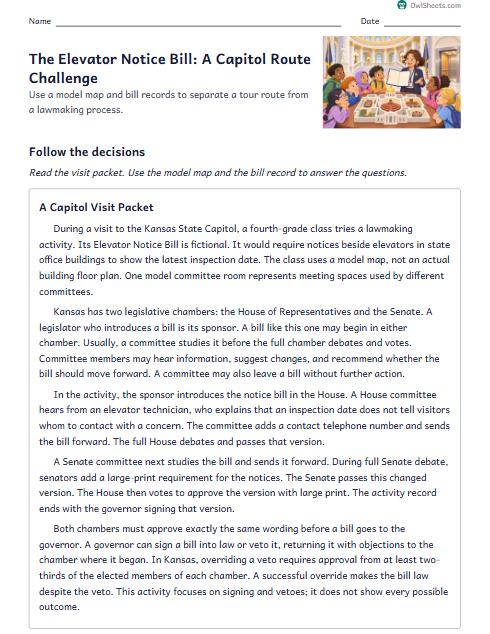
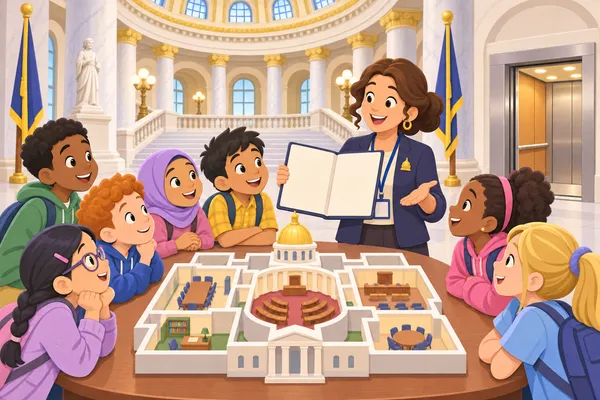
During a visit to the Kansas State Capitol, a fourth-grade class tries a lawmaking activity. Its Elevator Notice Bill is fictional. It would require notices beside elevators in state office buildings to show the latest inspection date. The class uses a model map, not an actual building floor plan. One model committee room represents meeting spaces used by different committees.
Kansas has two legislative chambers: the House of Representatives and the Senate. A legislator who introduces a bill is its sponsor. A bill like this one may begin in either chamber. Usually, a committee studies it before the full chamber debates and votes. Committee members may hear information, suggest changes, and recommend whether the bill should move forward. A committee may also leave a bill without further action.
In the activity, the sponsor introduces the notice bill in the House. A House committee hears from an elevator technician, who explains that an inspection date does not tell visitors whom to contact with a concern. The committee adds a contact telephone number and sends the bill forward. The full House debates and passes that version.
A Senate committee next studies the bill and sends it forward. During full Senate debate, senators add a large-print requirement for the notices. The Senate passes this changed version. The House then votes to approve the version with large print. The activity record ends with the governor signing that version.
Both chambers must approve exactly the same wording before a bill goes to the governor. A governor can sign a bill into law or veto it, returning it with objections to the chamber where it began. In Kansas, overriding a veto requires approval from at least two-thirds of the elected members of each chamber. A successful override makes the bill law despite the veto. This activity focuses on signing and vetoes; it does not show every possible outcome.
- A. The tour order does not establish the bill's steps.
- B. The governor approved it before the House debate.
- C. The bill followed the same order as the class tour.
- D. The governor introduced it before the sponsor did.
The preview shows the first questions. Unlock the worksheet to see all of it.
Related worksheets
Airport Fieldwork and a Bill's Flight Plan
Grade 4 · CIV.4.3
14 questionsPremium
Checking the National Park Sound Bill
Grade 4 · CIV.4.3
13 questionsPremium
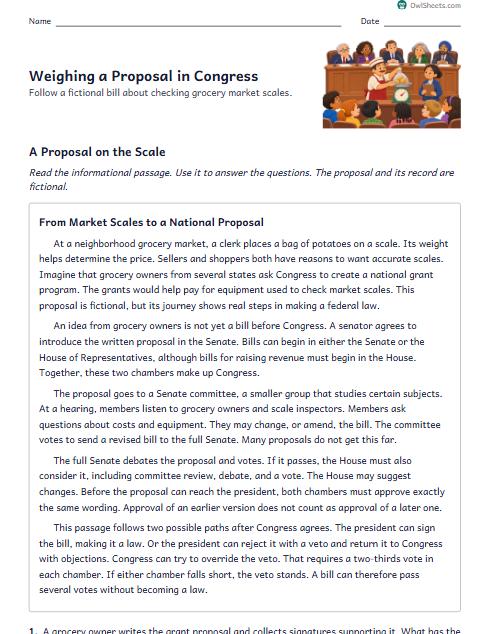
Weighing a Proposal in Congress
Grade 4 · CIV.4.3
13 questionsPremium
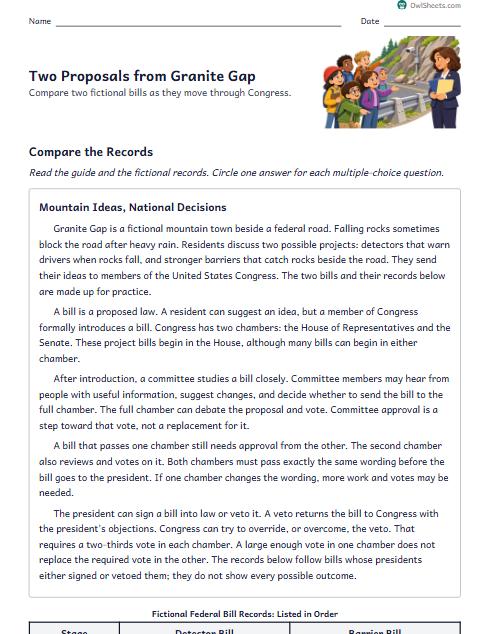
Two Proposals from Granite Gap
Grade 4 · CIV.4.3
13 questionsFree
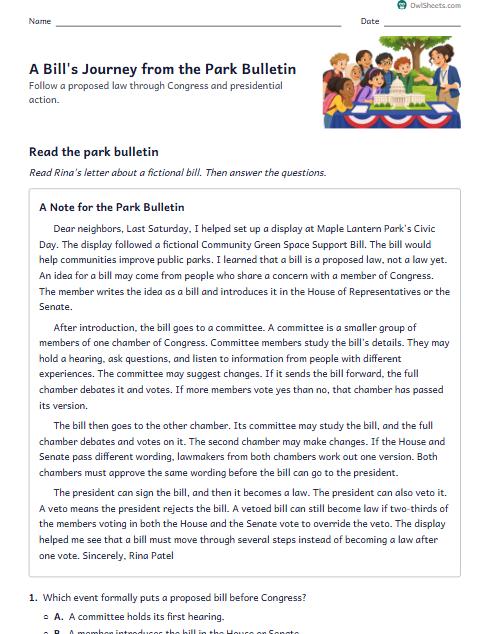
A Bill's Journey from the Park Bulletin
Grade 4 · CIV.4.3
14 questionsPremium
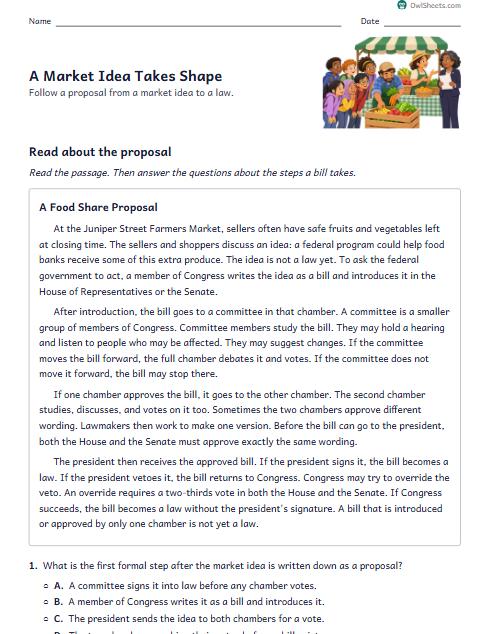
A Market Idea Takes Shape
Grade 4 · CIV.4.3
15 questionsPremium