Grade 6 · Social StudiesGEO.6.3Premium
News from the Bay of Naples, 79 CE: Living Beside Vesuvius
Grade 6 geography: read a retold Roman news report on Vesuvius and use population, rain and land-use data to compare the Bay of Naples with the Nile valley.
Preview
OwlSheets.com
News from the Bay of Naples, 79 CE: Living Beside Vesuvius
Read a retold news report and use population, climate and land-use data to explain how people adapted to and changed their land.
The report
Read the note and the news report. Then answer the questions.
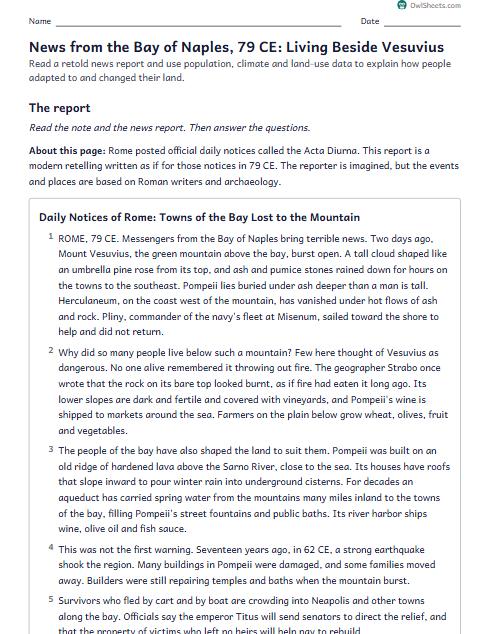
Daily Notices of Rome: Towns of the Bay Lost to the Mountain
1ROME, 79 CE. Messengers from the Bay of Naples bring terrible news. Two days ago, Mount Vesuvius, the green mountain above the bay, burst open. A tall cloud shaped like an umbrella pine rose from its top, and ash and pumice stones rained down for hours on the towns to the southeast. Pompeii lies buried under ash deeper than a man is tall. Herculaneum, on the coast west of the mountain, has vanished under hot flows of ash and rock. Pliny, commander of the navy's fleet at Misenum, sailed toward the shore to help and did not return.
2Why did so many people live below such a mountain? Few here thought of Vesuvius as dangerous. No one alive remembered it throwing out fire. The geographer Strabo once wrote that the rock on its bare top looked burnt, as if fire had eaten it long ago. Its lower slopes are dark and fertile and covered with vineyards, and Pompeii's wine is shipped to markets around the sea. Farmers on the plain below grow wheat, olives, fruit and vegetables.
3The people of the bay have also shaped the land to suit them. Pompeii was built on an old ridge of hardened lava above the Sarno River, close to the sea. Its houses have roofs that slope inward to pour winter rain into underground cisterns. For decades an aqueduct has carried spring water from the mountains many miles inland to the towns of the bay, filling Pompeii's street fountains and public baths. Its river harbor ships wine, olive oil and fish sauce.
4This was not the first warning. Seventeen years ago, in 62 CE, a strong earthquake shook the region. Many buildings in Pompeii were damaged, and some families moved away. Builders were still repairing temples and baths when the mountain burst.
5Survivors who fled by cart and by boat are crowding into Neapolis and other towns along the bay. Officials say the emperor Titus will send senators to direct the relief, and that the property of victims who left no heirs will help pay to rebuild.
- A. The mountain kept away the rain, so towns there never flooded.
- B. The soil and harbor gave a good living, and few saw a danger.
- C. Rome ordered families to settle there and guard the mountain.
- D. They knew it erupted but believed the ash would not reach them.
The preview shows the first questions. Unlock the worksheet to see all of it.
Related worksheets
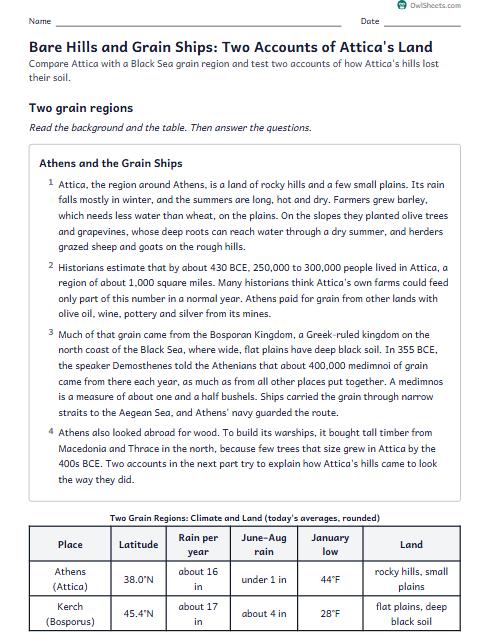
Bare Hills and Grain Ships: Two Accounts of Attica's Land
Grade 6 · GEO.6.3
14 questionsPremium
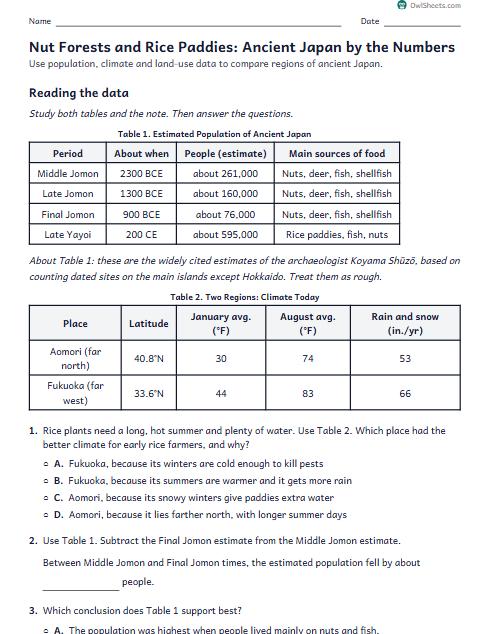
Nut Forests and Rice Paddies: Ancient Japan by the Numbers
Grade 6 · GEO.6.3
14 questionsPremium
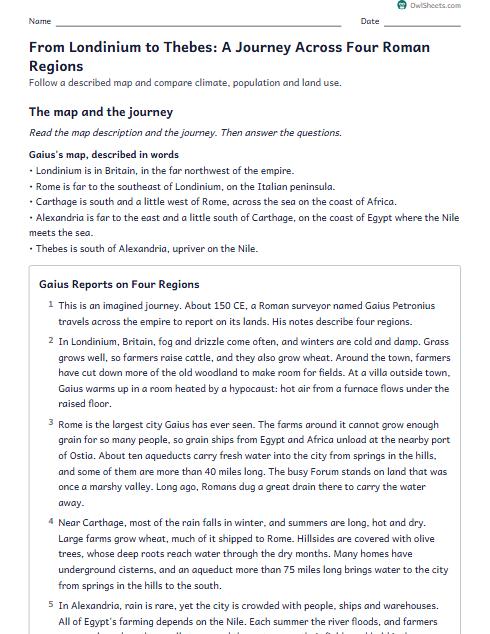
From Londinium to Thebes: A Journey Across Four Roman Regions
Grade 6 · GEO.6.3
13 questionsPremium
Stone Houses and House Mounds: Field Notes from Two Windy Coasts
Grade 6 · GEO.6.3
13 questionsPremium
Hall of Dry Lands: Water in the Sahara, Iran and the Steppe
Grade 6 · GEO.6.3
11 questionsPremium
Cut the Cedars? A Council Meeting in Byblos
Grade 6 · GEO.6.3
10 questionsPremium