Grade 6 · Social StudiesGEO.6.3Premium
Nut Forests and Rice Paddies: Ancient Japan by the Numbers
Grade 6 geography: use population estimates, climate data and land-use evidence to compare Jomon and Yayoi Japan and how people adapted to and changed the land.
Preview
OwlSheets.com
Name Date
Nut Forests and Rice Paddies: Ancient Japan by the Numbers
Use population, climate and land-use data to compare regions of ancient Japan.
Reading the data
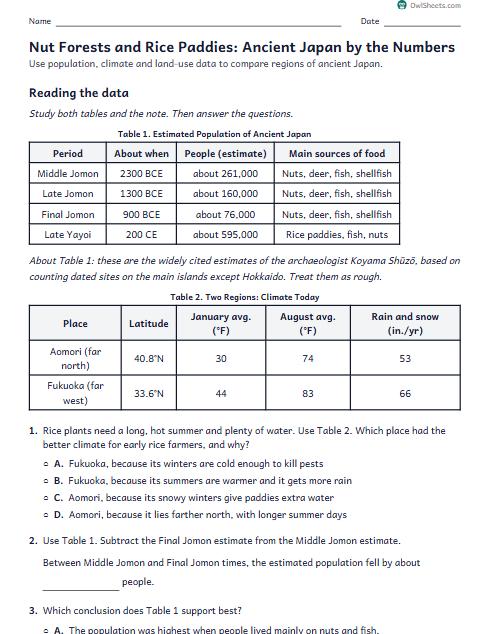
Study both tables and the note. Then answer the questions.
| Period | About when | People (estimate) | Main sources of food |
|---|---|---|---|
| Middle Jomon | 2300 BCE | about 261,000 | Nuts, deer, fish, shellfish |
| Late Jomon | 1300 BCE | about 160,000 | Nuts, deer, fish, shellfish |
| Final Jomon | 900 BCE | about 76,000 | Nuts, deer, fish, shellfish |
| Late Yayoi | 200 CE | about 595,000 | Rice paddies, fish, nuts |
About Table 1: these are the widely cited estimates of the archaeologist Koyama Shūzō, based on counting dated sites on the main islands except Hokkaido. Treat them as rough.
| Place | Latitude | January avg. (°F) | August avg. (°F) | Rain and snow (in./yr) |
|---|---|---|---|---|
| Aomori (far north) | 40.8°N | 30 | 74 | 53 |
| Fukuoka (far west) | 33.6°N | 44 | 83 | 66 |
The preview shows the first questions. Unlock the worksheet to see all of it.
Related worksheets
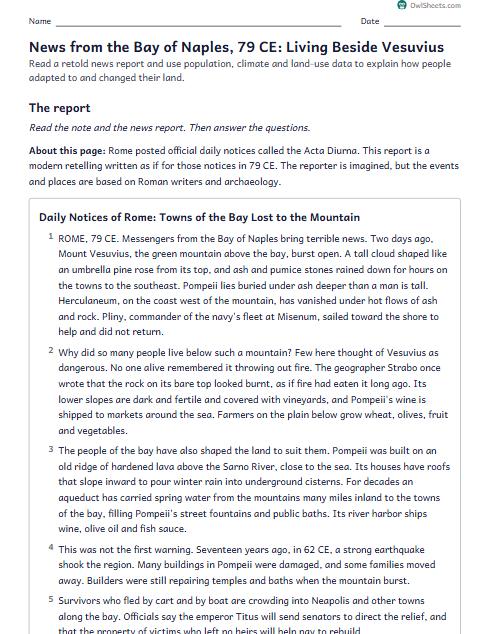
News from the Bay of Naples, 79 CE: Living Beside Vesuvius
Grade 6 · GEO.6.3
14 questionsPremium
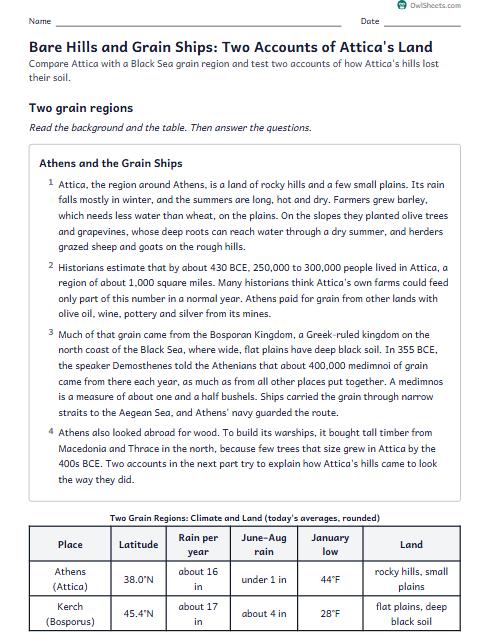
Bare Hills and Grain Ships: Two Accounts of Attica's Land
Grade 6 · GEO.6.3
14 questionsPremium
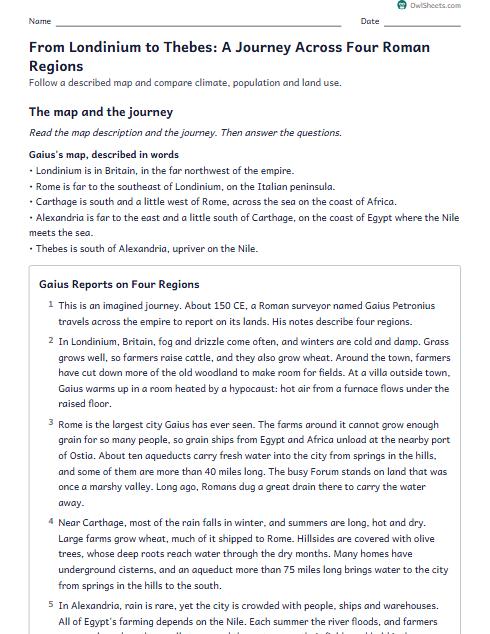
From Londinium to Thebes: A Journey Across Four Roman Regions
Grade 6 · GEO.6.3
13 questionsPremium
Stone Houses and House Mounds: Field Notes from Two Windy Coasts
Grade 6 · GEO.6.3
13 questionsPremium
Hall of Dry Lands: Water in the Sahara, Iran and the Steppe
Grade 6 · GEO.6.3
11 questionsPremium
Cut the Cedars? A Council Meeting in Byblos
Grade 6 · GEO.6.3
10 questionsPremium