Grade 6 · Social StudiesHIS.6.1Premium
The Village by the Spring: Jericho on a Timeline
Grade 6 history: follow a timeline from Natufian foragers to farming villagers at Jericho and explain how farming led to a permanent village.
Preview
OwlSheets.com
The Village by the Spring: Jericho on a Timeline
Use a dated timeline and an archaeologist's account to trace foragers becoming farmers at Jericho.
The timeline and the passage
Read the timeline and the passage. Then answer the questions.
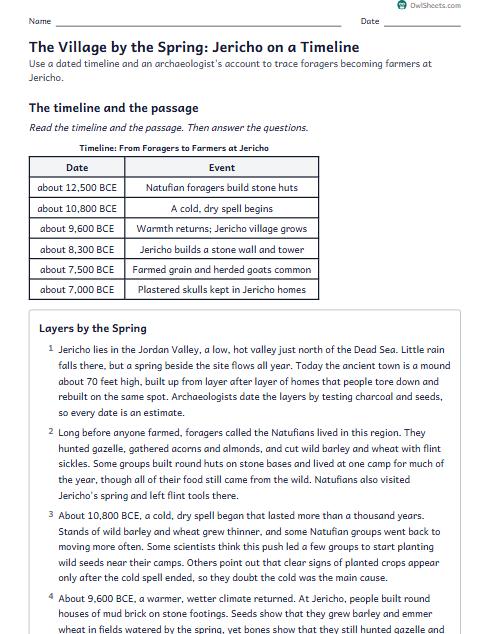
| Date | Event |
|---|---|
| about 12,500 BCE | Natufian foragers build stone huts |
| about 10,800 BCE | A cold, dry spell begins |
| about 9,600 BCE | Warmth returns; Jericho village grows |
| about 8,300 BCE | Jericho builds a stone wall and tower |
| about 7,500 BCE | Farmed grain and herded goats common |
| about 7,000 BCE | Plastered skulls kept in Jericho homes |
Layers by the Spring
1Jericho lies in the Jordan Valley, a low, hot valley just north of the Dead Sea. Little rain falls there, but a spring beside the site flows all year. Today the ancient town is a mound about 70 feet high, built up from layer after layer of homes that people tore down and rebuilt on the same spot. Archaeologists date the layers by testing charcoal and seeds, so every date is an estimate.
2Long before anyone farmed, foragers called the Natufians lived in this region. They hunted gazelle, gathered acorns and almonds, and cut wild barley and wheat with flint sickles. Some groups built round huts on stone bases and lived at one camp for much of the year, though all of their food still came from the wild. Natufians also visited Jericho's spring and left flint tools there.
3About 10,800 BCE, a cold, dry spell began that lasted more than a thousand years. Stands of wild barley and wheat grew thinner, and some Natufian groups went back to moving more often. Some scientists think this push led a few groups to start planting wild seeds near their camps. Others point out that clear signs of planted crops appear only after the cold spell ended, so they doubt the cold was the main cause.
4About 9,600 BCE, a warmer, wetter climate returned. At Jericho, people built round houses of mud brick on stone footings. Seeds show that they grew barley and emmer wheat in fields watered by the spring, yet bones show that they still hunted gazelle and gathered wild plants. They ground grain on large stones and stored it in their homes. Estimates of the village's size range from a few hundred people to about 1,000.
5About 8,300 BCE, the villagers built a stone wall and a round stone tower about 28 feet tall, with a staircase of 22 steps inside. The work took many people over a long time, and they had to be fed. Archaeologists still debate its purpose. Some think the wall held back floods and mudflows, and some think the tower was for defense or for gatherings and ceremonies.
6By about 7,500 BCE, villagers lived in rectangular houses with smooth plaster floors. Their wheat and barley were now fully farmed crops, with plump seeds that stayed on the stalk until harvest instead of dropping as wild seeds do, and many families herded goats. People buried relatives beneath their floors and covered some skulls with plaster shaped into faces, which they kept in their homes.
The cold, dry spell began about years before the village at Jericho grew.
The preview shows the first questions. Unlock the worksheet to see all of it.
Related worksheets
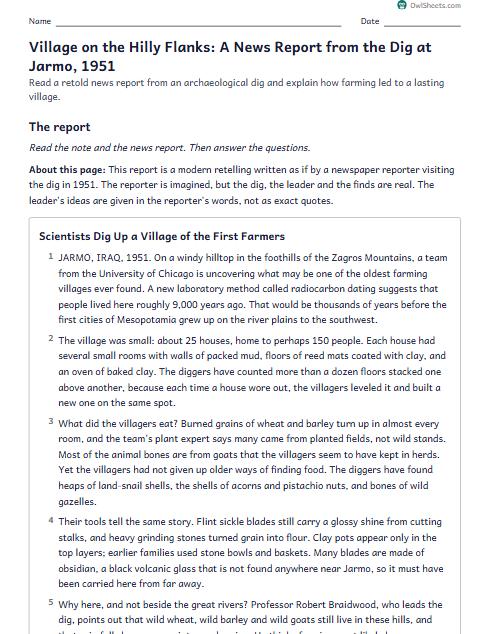
Village on the Hilly Flanks: A News Report from the Dig at Jarmo, 1951
Grade 6 · HIS.6.1
14 questionsPremium
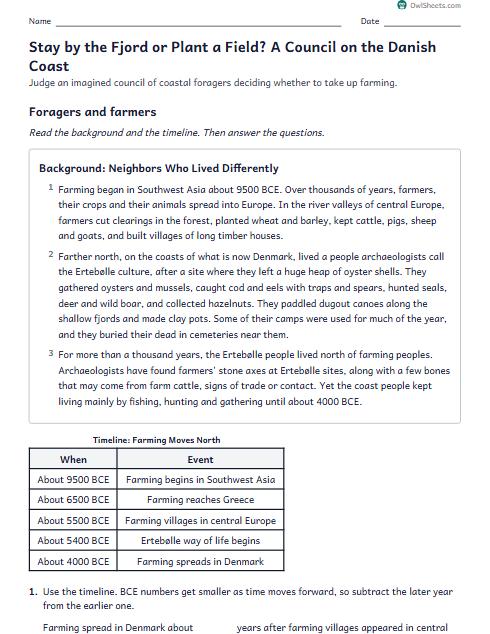
Stay by the Fjord or Plant a Field? A Council on the Danish Coast
Grade 6 · HIS.6.1
14 questionsPremium
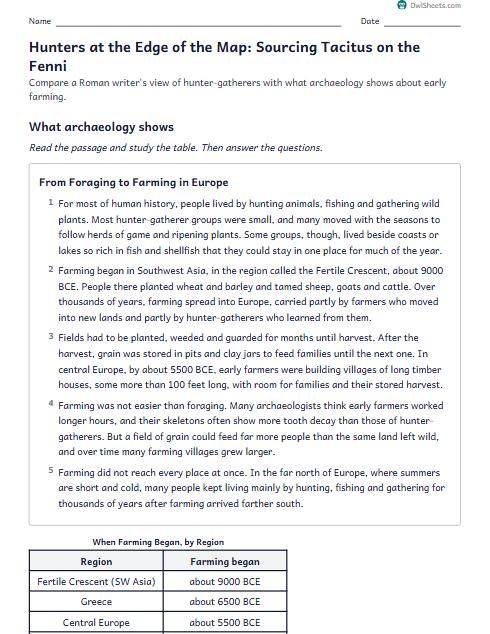
Hunters at the Edge of the Map: Sourcing Tacitus on the Fenni
Grade 6 · HIS.6.1
13 questionsPremium
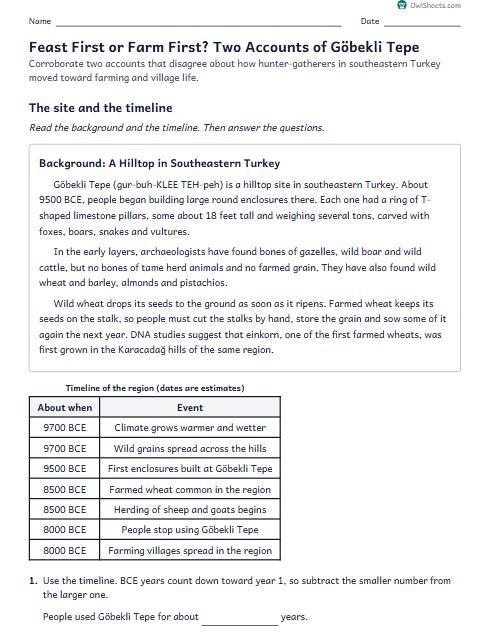
Feast First or Farm First? Two Accounts of Göbekli Tepe
Grade 6 · HIS.6.1
13 questionsPremium
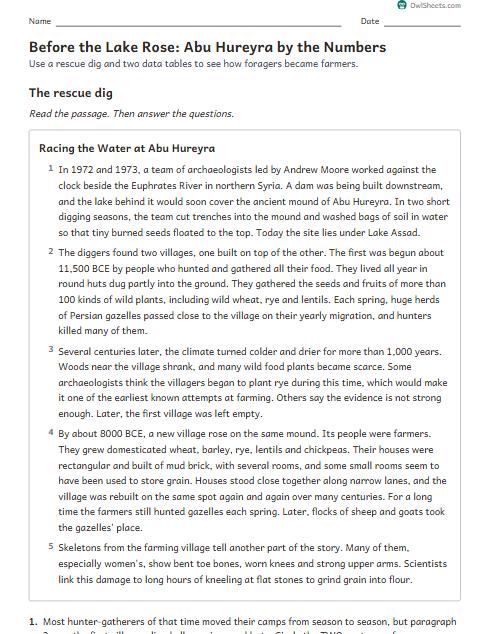
Before the Lake Rose: Abu Hureyra by the Numbers
Grade 6 · HIS.6.1
12 questionsPremium
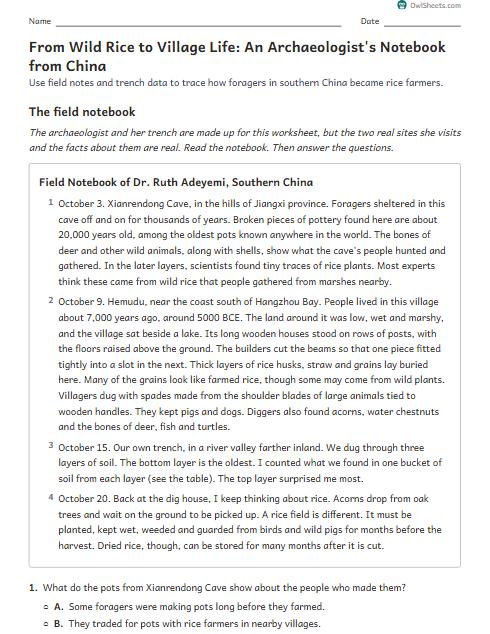
From Wild Rice to Village Life: An Archaeologist's Notebook from China
Grade 6 · HIS.6.1
10 questionsFree