Grade 6 · Social StudiesHIS.6.3Premium
Caravans to Yam: Sourcing Harkhuf's Tomb at Aswan
Grade 6 history: source Harkhuf's tomb inscription and a boy king's letter to learn about Old Kingdom rulers, beliefs, daily life and trade with Nubia.
Preview
OwlSheets.com
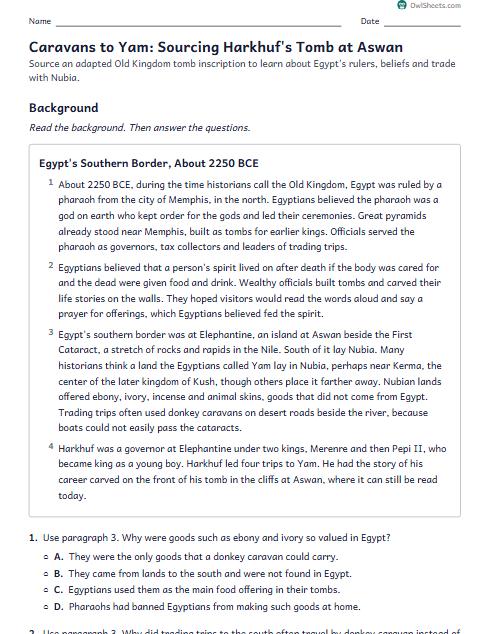
Caravans to Yam: Sourcing Harkhuf's Tomb at Aswan
Source an adapted Old Kingdom tomb inscription to learn about Egypt's rulers, beliefs and trade with Nubia.
Background
Read the background. Then answer the questions.
Egypt's Southern Border, About 2250 BCE
1About 2250 BCE, during the time historians call the Old Kingdom, Egypt was ruled by a pharaoh from the city of Memphis, in the north. Egyptians believed the pharaoh was a god on earth who kept order for the gods and led their ceremonies. Great pyramids already stood near Memphis, built as tombs for earlier kings. Officials served the pharaoh as governors, tax collectors and leaders of trading trips.
2Egyptians believed that a person's spirit lived on after death if the body was cared for and the dead were given food and drink. Wealthy officials built tombs and carved their life stories on the walls. They hoped visitors would read the words aloud and say a prayer for offerings, which Egyptians believed fed the spirit.
3Egypt's southern border was at Elephantine, an island at Aswan beside the First Cataract, a stretch of rocks and rapids in the Nile. South of it lay Nubia. Many historians think a land the Egyptians called Yam lay in Nubia, perhaps near Kerma, the center of the later kingdom of Kush, though others place it farther away. Nubian lands offered ebony, ivory, incense and animal skins, goods that did not come from Egypt. Trading trips often used donkey caravans on desert roads beside the river, because boats could not easily pass the cataracts.
4Harkhuf was a governor at Elephantine under two kings, Merenre and then Pepi II, who became king as a young boy. Harkhuf led four trips to Yam. He had the story of his career carved on the front of his tomb in the cliffs at Aswan, where it can still be read today.
- A. They were the only goods that a donkey caravan could carry.
- B. They came from lands to the south and were not found in Egypt.
- C. Egyptians used them as the main food offering in their tombs.
- D. Pharaohs had banned Egyptians from making such goods at home.
- A. Rocks and rapids at the cataracts made boat travel hard.
- B. The Nile flows south there, so boats could not come home.
- C. Donkeys could carry far more goods than a river boat.
- D. The pharaoh did not allow any boats to sail past Memphis.
The preview shows the first questions. Unlock the worksheet to see all of it.
Related worksheets
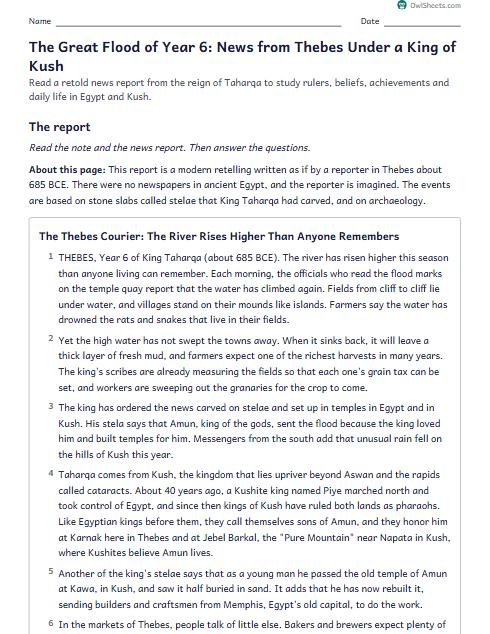
The Great Flood of Year 6: News from Thebes Under a King of Kush
Grade 6 · HIS.6.3
14 questionsPremium
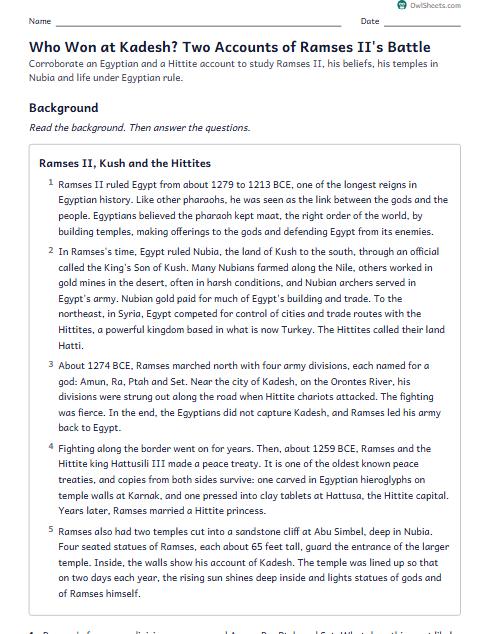
Who Won at Kadesh? Two Accounts of Ramses II's Battle
Grade 6 · HIS.6.3
14 questionsPremium
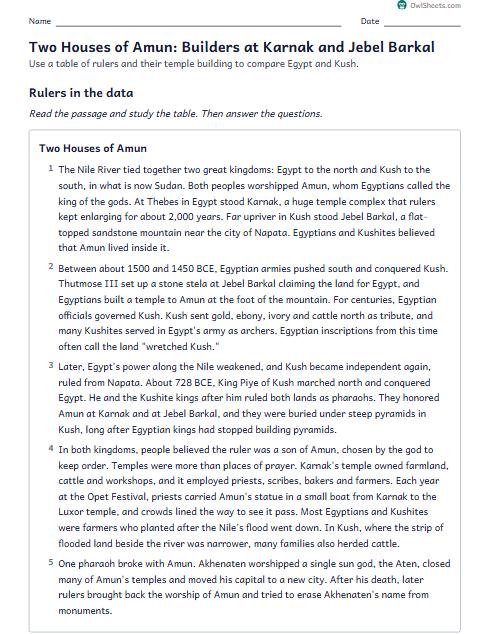
Two Houses of Amun: Builders at Karnak and Jebel Barkal
Grade 6 · HIS.6.3
13 questionsPremium
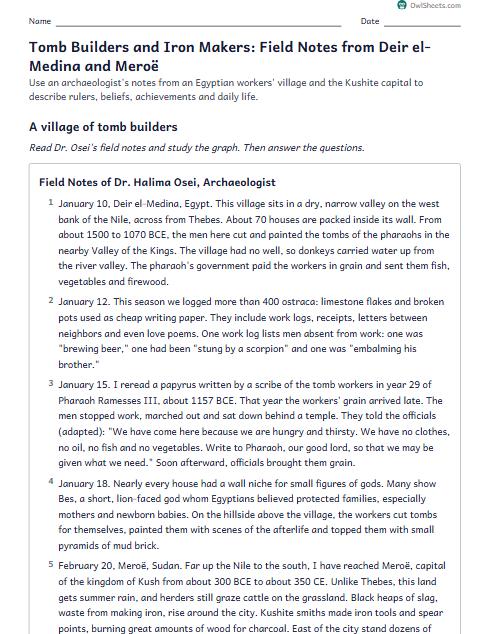
Tomb Builders and Iron Makers: Field Notes from Deir el-Medina and Meroë
Grade 6 · HIS.6.3
14 questionsPremium
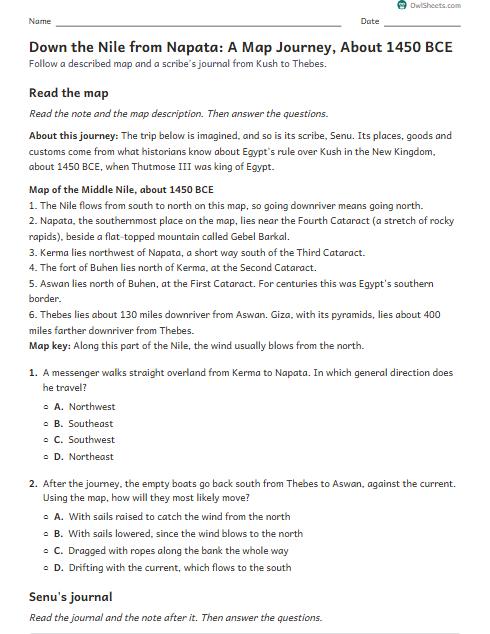
Down the Nile from Napata: A Map Journey, About 1450 BCE
Grade 6 · HIS.6.3
11 questionsPremium
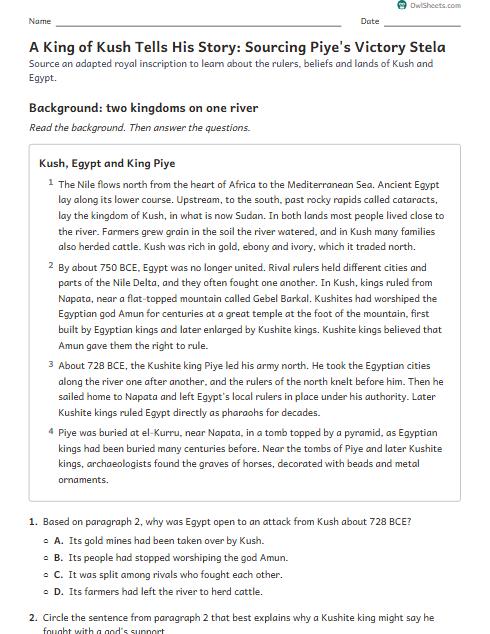
A King of Kush Tells His Story: Sourcing Piye's Victory Stela
Grade 6 · HIS.6.3
10 questionsFree