Grade 4 · Social StudiesCIV.4.4Premium
Two Work Orders for Selwick Island
Compare two island heating-project plans to explain constitutional limits, protected rights, and citizens' responsibilities.
Preview
OwlSheets.com
Two Work Orders for Selwick Island
Compare government plans using constitutional rights and citizen responsibilities.
Compare the work orders
Read the passage and the two proposed work orders. Choose answers supported by the page.
Before the Heating Project Begins
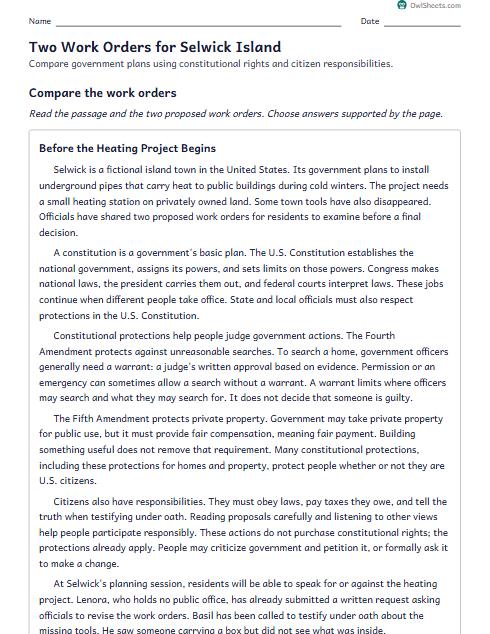
Selwick is a fictional island town in the United States. Its government plans to install underground pipes that carry heat to public buildings during cold winters. The project needs a small heating station on privately owned land. Some town tools have also disappeared. Officials have shared two proposed work orders for residents to examine before a final decision.
A constitution is a government's basic plan. The U.S. Constitution establishes the national government, assigns its powers, and sets limits on those powers. Congress makes national laws, the president carries them out, and federal courts interpret laws. These jobs continue when different people take office. State and local officials must also respect protections in the U.S. Constitution.
Constitutional protections help people judge government actions. The Fourth Amendment protects against unreasonable searches. To search a home, government officers generally need a warrant: a judge's written approval based on evidence. Permission or an emergency can sometimes allow a search without a warrant. A warrant limits where officers may search and what they may search for. It does not decide that someone is guilty.
The Fifth Amendment protects private property. Government may take private property for public use, but it must provide fair compensation, meaning fair payment. Building something useful does not remove that requirement. Many constitutional protections, including these protections for homes and property, protect people whether or not they are U.S. citizens.
Citizens also have responsibilities. They must obey laws, pay taxes they owe, and tell the truth when testifying under oath. Reading proposals carefully and listening to other views help people participate responsibly. These actions do not purchase constitutional rights; the protections already apply. People may criticize government and petition it, or formally ask it to make a change.
At Selwick's planning session, residents will be able to speak for or against the heating project. Lenora, who holds no public office, has already submitted a written request asking officials to revise the work orders. Basil has been called to testify under oath about the missing tools. He saw someone carrying a box but did not see what was inside.
| Government task | Work Order A | Work Order B |
|---|---|---|
| Land for the station | Take land; pay fair compensation. | Take land; no payment if most approve. |
| Search for town tools | Enter homes without a warrant. | Seek judge's warrant based on evidence. |
The preview shows the first questions. Unlock the worksheet to see all of it.
Related worksheets
Election Day at Willowglass Pool
Grade 4 · CIV.4.4
13 questionsFree
Science Center Surveys and Constitutional Rights
Grade 4 · CIV.4.4
14 questionsPremium
Constitution Day Posters in Hallway B
Grade 4 · CIV.4.4
13 questionsPremium
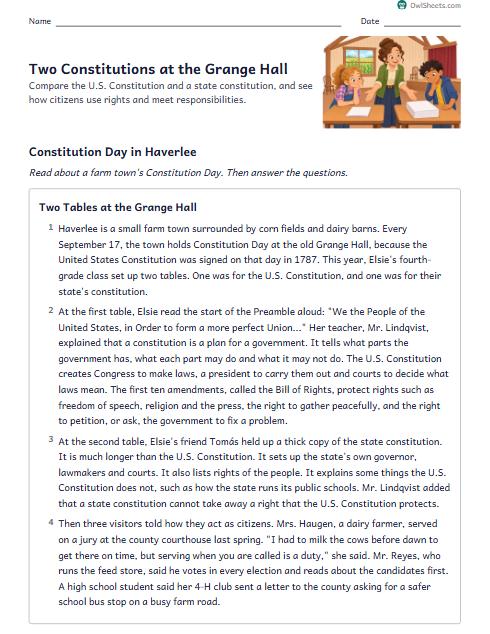
Two Constitutions at the Grange Hall
Grade 4 · CIV.4.4
14 questionsPremium
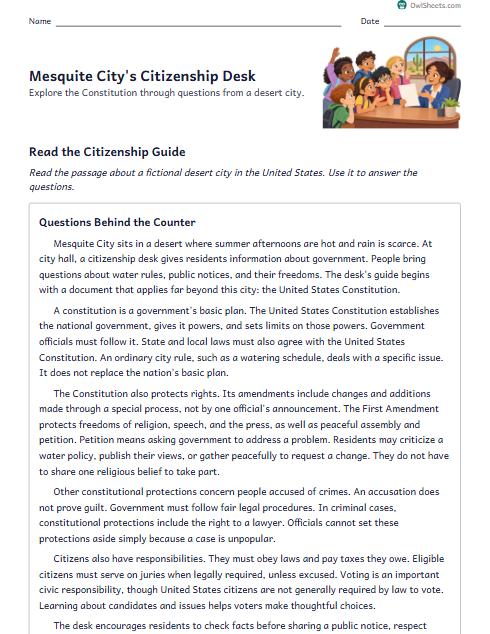
Mesquite City's Citizenship Desk
Grade 4 · CIV.4.4
13 questionsPremium
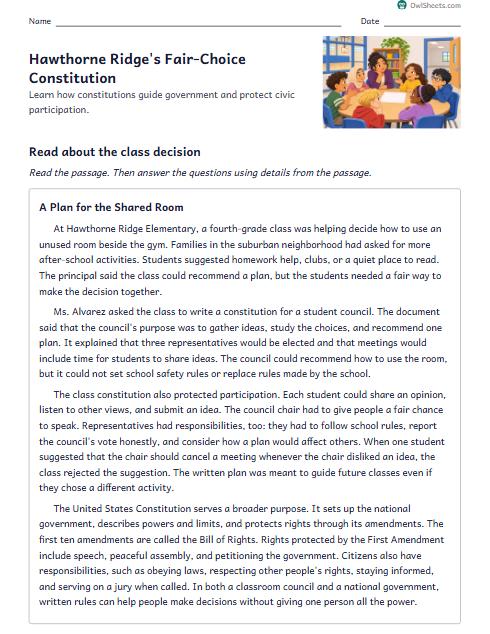
Hawthorne Ridge's Fair-Choice Constitution
Grade 4 · CIV.4.4
15 questionsPremium