Grade 4 · Social StudiesCIV.4.4Premium
Constitution Day Posters in Hallway B
Read four student-made Constitution Day posters to explain the purpose of a constitution, how it can be amended, and citizens' rights and responsibilities.
Preview
OwlSheets.com
Constitution Day Posters in Hallway B
Four student posters explain what the Constitution does and what citizens do.

Read the posters
Read the four posters. Then answer the questions.
Hallway B Constitution Day Posters
1For Constitution Day on September 17, Mr. Haldane's fourth graders at Pinewick Elementary made four posters for Hallway B. Each student wrote one poster.
2Poster 1: A Written Plan (by Wrenna). In 1787, leaders from the states met in Philadelphia and wrote the United States Constitution. It is the written plan for our national government. It creates three branches. Congress makes the laws. The president carries out the laws. The courts decide what laws mean and settle disagreements about them. The Constitution also lists what each branch may do and may not do. Even the president has to follow it.
3Poster 2: Rights We Keep (by Tobiah). Many people wanted the Constitution to list the rights of the people, too. In 1791, ten amendments, or changes, were added. They are called the Bill of Rights. The First Amendment protects freedom of speech, freedom of the press and freedom of religion. It also protects the right to gather peacefully and the right to petition, or ask the government to change something. Another amendment promises a person accused of a crime a fair trial with a jury.
4Poster 3: Our Part (by Lucinda). Rights work best when citizens do their part. Citizens obey laws and pay taxes, which pay for things like courts and roads. Adults serve on a jury when they are called. Citizens who are 18 or older can vote, and they learn about the choices first. Everyone respects the rights of others, even people they disagree with.
5Poster 4: A Plan That Can Grow (by Emeka). The writers knew the country would change, so they gave the Constitution a way to be amended. For every amendment so far, two-thirds of the House and two-thirds of the Senate voted to propose it. Then three-fourths of the states had to approve it. Since 1787, the Constitution has been amended 27 times. The first ten amendments make up the Bill of Rights.
- A. What time does Pinewick Elementary start each day?
- B. Which freedoms did the Bill of Rights add in 1791?
- C. How many states must approve a new amendment?
- D. How is our national government set up?
- A. It lets the president change laws without Congress.
- B. It keeps any leader from using power in unfair ways.
- C. It means the president also runs the courts.
- D. It means citizens do not have to obey laws.
The preview shows the first questions. Unlock the worksheet to see all of it.
Related worksheets
Two Work Orders for Selwick Island
Grade 4 · CIV.4.4
14 questionsPremium
Election Day at Willowglass Pool
Grade 4 · CIV.4.4
13 questionsFree
Science Center Surveys and Constitutional Rights
Grade 4 · CIV.4.4
14 questionsPremium
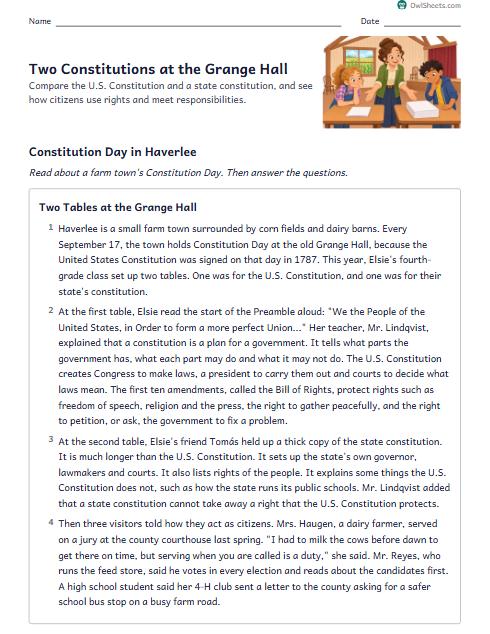
Two Constitutions at the Grange Hall
Grade 4 · CIV.4.4
14 questionsPremium
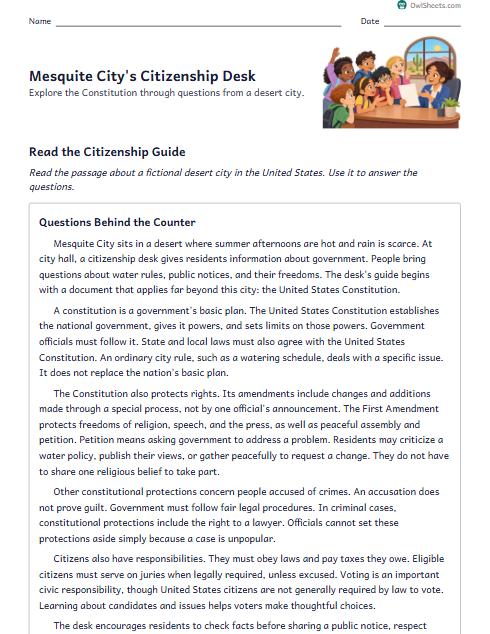
Mesquite City's Citizenship Desk
Grade 4 · CIV.4.4
13 questionsPremium
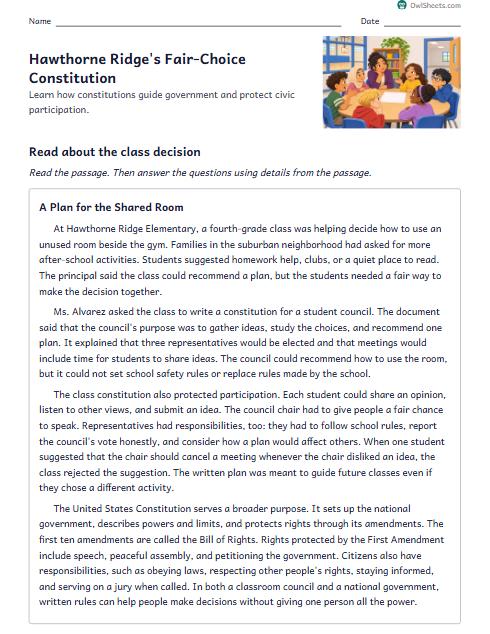
Hawthorne Ridge's Fair-Choice Constitution
Grade 4 · CIV.4.4
15 questionsPremium