
WorksheetPremium
Life Cycle Detectives at the Desert Arroyo
Investigate desert life cycle records, compare plants and animals, and build a model showing birth, growth, reproduction, and death.
Grade 3ScienceInteractive · Printable
Aligned to3-LS1-1
Or unlock every Premium worksheet with Premium
What’s included
- Single worksheet
- Auto-graded online
- 1 NGSS standard
- Printable answer key
- 14 questions
- Classroom-ready
Details
- Format
- Interactive · Printable
- Grade
- Grade 3
- Subject
- Science
- Question types
- Fill in the blank, Multiple choice, Matching, Circle the answer, Sorting, Short answer, Drawing
About this worksheet
What students practice
- Students compare desert plant and animal life cycles using observation records.
- Students identify evidence of birth, growth, reproduction, and death.
- Students build a life cycle model that connects adults to a new generation through reproduction.
How to use
Read the investigation records together. Have students use the evidence to check models, then draw and explain a complete life cycle model.
Curriculum
NGSS standard covered
Model that living things have different life cycles that all include birth, growth, reproduction and death.
Preview
OwlSheets.com
Life Cycle Detectives at the Desert Arroyo
Investigate records and build models that connect generations.
Investigate the Records
Read the investigation. Use the records to compare the living things.
An Investigation at a Dry Desert Streambed
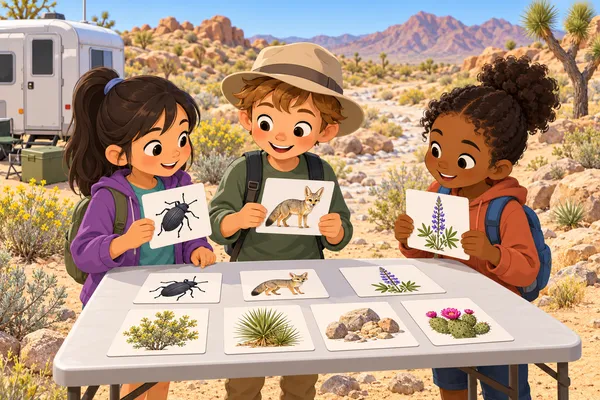
An arroyo is a streambed that is often dry. At a desert arroyo research trailer, Imani's class investigates how living things change during their lives. The class uses scientists' dated photographs and notes collected over several years.
Step 1: Choose records for darkling beetles, kit foxes, and desert lupine plants. Step 2: Use the dates to arrange each set from earlier to later. Step 3: Record body changes, new offspring, and the end of individuals' lives. Compare the three sets. Students change no living conditions; this is an observation study.
Darkling beetle results: A larva hatches from an egg. The larva grows longer. Later, it becomes a pupa. Inside the pupa, its body develops into an adult beetle. Adults reproduce, and females lay eggs. One female is seen alive after laying eggs. A later record reports the end of her life.
Kit fox results: Pups are born alive. They are small, with their eyes closed. As they grow, their eyes open and they develop adult bodies. Adult foxes can reproduce and have pups. Records show one mother alive with her pups and later with those young as adults. Eventually, her life ends.
Desert lupine results: A seed sprouts. The seedling develops more leaves and grows into an adult plant. Flowers develop, followed by pods containing new seeds. Later, that plant dies. Some of its seeds sprout after rain.
For their models, students use birth for the beginning of a young animal's life and sprouting for the beginning of a new plant's growth. Growth includes getting bigger or developing body parts. Reproduction means producing offspring. Death means an individual's life has ended.
| Birth | Growth | Reproduction | Death |
|---|---|---|---|
- Egg before hatching
- Larva
- Pupa
- Adult beetle
- A. Third
- B. First
- C. Fourth
- D. Second
The preview shows the first questions. Unlock the worksheet to see all of it.
Related worksheets
 Worksheet
Grade 3
Life Cycle Notes from the Market Stall
Life Science · 3-LS1-1
Premium15 questions
 Worksheet
Grade 3
Life Cycle Panels for the Healing Garden
Life Science · 3-LS1-1
Premium15 questions
 Worksheet
Grade 3
Following Generations in the Museum Story Garden
Life Science · 3-LS1-1
Premium15 questions
 Worksheet
Grade 3
Life Cycle Connections at the Fountain Steps
Life Science · 3-LS1-1
Free13 questions
 Worksheet
Grade 3
Editing Life Stories at the Science Museum
Life Science · 3-LS1-1
Premium14 questions
 Worksheet
Grade 3
What Comes Next Beside the Tetherball Court?
Life Science · 3-LS1-1
Premium14 questions