Grade 7 · Social StudiesGEO.7.1Premium
Staircase Fields and Bird Islands: Garcilaso on Inca Farming
Grade 7 geography: source Garcilaso de la Vega's account of Inca terraces, canals and sea-bird fertilizer, and compare it with chinampas and Maya farming.
Preview
OwlSheets.com
Staircase Fields and Bird Islands: Garcilaso on Inca Farming
Source an adapted excerpt from the Royal Commentaries of the Incas (1609) to see how Andean farmers adapted to and changed their land.
Background: farming the Andes
Read the background. Then answer the questions.
Mountains, Desert and Lakes
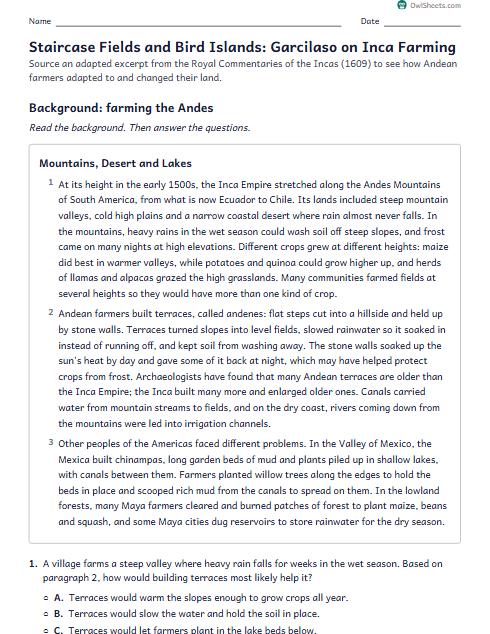
1At its height in the early 1500s, the Inca Empire stretched along the Andes Mountains of South America, from what is now Ecuador to Chile. Its lands included steep mountain valleys, cold high plains and a narrow coastal desert where rain almost never falls. In the mountains, heavy rains in the wet season could wash soil off steep slopes, and frost came on many nights at high elevations. Different crops grew at different heights: maize did best in warmer valleys, while potatoes and quinoa could grow higher up, and herds of llamas and alpacas grazed the high grasslands. Many communities farmed fields at several heights so they would have more than one kind of crop.
2Andean farmers built terraces, called andenes: flat steps cut into a hillside and held up by stone walls. Terraces turned slopes into level fields, slowed rainwater so it soaked in instead of running off, and kept soil from washing away. The stone walls soaked up the sun's heat by day and gave some of it back at night, which may have helped protect crops from frost. Archaeologists have found that many Andean terraces are older than the Inca Empire; the Inca built many more and enlarged older ones. Canals carried water from mountain streams to fields, and on the dry coast, rivers coming down from the mountains were led into irrigation channels.
3Other peoples of the Americas faced different problems. In the Valley of Mexico, the Mexica built chinampas, long garden beds of mud and plants piled up in shallow lakes, with canals between them. Farmers planted willow trees along the edges to hold the beds in place and scooped rich mud from the canals to spread on them. In the lowland forests, many Maya farmers cleared and burned patches of forest to plant maize, beans and squash, and some Maya cities dug reservoirs to store rainwater for the dry season.
- A. Terraces would warm the slopes enough to grow crops all year.
- B. Terraces would slow the water and hold the soil in place.
- C. Terraces would let farmers plant in the lake beds below.
- D. Terraces would carry the rainwater quickly down to the river.
- A. Chinampas were built on hillsides; terraces were built in lakes.
- B. Chinampas were built by the Maya; terraces were built by the Mexica.
- C. Chinampas made fields in shallow lakes; terraces made fields on slopes.
- D. Chinampas stored rain for dry months; terraces were cleared by burning.
The preview shows the first questions. Unlock the worksheet to see all of it.
Related worksheets
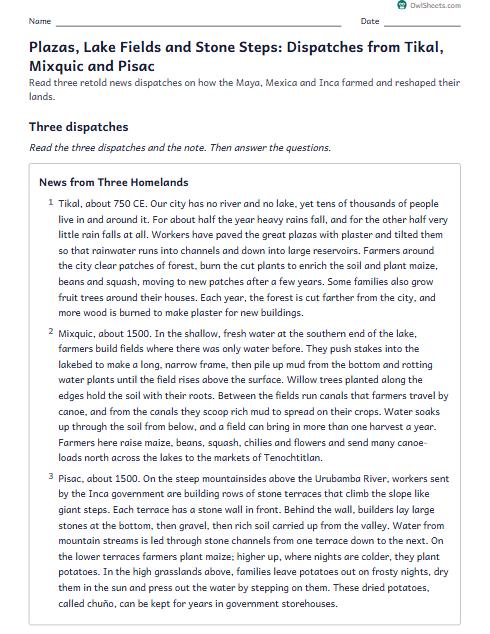
Plazas, Lake Fields and Stone Steps: Dispatches from Tikal, Mixquic and Pisac
Grade 7 · GEO.7.1
14 questionsPremium
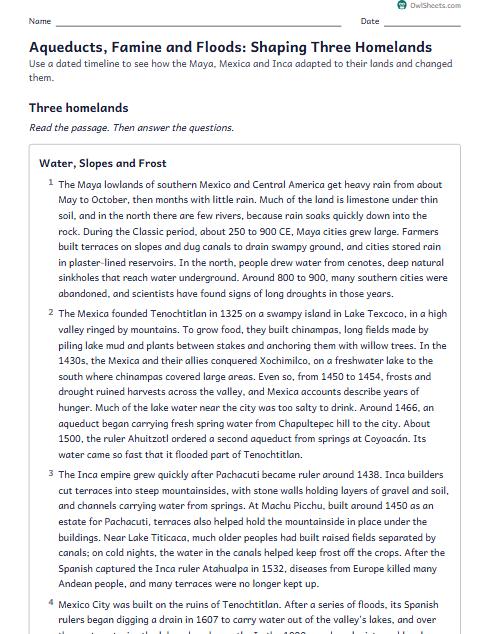
Aqueducts, Famine and Floods: Shaping Three Homelands
Grade 7 · GEO.7.1
14 questionsPremium
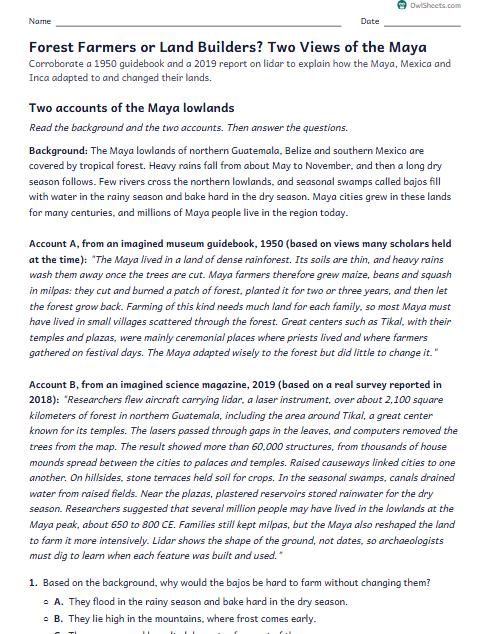
Forest Farmers or Land Builders? Two Views of the Maya
Grade 7 · GEO.7.1
14 questionsPremium
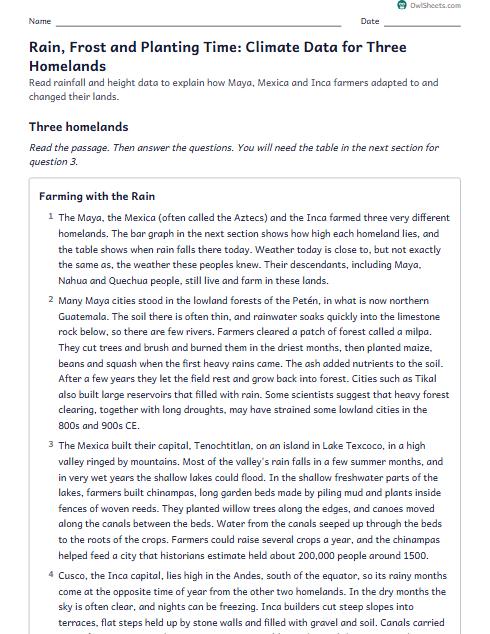
Rain, Frost and Planting Time: Climate Data for Three Homelands
Grade 7 · GEO.7.1
14 questionsPremium
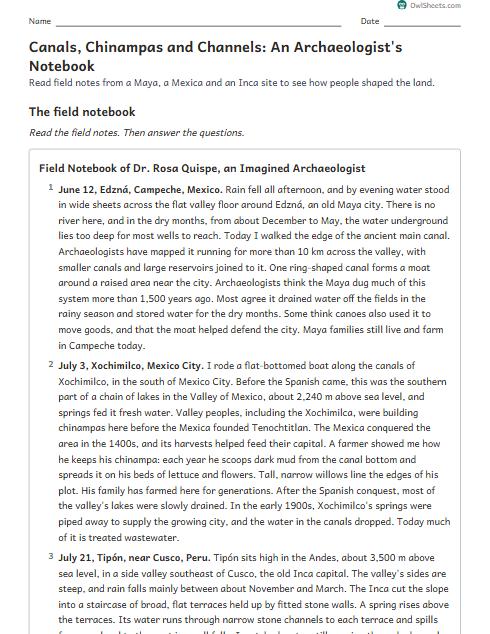
Canals, Chinampas and Channels: An Archaeologist's Notebook
Grade 7 · GEO.7.1
12 questionsPremium
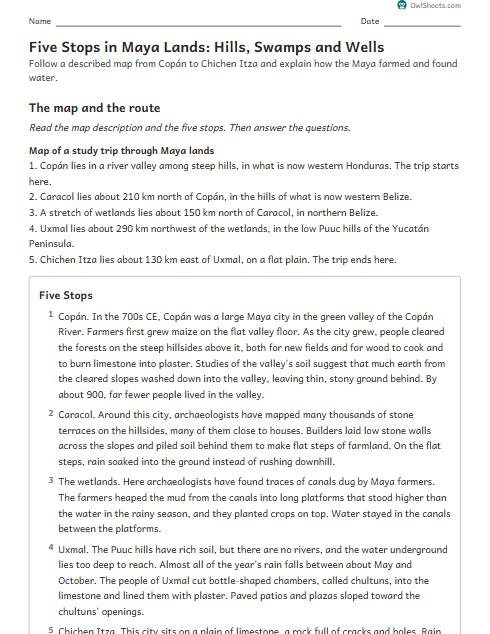
Five Stops in Maya Lands: Hills, Swamps and Wells
Grade 7 · GEO.7.1
11 questionsPremium