Grade 7 · Social StudiesHIS.7.5Premium
Counting England, 1086–1450: Domesday, Crusade Taxes and the Plague
Grade 7 history: use Domesday Book's peasant groups and England's population estimates to trace feudalism, crusade costs and the Black Death.
Preview
OwlSheets.com
Counting England, 1086–1450: Domesday, Crusade Taxes and the Plague
Use Domesday Book's numbers and population estimates to trace how feudal England changed.
A kingdom counted
Read the passage and the Domesday table. Then answer the questions.
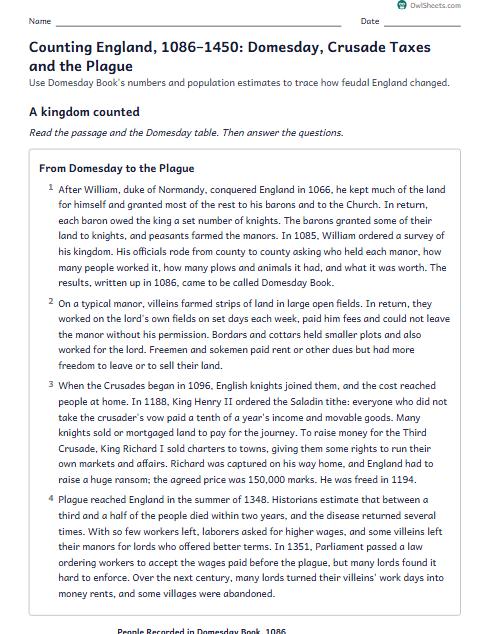
From Domesday to the Plague
1After William, duke of Normandy, conquered England in 1066, he kept much of the land for himself and granted most of the rest to his barons and to the Church. In return, each baron owed the king a set number of knights. The barons granted some of their land to knights, and peasants farmed the manors. In 1085, William ordered a survey of his kingdom. His officials rode from county to county asking who held each manor, how many people worked it, how many plows and animals it had, and what it was worth. The results, written up in 1086, came to be called Domesday Book.
2On a typical manor, villeins farmed strips of land in large open fields. In return, they worked on the lord's own fields on set days each week, paid him fees and could not leave the manor without his permission. Bordars and cottars held smaller plots and also worked for the lord. Freemen and sokemen paid rent or other dues but had more freedom to leave or to sell their land.
3When the Crusades began in 1096, English knights joined them, and the cost reached people at home. In 1188, King Henry II ordered the Saladin tithe: everyone who did not take the crusader's vow paid a tenth of a year's income and movable goods. Many knights sold or mortgaged land to pay for the journey. To raise money for the Third Crusade, King Richard I sold charters to towns, giving them some rights to run their own markets and affairs. Richard was captured on his way home, and England had to raise a huge ransom; the agreed price was 150,000 marks. He was freed in 1194.
4Plague reached England in the summer of 1348. Historians estimate that between a third and a half of the people died within two years, and the disease returned several times. With so few workers left, laborers asked for higher wages, and some villeins left their manors for lords who offered better terms. In 1351, Parliament passed a law ordering workers to accept the wages paid before the plague, but many lords found it hard to enforce. Over the next century, many lords turned their villeins' work days into money rents, and some villages were abandoned.
| Group | Main duty to the lord | Share recorded |
|---|---|---|
| Villeins | Work days on the lord's land | About 41% |
| Bordars and cottars | Work for him; small plots | About 32% |
| Freemen and sokemen | Rent or dues; freer to leave | About 14% |
| Slaves | Owned by the lord | About 10% |
| Others | Priests, craftsmen and more | About 3% |
About % of the people recorded farmed land of their own from a lord and also owed him work.
The preview shows the first questions. Unlock the worksheet to see all of it.
Related worksheets
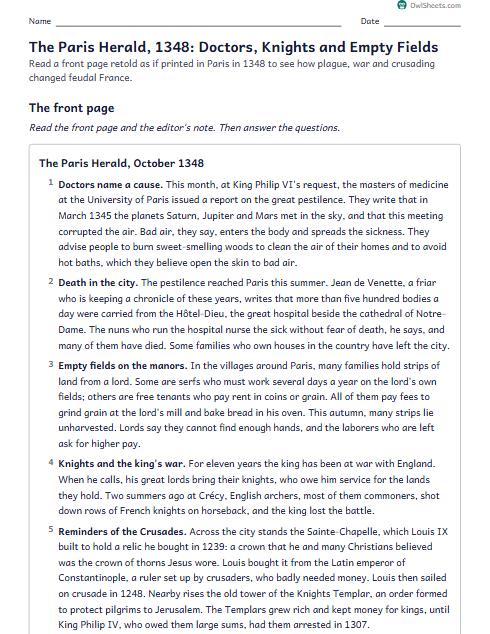
The Paris Herald, 1348: Doctors, Knights and Empty Fields
Grade 7 · HIS.7.5
13 questionsPremium
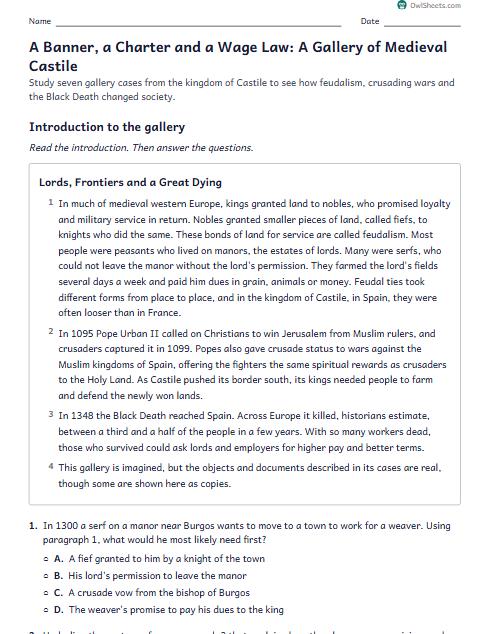
A Banner, a Charter and a Wage Law: A Gallery of Medieval Castile
Grade 7 · HIS.7.5
14 questionsPremium
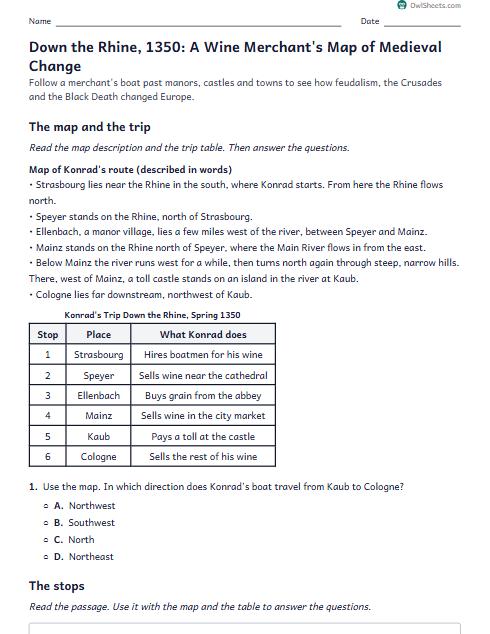
Down the Rhine, 1350: A Wine Merchant's Map of Medieval Change
Grade 7 · HIS.7.5
14 questionsPremium
From Abbey Lists to Plague Fields: A Historian's Notes Across France
Grade 7 · HIS.7.5
14 questionsPremium
Debt and a Vow: The Crusaders' Council at Zara
Grade 7 · HIS.7.5
12 questionsPremium
After the Plague: A Museum Gallery of Medieval England
Grade 7 · HIS.7.5
11 questionsFree