Grade 5 · Social StudiesECO.5.4Premium
Two Jobs Behind the County Fair
Compare a fair seller’s tax-collection job with a county inspector’s public service, using receipts and a government payment record.
Preview
OwlSheets.com
Two Jobs Behind the County Fair
Follow tax money from fair purchases to public health work.
Follow the Money
Read this fictional county briefing. Use the briefing and receipts to answer the questions.
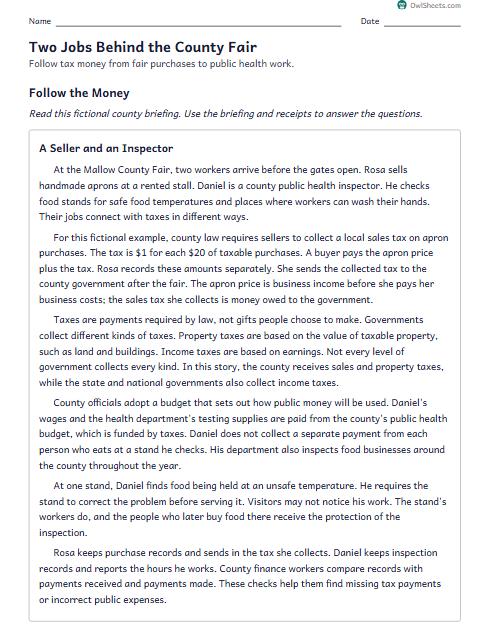
A Seller and an Inspector
At the Mallow County Fair, two workers arrive before the gates open. Rosa sells handmade aprons at a rented stall. Daniel is a county public health inspector. He checks food stands for safe food temperatures and places where workers can wash their hands. Their jobs connect with taxes in different ways.
For this fictional example, county law requires sellers to collect a local sales tax on apron purchases. The tax is $1 for each $20 of taxable purchases. A buyer pays the apron price plus the tax. Rosa records these amounts separately. She sends the collected tax to the county government after the fair. The apron price is business income before she pays her business costs; the sales tax she collects is money owed to the government.
Taxes are payments required by law, not gifts people choose to make. Governments collect different kinds of taxes. Property taxes are based on the value of taxable property, such as land and buildings. Income taxes are based on earnings. Not every level of government collects every kind. In this story, the county receives sales and property taxes, while the state and national governments also collect income taxes.
County officials adopt a budget that sets out how public money will be used. Daniel's wages and the health department's testing supplies are paid from the county's public health budget, which is funded by taxes. Daniel does not collect a separate payment from each person who eats at a stand he checks. His department also inspects food businesses around the county throughout the year.
At one stand, Daniel finds food being held at an unsafe temperature. He requires the stand to correct the problem before serving it. Visitors may not notice his work. The stand's workers do, and the people who later buy food there receive the protection of the inspection.
Rosa keeps purchase records and sends in the tax she collects. Daniel keeps inspection records and reports the hours he works. County finance workers compare records with payments received and payments made. These checks help them find missing tax payments or incorrect public expenses.
| Receipt | Apron price | Sales tax | Buyer paid |
|---|---|---|---|
| A | $20 | $1 | $21 |
| B | $40 | $2 | $42 |
| C | $60 | $3 | $63 |
- A. She should divide that money among the buyers.
- B. She should send that money to the county.
- C. She should pay that money directly to Daniel.
- D. She should save that money for her stall rent.
The preview shows the first questions. Unlock the worksheet to see all of it.
Related worksheets
Following Aldercap's Winter Tax Dollars
Grade 5 · ECO.5.4
14 questionsFree
Bellwether Town's Shared Services
Grade 5 · ECO.5.4
15 questionsPremium
Fairground Funds in Two Counties
Grade 5 · ECO.5.4
15 questionsPremium
Two Park Jobs, One Bike Goal
Grade 5 · ECO.5.3
13 questionsPremium
Tuesday Mornings at the Fernhill School Bank
Grade 5 · ECO.5.3
13 questionsFree
Ice Pop Carts on Larkin Avenue
Grade 5 · ECO.5.2
14 questionsPremium