Grade 3 · Social StudiesCIV.3.1
Behind the Headphones at Soundbridge Library
Use a librarian's speech and service records to explain why communities have governments and how taxes support public services.
Preview
OwlSheets.com
Behind the Headphones at Soundbridge Library
Follow public money from taxes to a working library service.
A Librarian Explains
Read this speech by a fictional librarian. Choose answers using evidence from the speech.
Ms. Chen's Welcome Speech
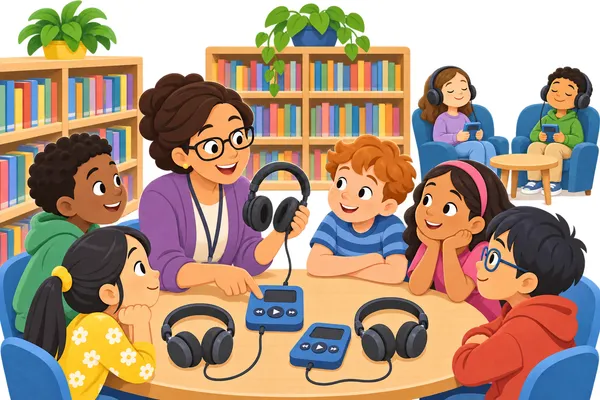
Welcome to Soundbridge Public Library! I am Ms. Chen, a librarian. Today we are opening our listening room. People can hear recorded books here. Some visitors have trouble reading small print. Others are learning to read or enjoy hearing a story. Visitors share the players and headphones instead of buying their own equipment.
Before this room opened, residents told the town government that they wanted more ways to use books. Town leaders checked the needs and costs. They approved money for recorded books, equipment, and staff time. Government helps the community organize public services and make rules for using shared resources.
Where did that money come from? People and businesses pay taxes required by law. The government collects these payments and puts money into a public budget, a plan for spending public money. Part of our town's budget supports this library. Taxes also support other services, including street lighting and fire protection.
Our equipment did not arrive by magic! The library used approved public money to buy players and pay workers to install them. Now staff members teach visitors to use them. Workers also clean headphones, replace worn parts, and repair players.
Last month, a reading club gave the library two extra headphones. That gift helped, but it did not pay staff wages or repair bills. Visitors do not buy a ticket each time they listen. The library follows a public schedule and sets time limits when people are waiting. Even residents who do not visit this week can use the service another time.
- A. To organize a shared way for residents to use books
- B. To collect payments for each story visitors hear
- C. To sell personal music players to residents
- D. To choose which stories families read at home
- A. The reading club gave headphones, leaders sold them, and visitors paid repair bills.
- B. Workers bought players, visitors took them home, and the library collected gifts.
- C. Visitors bought tickets, workers collected them, and the town returned the taxes.
- D. People paid taxes, leaders approved spending, and the library bought equipment.
Staff members spend time teaching visitors to use players.Residents asked for more ways to use books.Workers replace worn parts and repair players.Some visitors enjoy hearing a story.
- A. Public money pays costs that visitors do not pay at the door.
- B. The reading club pays the full cost through its gifts.
- C. The workers cover the room's costs with their own money.
- D. The room's costs ended when the players were installed.
- A. The headphones replace the town's spending plan.
- B. The headphones are a payment required by town law.
- C. The headphones are a gift rather than a required payment.
- D. The headphones give club members ownership of the room.
- A. Finding buyers for the reading club's headphones
- B. Choosing which books residents should own
- C. Deciding which visitors should pay the town's taxes
- D. Sharing a limited number of players among visitors
Keeping a Public Service Working
Use the speech and this fictional service record. Then apply the ideas to new situations.
| When | Record | Payment source |
|---|---|---|
| Before opening | Players bought and installed | Town tax funds |
| Opening month | Two extra headphones received | Reading club gift |
| Each month | Staff paid to assist visitors | Town tax funds |
| After a player broke | Replacement part purchased | Town tax funds |
- A. Club gifts pay for both staff assistance and replacement parts.
- B. Club gifts cover more kinds of expenses than tax funds do.
- C. Tax funds help both start the service and keep it working.
- D. Tax funds pay for equipment but leave staff costs unpaid.
| Equipment or parts | Workers' time |
|---|---|
- A. The players would become personal property of the visitors.
- B. Some visitors would have equipment but less help using it.
- C. The public schedule would replace the need for working players.
- D. The reading club would become responsible for collecting taxes.
- A. They replace the need for a public spending plan.
- B. They help provide access and keep that access usable.
- C. They make visitors responsible for staff wages.
- D. They let workers sell the entrance to visitors.
- A. Taxes help keep services available beyond one person's use.
- B. Taxes work like tickets purchased for each visit.
- C. Taxes are gifts that residents send after using a service.
- D. Taxes give frequent visitors a larger share of ownership.
- A. Both let a club decide how the town collects taxes.
- B. Both use public funds to maintain something people share.
- C. Both give each nearby family equipment to own.
- D. Both depend on collecting a ticket from each user.
Related worksheets
Two Jobs at the Paper-Folding Festival
Grade 3 · CIV.3.1
14 questionsPremium
Beyond the Ranch Fence
Grade 3 · CIV.3.1
14 questionsPremium
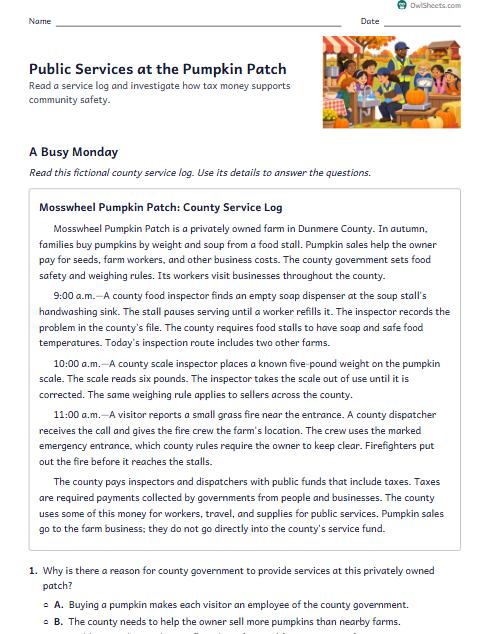
Public Services at the Pumpkin Patch
Grade 3 · CIV.3.1
13 questionsPremium
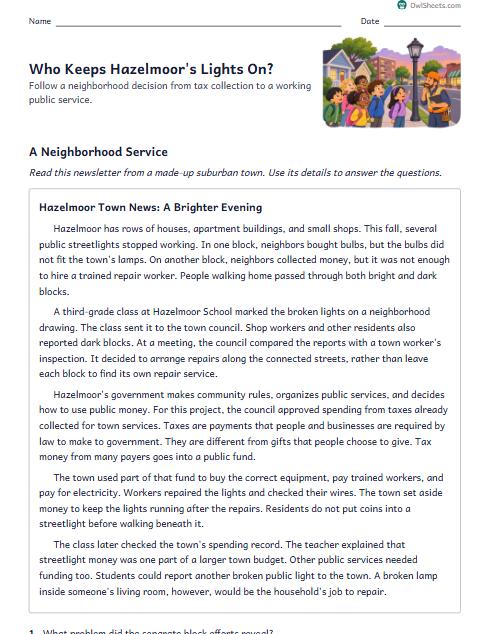
Who Keeps Hazelmoor's Lights On?
Grade 3 · CIV.3.1
14 questionsPremium
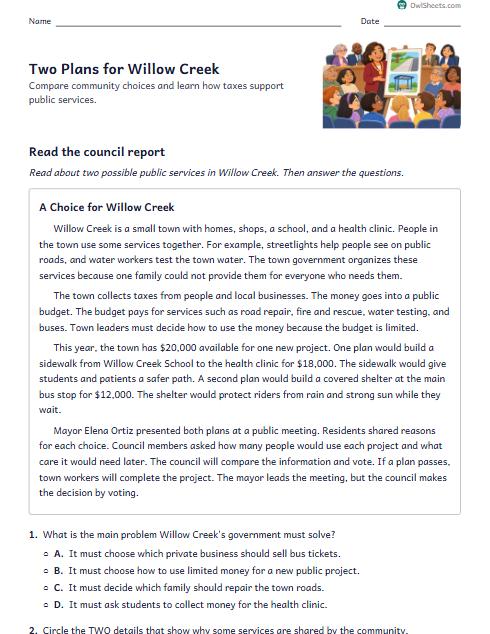
Two Plans for Willow Creek
Grade 3 · CIV.3.1
15 questionsPremium
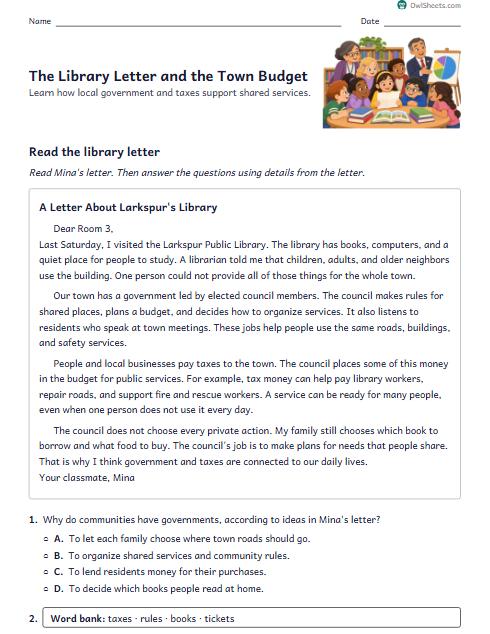
The Library Letter and the Town Budget
Grade 3 · CIV.3.1
14 questionsPremium