Grade 3 · Social StudiesCIV.3.1Premium
Who Keeps Hazelmoor's Lights On?
Explore why a suburban town organizes streetlight service and how taxes pay for equipment, workers, and electricity.
Preview
OwlSheets.com
Who Keeps Hazelmoor's Lights On?
Follow a neighborhood decision from tax collection to a working public service.
A Neighborhood Service
Read this newsletter from a made-up suburban town. Use its details to answer the questions.
Hazelmoor Town News: A Brighter Evening
Hazelmoor has rows of houses, apartment buildings, and small shops. This fall, several public streetlights stopped working. In one block, neighbors bought bulbs, but the bulbs did not fit the town's lamps. On another block, neighbors collected money, but it was not enough to hire a trained repair worker. People walking home passed through both bright and dark blocks.
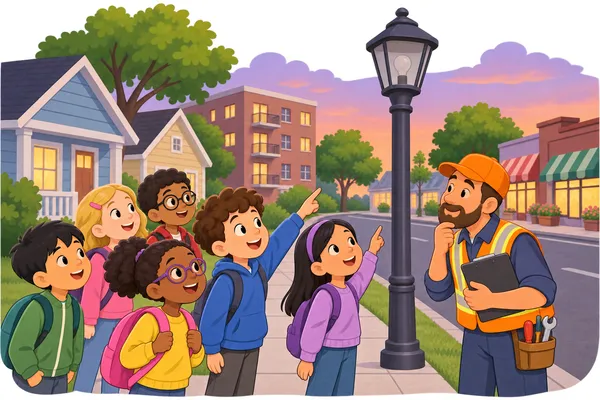
A third-grade class at Hazelmoor School marked the broken lights on a neighborhood drawing. The class sent it to the town council. Shop workers and other residents also reported dark blocks. At a meeting, the council compared the reports with a town worker's inspection. It decided to arrange repairs along the connected streets, rather than leave each block to find its own repair service.
Hazelmoor's government makes community rules, organizes public services, and decides how to use public money. For this project, the council approved spending from taxes already collected for town services. Taxes are payments that people and businesses are required by law to make to government. They are different from gifts that people choose to give. Tax money from many payers goes into a public fund.
The town used part of that fund to buy the correct equipment, pay trained workers, and pay for electricity. Workers repaired the lights and checked their wires. The town set aside money to keep the lights running after the repairs. Residents do not put coins into a streetlight before walking beneath it.
The class later checked the town's spending record. The teacher explained that streetlight money was one part of a larger town budget. Other public services needed funding too. Students could report another broken public light to the town. A broken lamp inside someone's living room, however, would be the household's job to repair.
- A. Shop workers needed to buy lamps for nearby living rooms.
- B. Neighbors had enough money but preferred darker streets.
- C. Streetlight repairs needed shared planning, money, and skills.
- D. The class needed to collect taxes before drawing the streets.
The class sent a drawing to the council.One block bought bulbs that did not fit.Another block collected too little to hire a trained worker.The class later checked a spending record.
The preview shows the first questions. Unlock the worksheet to see all of it.
Related worksheets
Two Jobs at the Paper-Folding Festival
Grade 3 · CIV.3.1
14 questionsPremium
Beyond the Ranch Fence
Grade 3 · CIV.3.1
14 questionsPremium
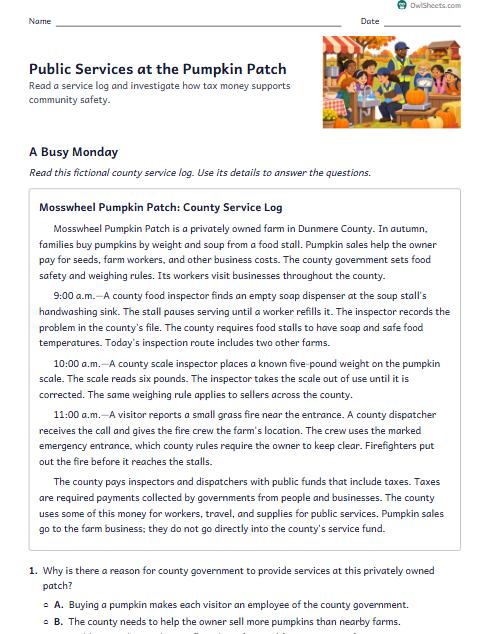
Public Services at the Pumpkin Patch
Grade 3 · CIV.3.1
13 questionsPremium
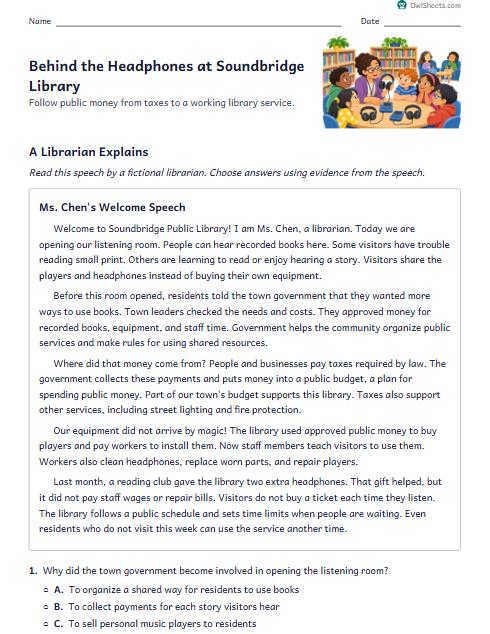
Behind the Headphones at Soundbridge Library
Grade 3 · CIV.3.1
13 questionsFree
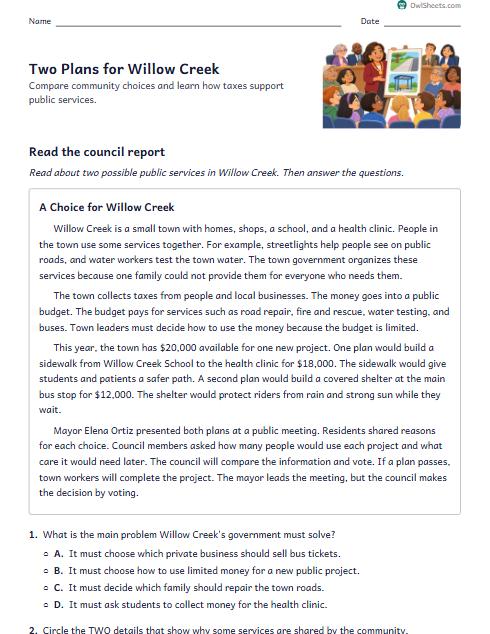
Two Plans for Willow Creek
Grade 3 · CIV.3.1
15 questionsPremium
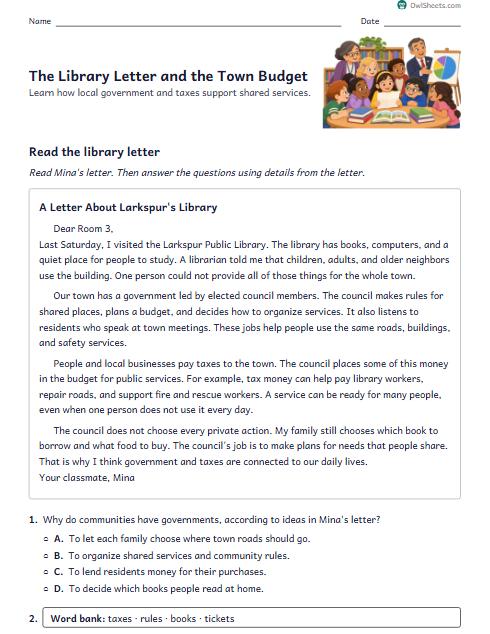
The Library Letter and the Town Budget
Grade 3 · CIV.3.1
14 questionsPremium