Grade 2 · Social StudiesGEO.2.2Premium
Two Libraries, Different Delivery Plans
Compare urban, suburban, and rural homes, jobs, transportation, and land use while planning deliveries from two public libraries.
Preview
OwlSheets.com
Two Libraries, Different Delivery Plans
Compare the communities served by two public libraries.
Two Library Areas
Read about these made-up library areas. Use the details to answer the questions.
Planning Book Deliveries
Two public libraries deliver books to people who have trouble visiting. Workers study the communities before planning their trips.
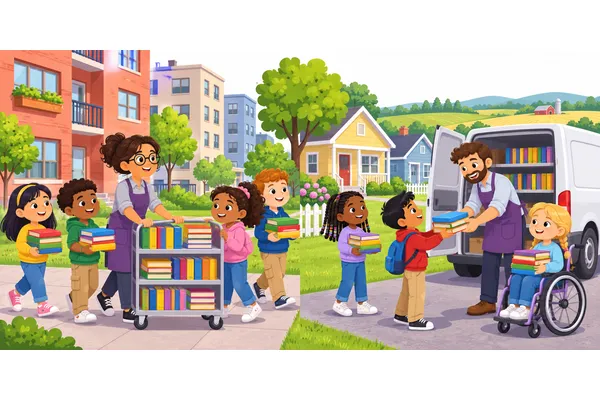
Central Library serves an urban community, or city. Many people live close together. Tall apartment buildings stand beside offices and stores. Some workers repair elevators or work in offices. Buses stop on many streets. A delivery worker can park a cart outside one apartment building and bring books to several families inside.
Fieldside Library stands in a suburban community near the city. Many homes have yards. There are apartments, too. Shops, schools, and parks use some land. Some residents work nearby; others travel into the city for work. Many drive cars. A bus connects the library with the city. The delivery van stops at several separate houses along one street.
Fieldside also serves a rural area beyond the suburb. Homes are farther apart. Fields and pastures cover much of the land. Some people grow crops or care for farm animals. Others teach or repair vehicles. People often drive between homes and stores. The delivery van follows long roads between stops.
Each community has homes and workers. Its buildings, roads, and open spaces help shape the library's delivery plan.
- A. The families share an apartment building.
- B. The families work in nearby offices.
- C. The families live along separate roads.
- D. The families have large yards nearby.
- A. Suburban stops need longer drives between fields and pastures.
- B. Rural stops serve more families inside each apartment building.
- C. Rural stops are farther apart than stops along the suburban street.
- D. Suburban stops are reached by walking through office buildings.
The preview shows the first questions. Unlock the worksheet to see all of it.
Related worksheets
Window Crews on Kestrel Island
Grade 2 · GEO.2.2
14 questionsPremium
Hard Hats, Three Building Choices
Grade 2 · GEO.2.2
14 questionsPremium
A Letter from Needlefin Harbor
Grade 2 · GEO.2.2
13 questionsPremium
Picture the Communities of Wrenhaven
Grade 2 · GEO.2.2
14 questionsFree
Three Communities Around Gull Bay
Grade 2 · GEO.2.2
14 questionsPremium
County Fair Community Clues
Grade 2 · GEO.2.2
14 questionsPremium