
Worksheet
Campsite Beanbag Challenge
Explore how the strength and direction of pushes and pulls change a beanbag's motion during a campsite game.
KindergartenScienceInteractive · Printable
Aligned toK-PS2-1
What’s included
- Single worksheet
- Auto-graded online
- 1 NGSS standard
- Printable answer key
- 8 questions
- Classroom-ready
Details
- Format
- Interactive · Printable
- Grade
- Kindergarten
- Subject
- Science
- Question types
- Multiple choice, Sorting, Short answer
About this worksheet
What students practice
- Students compare how small and big pushes and pulls change how far a beanbag moves.
- Students predict how changing a push or pull's direction changes a beanbag's motion.
- Students identify a fair test of push strength.
How to use
Read the passage and questions aloud. Point out the campsite landmarks before the direction questions. Students can point to choices or tell an adult their answers.
Curriculum
NGSS standard covered
Test how pushes and pulls of different strengths or directions change the way an object moves.
Preview
OwlSheets.com
Campsite Beanbag Challenge
Use camping game tests to think about pushes and pulls.
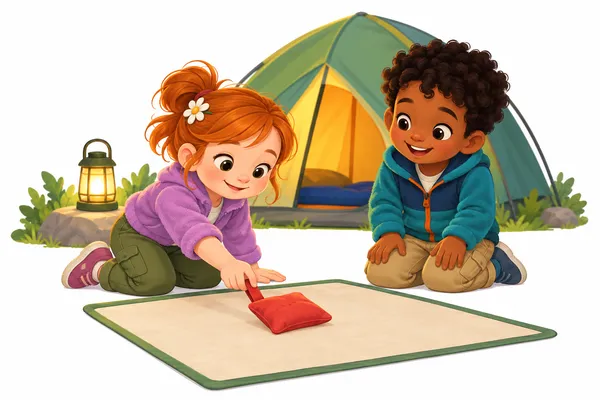
Try the Camping Game
Listen to the test story. Use what happened to answer.
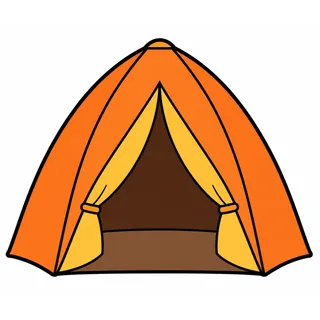
Nell's Beanbag Tests
On a camping trip, Nell sets a smooth game mat on flat ground. She uses one beanbag with a short cloth tab. Before each test, she puts the bag at the same start mark. A small push slides it to the near line. A big push slides it to the far line. Nell pulls the tab next. A small pull slides the bag to the near line. A big pull slides it to the far line.
- A. Small pushes and pulls moved the bag farther.
- B. Big pushes and pulls moved the bag farther.
- C. Pushes always moved the bag farther than pulls.
- D. Pushes and pulls always moved the bag equally far.
- A. Keep the bag, mat, start, and direction the same. Change only push strength.
- B. Keep the bag, start, and direction the same. Change the mat and push strength.
- C. Keep the mat, start, and direction the same. Change the bag and push strength.
- D. Keep the bag, mat, and direction the same. Change the start and push strength.
- A. The small push reached the near line.
- B. The big push reached the far line.
- C. The small pull reached the near line.
- D. The big pull reached the far line.
Choose a Direction
Listen to the new tests. Think about which way the bag moves.
- A. Pull toward the lantern.
- B. Pull toward the tent.
- C. Pull straight up off the mat.
- D. Do not pull the bag at all.
| Strength: how hard | Direction: which way |
|---|---|
- A. The bag changed the way it was moving.
- B. The bag kept moving the same way.
- C. The bag stayed still after the push.
- D. The bag moved upward off the mat.
- A. A smaller pull toward the tent.
- B. A bigger pull toward the lantern.
- C. A bigger pull toward the tent.
- D. A smaller pull toward the lantern.
Related worksheets
 Worksheet
Kindergarten
Pear Path Tests at Harvest
Physical Science · K-PS2-1
Premium15 questions
 Worksheet
Kindergarten
Crate Checks on the Spring Farm
Physical Science · K-PS2-1
Premium13 questions
 Worksheet
Kindergarten
The Orchard Basket Delivery
Physical Science · K-PS2-1
Premium10 questions
 Worksheet
Kindergarten
Rugby Field Marker Challenge
Physical Science · K-PS2-1
Premium12 questions
 Worksheet
Kindergarten
Backyard Playhouse Block Tests
Physical Science · K-PS2-1
Premium10 questions
 Worksheet
Kindergarten
Mountain Trail Boot Tests
Physical Science · K-PS2-1
Premium9 questions