Grade 4 · Social StudiesECO.4.2Premium
Two Catches, One Harbor Decision
Analyze a fishing cooperative’s records and proposed prices to explain shortages, unsold fish, and buyers switching between goods.
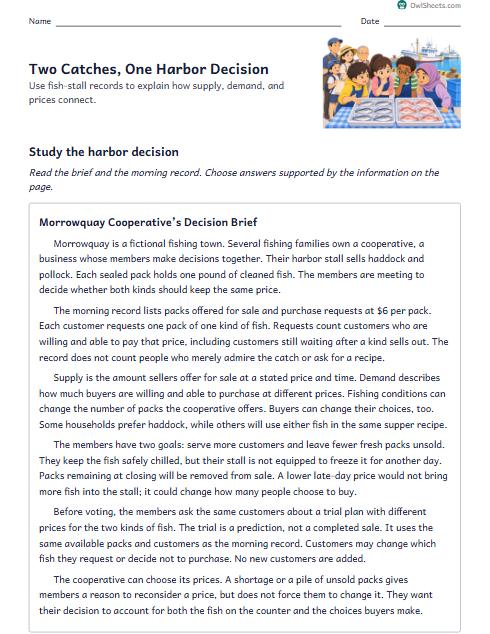
Preview
OwlSheets.com
Two Catches, One Harbor Decision
Use fish-stall records to explain how supply, demand, and prices connect.

Study the harbor decision
Read the brief and the morning record. Choose answers supported by the information on the page.
Morrowquay Cooperative’s Decision Brief
Morrowquay is a fictional fishing town. Several fishing families own a cooperative, a business whose members make decisions together. Their harbor stall sells haddock and pollock. Each sealed pack holds one pound of cleaned fish. The members are meeting to decide whether both kinds should keep the same price.
The morning record lists packs offered for sale and purchase requests at $6 per pack. Each customer requests one pack of one kind of fish. Requests count customers who are willing and able to pay that price, including customers still waiting after a kind sells out. The record does not count people who merely admire the catch or ask for a recipe.
Supply is the amount sellers offer for sale at a stated price and time. Demand describes how much buyers are willing and able to purchase at different prices. Fishing conditions can change the number of packs the cooperative offers. Buyers can change their choices, too. Some households prefer haddock, while others will use either fish in the same supper recipe.
The members have two goals: serve more customers and leave fewer fresh packs unsold. They keep the fish safely chilled, but their stall is not equipped to freeze it for another day. Packs remaining at closing will be removed from sale. A lower late-day price would not bring more fish into the stall; it could change how many people choose to buy.
Before voting, the members ask the same customers about a trial plan with different prices for the two kinds of fish. The trial is a prediction, not a completed sale. It uses the same available packs and customers as the morning record. Customers may change which fish they request or decide not to purchase. No new customers are added.
The cooperative can choose its prices. A shortage or a pile of unsold packs gives members a reason to reconsider a price, but does not force them to change it. They want their decision to account for both the fish on the counter and the choices buyers make.
| Kind of fish | Packs offered | Purchase requests |
|---|---|---|
| Haddock | 48 | 72 |
| Pollock | 84 | 56 |
- A. Consider raising haddock’s price and lowering pollock’s price.
- B. Consider raising both prices because both kinds have waiting buyers.
- C. Consider lowering haddock’s price and raising pollock’s price.
- D. Consider lowering both prices because both kinds have extra packs.
The preview shows the first questions. Unlock the worksheet to see all of it.
Related worksheets
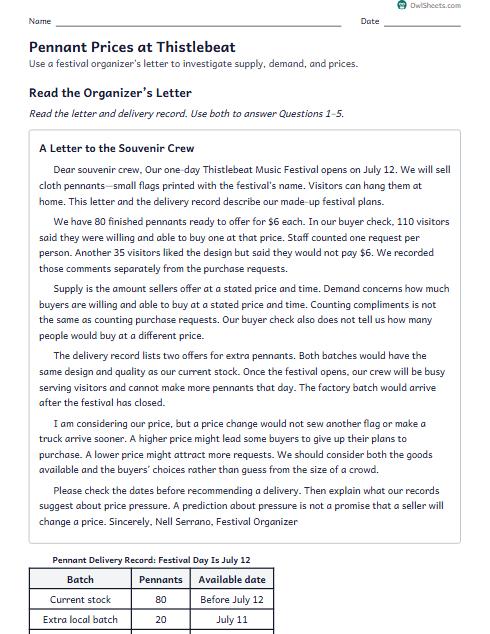
Pennant Prices at Thistlebeat
Grade 4 · ECO.4.2
14 questionsPremium
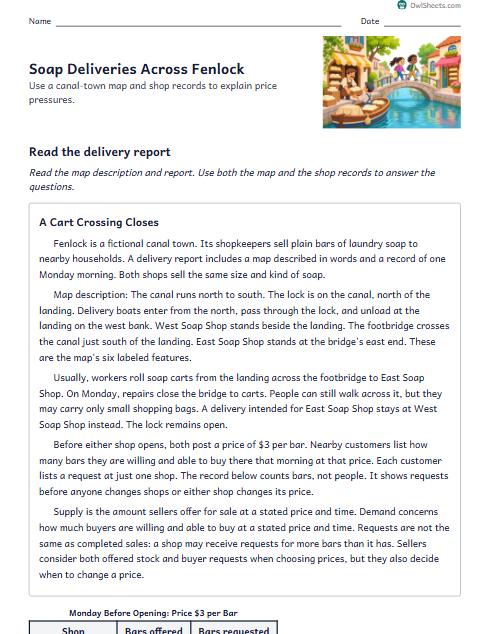
Soap Deliveries Across Fenlock
Grade 4 · ECO.4.2
14 questionsPremium
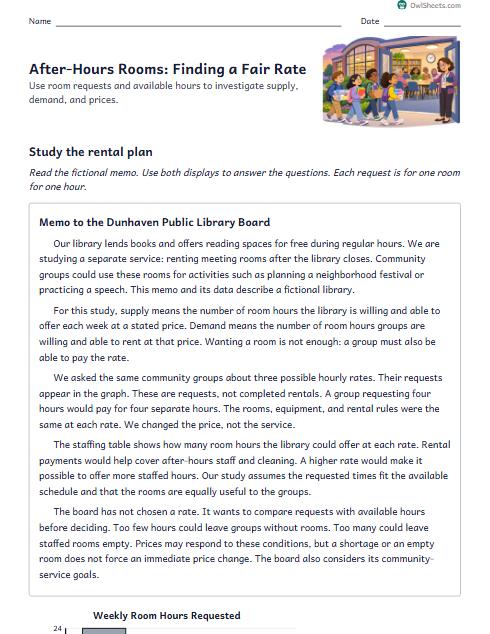
After-Hours Rooms: Finding a Fair Rate
Grade 4 · ECO.4.2
14 questionsPremium
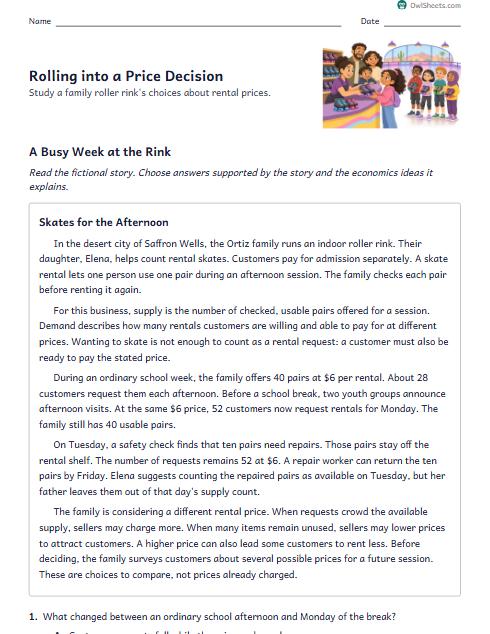
Rolling into a Price Decision
Grade 4 · ECO.4.2
14 questionsFree
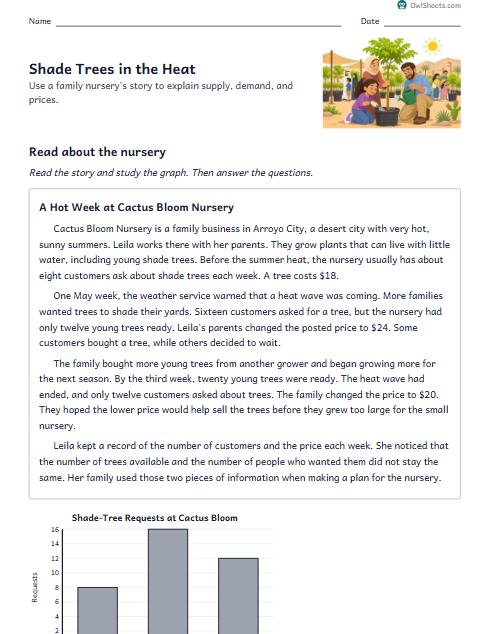
Shade Trees in the Heat
Grade 4 · ECO.4.2
14 questionsPremium
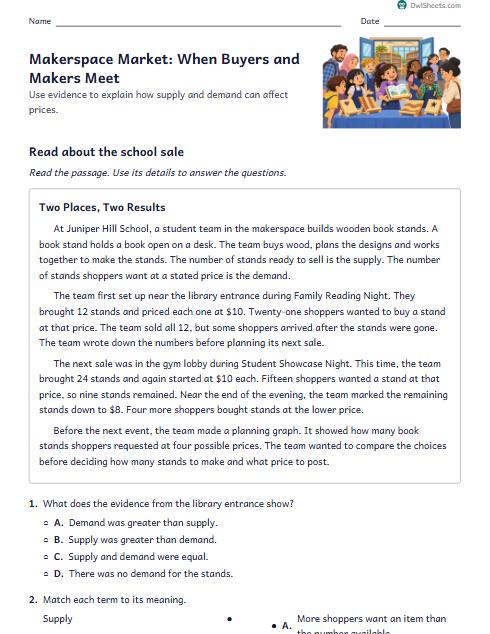
Makerspace Market: When Buyers and Makers Meet
Grade 4 · ECO.4.2
14 questionsPremium