Grade 3 · Social StudiesCIV.3.4
Two Ways to Run the Alarm-Check List
Compare two fire-station signup plans to explore privacy, equal treatment, citizens' responsibilities, and fair problem-solving.
Preview
OwlSheets.com
Two Ways to Run the Alarm-Check List
Compare two plans at a fire station and consider what makes a solution fair.
Compare the Plans
Read the training script. Use the town's guide and both plans to answer the questions.
Practice at Vesperbrick Fire Station
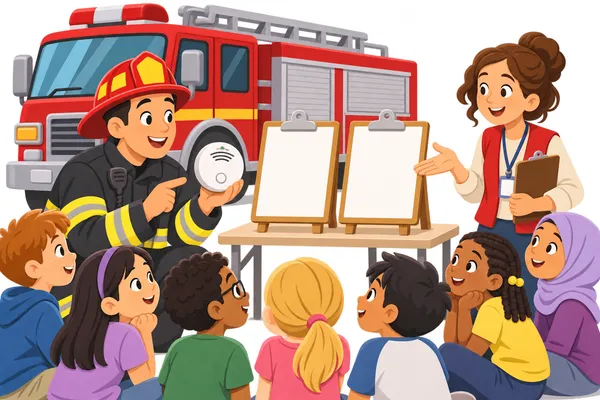
This invented training script takes place at Vesperbrick Fire Station. Firefighters offer free home visits to check smoke alarms. There are fewer visit times than requests this month. Delia, a firefighter, and Reuben, a volunteer, practice explaining two signup plans. Safiya plays a resident asking questions.
Delia reads the town's guide: “Residents have a right to equal treatment. They may question a decision and keep their home contact details off public displays. Residents are responsible for giving true information and following safety instructions. Donations do not buy an earlier visit. Routine visits are offered in the order requests arrive.”
Reuben describes Plan A: “People must come to the station to sign a board. They write their names, addresses, and phone numbers beside an open visit time. Neighbors can see who has signed up and offer to remind them. A volunteer will use the board to arrange visits.”
Delia describes Plan B: “People may phone the station or leave a paper request there. A volunteer puts both kinds of requests into one private list in arrival order. Each household gets a request number. A public notice lists numbers awaiting visits and numbers already served, but no names or contact details.”
Safiya asks, “What about people who work while the station desk is open? And how can we check our place without showing our address?” Reuben says Plan A needs less writing by volunteers. Delia says Plan B needs careful numbering. The station has not chosen a plan. Residents may suggest changes before the signup system begins.
- A. Choose volunteers to become town firefighters
- B. Teach residents how to repair station equipment
- C. Choose which households should donate money
- D. Arrange requested home visits to check smoke alarms
- A. Both plans display her details beside a visit time.
- B. Plan B protects her details; Plan A displays them.
- C. Plan A protects her details; Plan B displays them.
- D. Both plans keep her details on a private list.
People come to the station to sign up.Names, addresses, and phone numbers appear on a public board.Neighbors can offer reminders.A volunteer uses the board to arrange visits.
- A. Combine both kinds of requests in arrival order.
- B. Give paper requests a separate list for a later month.
- C. Let each volunteer choose which requests come first.
- D. Put households with more smoke alarms first.
- A. Households can follow their own request numbers.
- B. Volunteers will need to do careful numbering.
- C. Residents can offer reminders to their neighbors.
- D. Firefighters offer free visits to check alarms.
Apply the Guide
Each situation below is new. Use the town's guide to choose a responsible and fair action.
- A. Let the household choose which neighbor loses a turn.
- B. Move the household behind others for making the offer.
- C. Keep its place based on when its request arrived.
- D. Move the household ahead because it offered to help.
- A. Keep both numbers to get two chances at an early visit.
- B. Give the extra number to a friend who has not applied.
- C. Choose the earlier number without telling the station.
- D. Explain the duplicate so the station can combine the requests.
- A. The help takes the place of checking the resident's smoke alarms.
- B. The help makes signup possible without changing the resident's turn.
- C. The help gives the volunteer the right to choose a visit order.
- D. The help earns the resident a turn before earlier requests.
The street address beside each requestThe request numbers still awaiting visitsThe phone number beside each requestThe request numbers whose visits are finished
- A. Compare the arrival records with the rule and explain what happened.
- B. Ask how much her household has donated before answering.
- C. Move her to the end so volunteers have time to discuss it.
- D. Ask her neighbors to vote on whether she deserves an earlier turn.
Work Toward a Fair Solution
Think about rights, responsibilities, and ways to improve the plans. Use evidence when asked.
- A. Use the folder to tell neighbors who requested a visit.
- B. Return the folder to the staff without sharing its details.
- C. Leave the folder open so residents can check the names.
- D. Copy the folder onto the public progress notice.
- A. Post addresses but cover the residents' phone numbers.
- B. Require a neighbor's name before accepting a request.
- C. Let residents choose whether to ask a neighbor for a reminder.
- D. Give the private list to neighbors who offer reminders.
Related worksheets
The Kettlegrass Ranch Shortcut
Grade 3 · CIV.3.4
14 questionsPremium
Checking the Delta Lantern Records
Grade 3 · CIV.3.4
14 questionsPremium
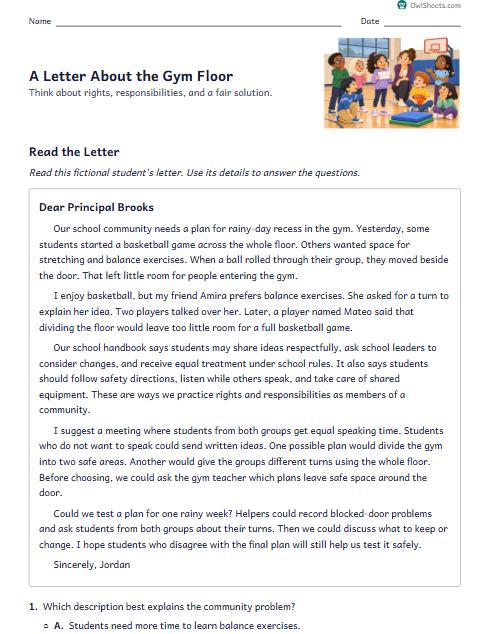
A Letter About the Gym Floor
Grade 3 · CIV.3.4
13 questionsPremium
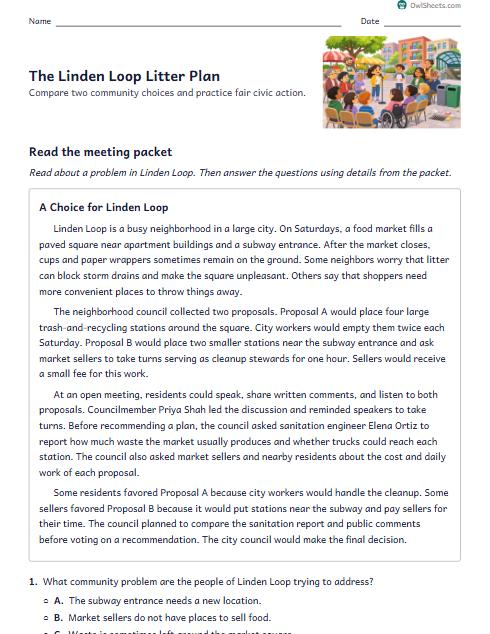
The Linden Loop Litter Plan
Grade 3 · CIV.3.4
14 questionsPremium
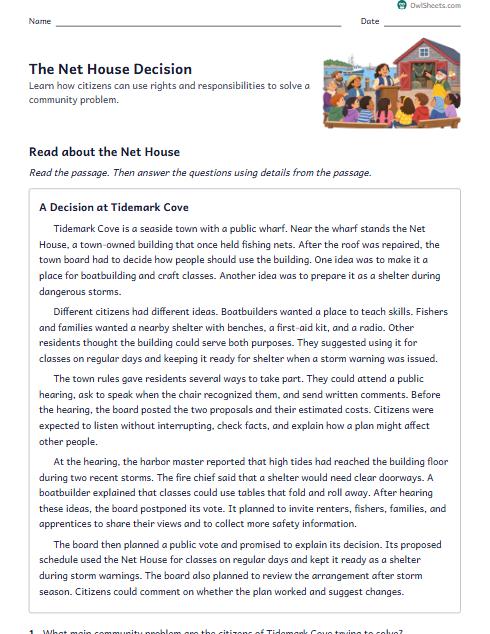
The Net House Decision
Grade 3 · CIV.3.4
15 questionsPremium
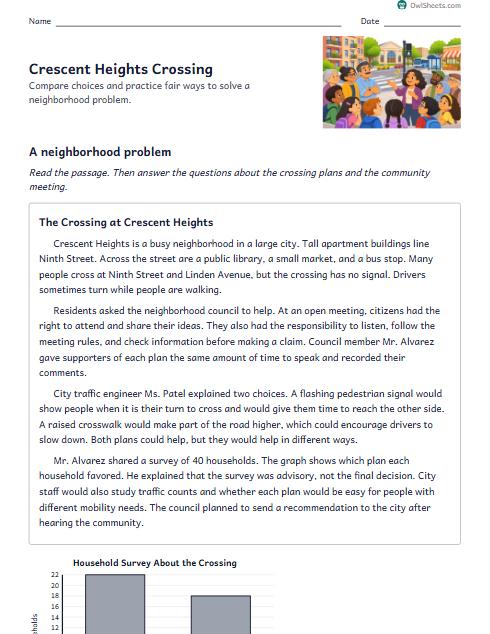
Crescent Heights Crossing
Grade 3 · CIV.3.4
14 questionsPremium