Grade 3 · Social StudiesCIV.3.3Premium
Island Voices on the Air
Compare two radio schedules in an island community while exploring voting, public meetings, letters, and volunteering.
Preview
OwlSheets.com
Island Voices on the Air
Compare ways residents help shape a community radio program.

Two Times for Island News
Read the story. Use its details to answer the questions.
A Radio Plan for Windward Island
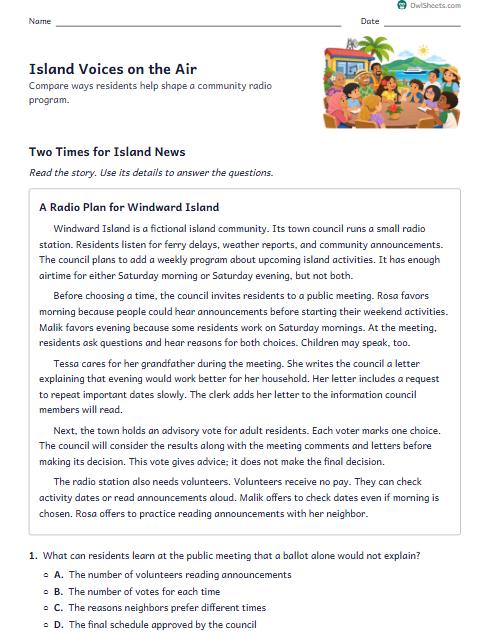
Windward Island is a fictional island community. Its town council runs a small radio station. Residents listen for ferry delays, weather reports, and community announcements. The council plans to add a weekly program about upcoming island activities. It has enough airtime for either Saturday morning or Saturday evening, but not both.
Before choosing a time, the council invites residents to a public meeting. Rosa favors morning because people could hear announcements before starting their weekend activities. Malik favors evening because some residents work on Saturday mornings. At the meeting, residents ask questions and hear reasons for both choices. Children may speak, too.
Tessa cares for her grandfather during the meeting. She writes the council a letter explaining that evening would work better for her household. Her letter includes a request to repeat important dates slowly. The clerk adds her letter to the information council members will read.
Next, the town holds an advisory vote for adult residents. Each voter marks one choice. The council will consider the results along with the meeting comments and letters before making its decision. This vote gives advice; it does not make the final decision.
The radio station also needs volunteers. Volunteers receive no pay. They can check activity dates or read announcements aloud. Malik offers to check dates even if morning is chosen. Rosa offers to practice reading announcements with her neighbor.
- A. The number of volunteers reading announcements
- B. The number of votes for each time
- C. The reasons neighbors prefer different times
- D. The final schedule approved by the council
- A. It lets her choose the schedule for the town.
- B. It signs her up to read on the radio.
- C. It counts as her ballot in the advisory vote.
- D. It lets her share ideas without attending.
The preview shows the first questions. Unlock the worksheet to see all of it.
Related worksheets
Two Ways to Share the Apricots
Grade 3 · CIV.3.3
13 questionsPremium
Citizen Pathways at Brindlefern Zoo
Grade 3 · CIV.3.3
14 questionsFree
Taking Part in Rimeford
Grade 3 · CIV.3.3
14 questionsPremium
New Hours for the Tolliver Library
Grade 3 · CIV.3.3
14 questionsPremium
A Choice on the Snowshoe Trail
Grade 3 · CIV.3.3
15 questionsPremium
Voices at Cedar Corner
Grade 3 · CIV.3.3
14 questionsPremium