Behind the Eyeglass Shop
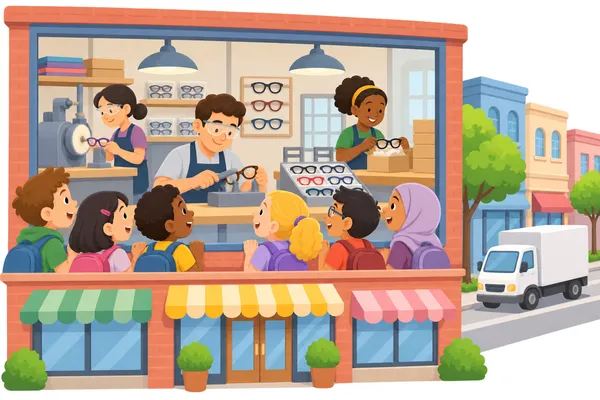
Brickline is a busy neighborhood in a large United States city. Above a row of stores, Clearview Workshop makes eyeglass frames. Workers shape the pieces that hold the lenses. They also make frames in unusual sizes that some customers have trouble finding.
Clearview buys small metal hinges from a business in Italy. The hinges let the arms of the frames fold. The Italian supplier has equipment for making these tiny parts. Clearview has tools for shaping frames, but it does not have equipment for making hinges. Its workers attach the purchased hinges to their frames.
Not every purchase crosses a country's border. A sewing shop across the city makes soft pouches for Clearview's frames. Clearview could sew pouches, but its workers would have less time to make frames. The sewing shop already has suitable machines and workers who know how to use them.
Clearview sells frames to shops in its own city and to a shop in Canada. The Canadian shop orders sizes its usual supplier does not offer. Money from these sales helps Clearview pay its workers and suppliers. Buyers gain more choices, while sellers gain customers beyond their neighborhoods.
Trade means buying, selling, or exchanging goods and services. Goods entering a country from another country are imports. Goods leaving a country for another country are exports. A sale between two US neighborhoods is trade, but it is not an import or export between countries.