Grade 2 · Social StudiesECO.2.1
A Mint-Making Plan for Market Day
Use a class's farmers market plans to explain how natural resources, workers, and equipment turn mint plants into a good.
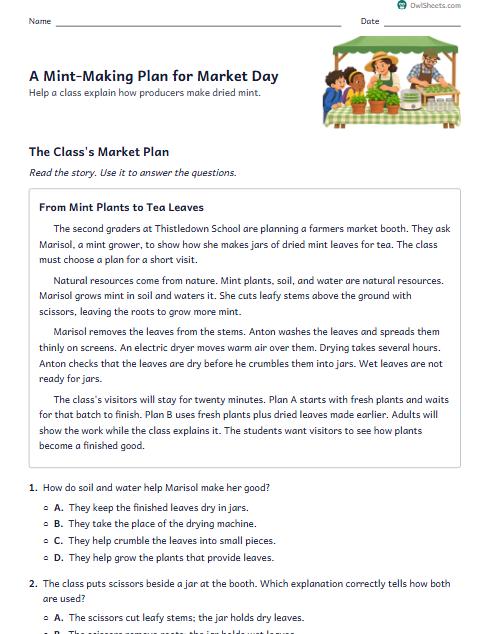
Preview
OwlSheets.com
A Mint-Making Plan for Market Day
Help a class explain how producers make dried mint.
The Class's Market Plan
Read the story. Use it to answer the questions.
From Mint Plants to Tea Leaves
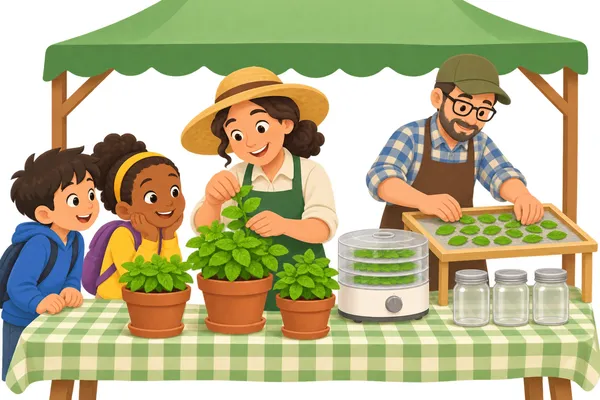
The second graders at Thistledown School are planning a farmers market booth. They ask Marisol, a mint grower, to show how she makes jars of dried mint leaves for tea. The class must choose a plan for a short visit.
Natural resources come from nature. Mint plants, soil, and water are natural resources. Marisol grows mint in soil and waters it. She cuts leafy stems above the ground with scissors, leaving the roots to grow more mint.
Marisol removes the leaves from the stems. Anton washes the leaves and spreads them thinly on screens. An electric dryer moves warm air over them. Drying takes several hours. Anton checks that the leaves are dry before he crumbles them into jars. Wet leaves are not ready for jars.
The class's visitors will stay for twenty minutes. Plan A starts with fresh plants and waits for that batch to finish. Plan B uses fresh plants plus dried leaves made earlier. Adults will show the work while the class explains it. The students want visitors to see how plants become a finished good.
- A. They keep the finished leaves dry in jars.
- B. They take the place of the drying machine.
- C. They help crumble the leaves into small pieces.
- D. They help grow the plants that provide leaves.
- A. The scissors cut leafy stems; the jar holds dry leaves.
- B. The scissors remove roots; the jar holds wet leaves.
- C. The scissors wash picked leaves; the jar dries them.
- D. The scissors crumble dry leaves; the jar grows mint.
- A. Marisol and the visitors
- B. Anton and the students
- C. Marisol and Anton
- D. The students and the visitors
The roots stay in the soil.Drying the leaves takes several hours.Marisol cuts stems with scissors.The visitors stay for twenty minutes.
- A. A tool used to dry mint leaves
- B. Plant material that still needs work
- C. A machine used to harvest mint
- D. Finished mint leaves, ready for tea
Removing leaves from the stemsWriting the name of the boothCrumbling leaves after they dryWelcoming visitors to the booth
Think Like a Producer
Use what you learned to solve each new problem.
- A. Keeping roots leaves plants able to grow more mint.
- B. Keeping roots makes the picked leaves dry faster.
- C. Keeping roots crumbles leaves before they are picked.
- D. Keeping roots washes soil from the picked leaves.
- A. Both make their plant materials inside a dryer.
- B. Both use screens to grow the leaves they need.
- C. Both use equipment and workers to prepare plant goods.
- D. Both turn their plant materials into mint leaves.
- A. A producer needs a resource suited to the good being made.
- B. A natural resource becomes mint after workers wash it.
- C. A dryer changes different resources into the same good.
- D. A resource becomes a tea leaf when it goes into a jar.
- A. Crumble the wet pile and call the batch finished.
- B. Spread the leaves so warm air can reach them.
- C. Put the wet pile into a jar with a tight lid.
- D. Add more wet leaves to the top of the pile.
Grow mint → Cut stems → Put fresh leaves in jars
Which change would make the plan show how Marisol produces her dried-mint good?
- A. Add watering after filling the jars with leaves.
- B. Add washing and drying before filling the jars.
- C. Move cutting stems to the end of the plan.
- D. Move growing mint to just before filling jars.
- A. It shows that checking takes the place of drying the leaves.
- B. It shows that jars do the work of making wet leaves dry.
- C. It shows that warm air grows the mint used in the good.
- D. It shows that a worker decides whether the leaves are ready.
Related worksheets
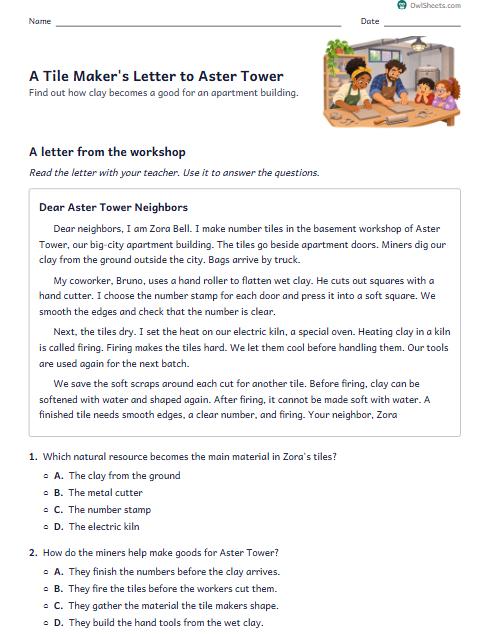
A Tile Maker's Letter to Aster Tower
Grade 2 · ECO.2.1
13 questionsPremium
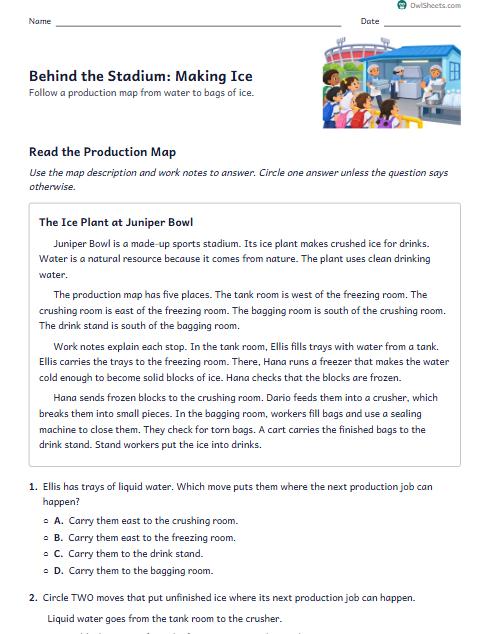
Behind the Stadium: Making Ice
Grade 2 · ECO.2.1
13 questionsPremium
A Family's First Cheese Order
Grade 2 · ECO.2.1
13 questionsPremium
Inside a City Candle Workshop
Grade 2 · ECO.2.1
13 questionsPremium
Goods Made in East Junction
Grade 2 · ECO.2.1
15 questionsPremium
How Market Goods Are Made
Grade 2 · ECO.2.1
14 questionsPremium