Grade 1 · Social StudiesECO.1.2
Pay and Purchases at Parcel Court
Use a post office neighborhood map and a worker’s note to explain earning money and buying goods and services.
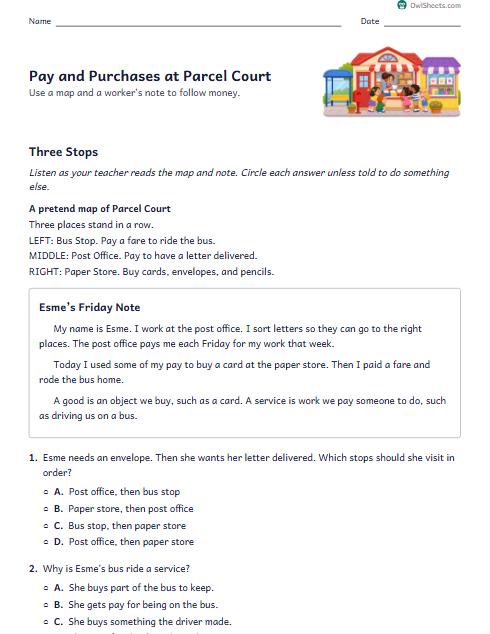
Preview
OwlSheets.com
Pay and Purchases at Parcel Court
Use a map and a worker’s note to follow money.
Three Stops
Listen as your teacher reads the map and note. Circle each answer unless told to do something else.
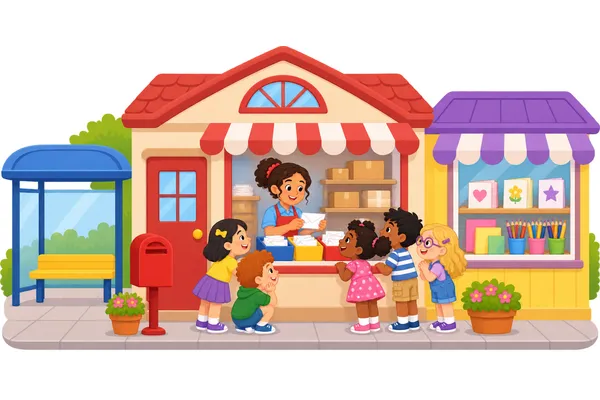
Three places stand in a row.
LEFT: Bus Stop. Pay a fare to ride the bus.
MIDDLE: Post Office. Pay to have a letter delivered.
RIGHT: Paper Store. Buy cards, envelopes, and pencils.
Esme’s Friday Note
My name is Esme. I work at the post office. I sort letters so they can go to the right places. The post office pays me each Friday for my work that week.
Today I used some of my pay to buy a card at the paper store. Then I paid a fare and rode the bus home.
A good is an object we buy, such as a card. A service is work we pay someone to do, such as driving us on a bus.
- A. Post office, then bus stop
- B. Paper store, then post office
- C. Bus stop, then paper store
- D. Post office, then paper store
- A. She buys part of the bus to keep.
- B. She gets pay for being on the bus.
- C. She buys something the driver made.
- D. She pays for the driver’s work.
The post office pays her for her week’s work.She buys a card at the paper store.She pays a fare to ride home.
- A. Putting envelopes on the shelves
- B. Buying a card from the shelves
- C. Choosing a pencil for home
- D. Paying to send a letter
Think About Pay
Use the map and note. Think about what people do to earn money.
- A. She spends money at the paper store.
- B. She waits near the shopping window.
- C. She rides the bus after her shift.
- D. She does the job she was hired to do.
- A. Stay in the middle and pay to mail a letter.
- B. Keep going left and pay for a bus ride.
- C. Go right and buy from the paper store.
- D. Stay in the middle and sort more letters.
- A. Her Monday work is a purchase.
- B. Pay can come after the work.
- C. Her Friday pay buys her job.
- D. Pay comes from taking the bus.
A cleaner gets paid to sweep the post office.A rider pays a fare at the bus stop.A painter gets paid to paint the paper store.A shopper pays for a pack of cards.
Change “buying a bus ticket” to “riding home.”Change “buying a bus ticket” to “driving the bus.”Change “buying a bus ticket” to “waiting for a ride.”
Use the Map Again
Think about new purchases at the three stops. Use details to explain your written answers.
- A. Money people earn can pay for other people’s goods or work.
- B. Money from selling cards is also pay for sorting letters.
- C. Buying from another worker is a way to earn more pay.
- D. Paying for letter delivery gives the buyer a new card.
- A. The envelope and delivery are both services.
- B. The envelope is a service; delivery is a good.
- C. The envelope is a good; delivery is a service.
- D. The envelope and delivery are both paid jobs for Jo.
Related worksheets
A Story Stop for Larchspan
Grade 1 · ECO.1.2
13 questionsPremium
A Letter from the Paper Arts Festival
Grade 1 · ECO.1.2
13 questionsPremium
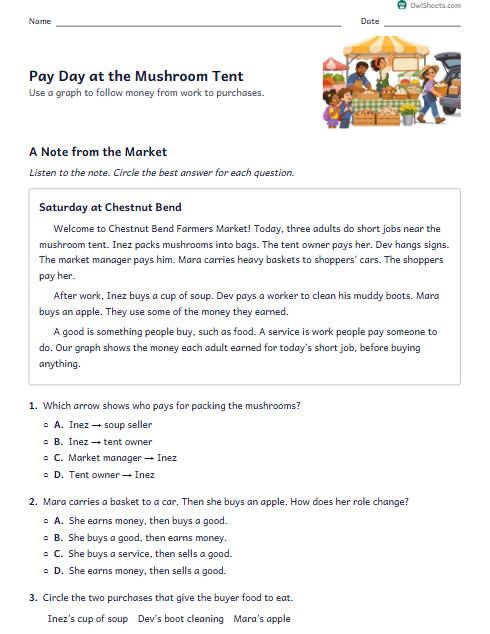
Pay Day at the Mushroom Tent
Grade 1 · ECO.1.2
13 questionsPremium
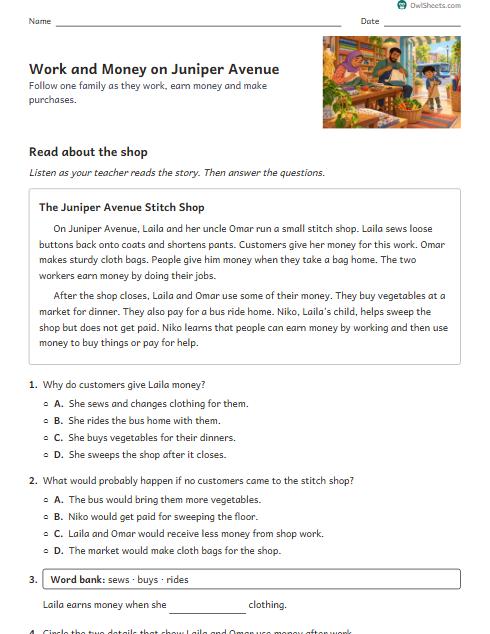
Work and Money on Juniper Avenue
Grade 1 · ECO.1.2
14 questionsPremium
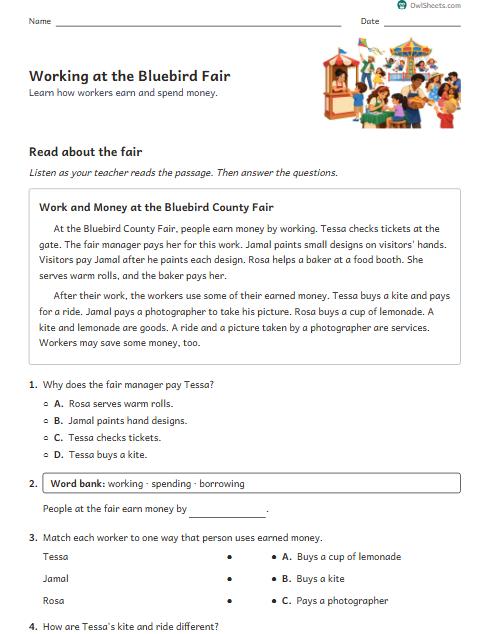
Working at the Bluebird Fair
Grade 1 · ECO.1.2
14 questionsPremium
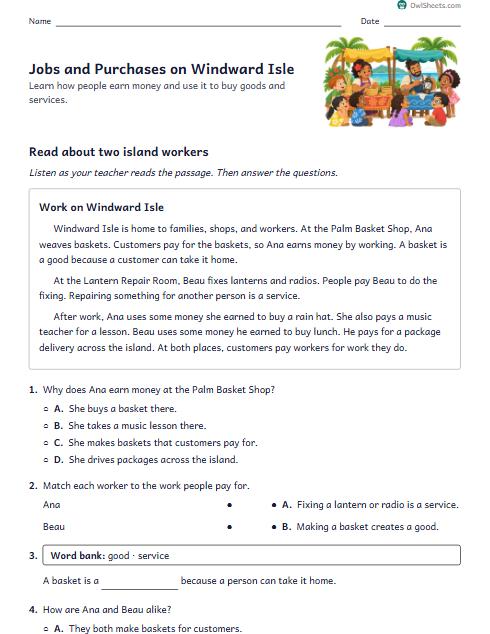
Jobs and Purchases on Windward Isle
Grade 1 · ECO.1.2
14 questionsPremium