
WorksheetPremium
Earthworms: Comparing Two Texts
Read two original articles about earthworms, then compare and contrast their most important points and key details.
Grade 3ELAInteractive · Printable
Aligned toRI.3.9
Or unlock every Premium worksheet with Premium
What’s included
- Single worksheet
- Auto-graded online
- 1 Common Core standard
- Printable answer key
- 10 questions
- Classroom-ready
Details
- Format
- Interactive · Printable
- Grade
- Grade 3
- Subject
- ELA
- Question types
- Fill in the blank, Multiple choice, Circle the answer, Sorting, Short answer
About this worksheet
What students practice
- Students identify the most important point of each of two texts on the same topic.
- Students compare and contrast key details that appear in one or both texts.
How to use
Have students read both texts once for the main idea, then reread to sort details by text before answering the questions.
Curriculum
Common Core standard covered
Compare and contrast the most important points and key details in two texts on the same topic.
Preview
OwlSheets.com
Earthworms: Comparing Two Texts
Read two short articles about earthworms and compare their key points.
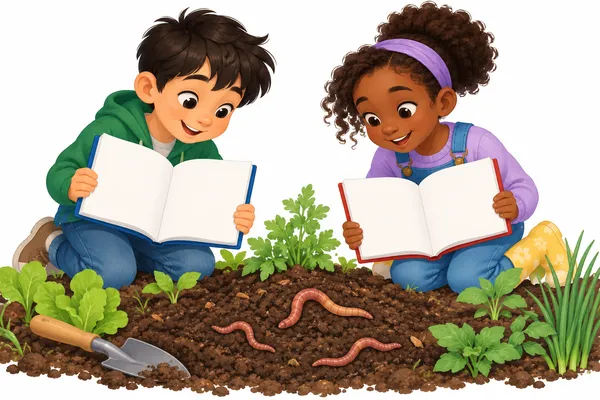
Read the two texts
Read Text 1 and Text 2. Both are about earthworms.
Text 1: Earthworms Help the Soil
1Earthworms may be small, but they do a big job for plants. They live in the soil under lawns, gardens, and forests. As they wiggle through the dirt, they dig long tunnels.
2These tunnels help plants grow. Rain soaks down through the tunnels instead of running away. Air moves into the soil too. Plant roots need both water and air, and they can spread more easily in loose soil.
3Earthworms also eat dead leaves and bits of old plants. The food passes through the worm's body and comes out as castings. Castings are full of things plants need, so they make the soil rich. A garden with many worms is often a healthy garden.
Text 2: How an Earthworm Lives Underground
1An earthworm has no legs, no eyes, and no lungs. So how does it live underground? Its body has some surprising tools.
2Tiny bristles stick out along the worm's body. To move, the worm stretches the front of its body forward. Then it grips the soil with its bristles and pulls the back end along.
3An earthworm breathes through its skin. Its skin must stay damp, or the worm cannot breathe. That is one reason worms stay in cool, moist soil and hide from the hot sun.
4A worm has no eyes, but its skin can sense light. Moving away from light helps it stay safe underground. There it digs tunnels and eats bits of dead plants.
The preview shows the first questions. Unlock the worksheet to see all of it.
Related worksheets
 Worksheet
Grade 3
Seahorses Side by Side: Two Texts
Reading: Informational Text · RI.3.9
Premium10 questions
 Worksheet
Grade 3
Two Texts About Spiders
Reading: Informational Text · RI.3.9
Free10 questions
 Worksheet
Grade 3
Tunnels Take Us Through
Reading: Informational Text · RI.3.2
Premium10 questions
 Worksheet
Grade 3
Sundials: Telling Time with Shadows
Reading: Informational Text · RI.3.10
Premium11 questions
 Worksheet
Grade 3
Keep Cursive in Our School: What Do You Think?
Reading: Informational Text · RI.3.6
Premium10 questions
 Worksheet
Grade 3
How a Compass Finds North
Reading: Informational Text · RI.3.1
Premium9 questions